


Thailand's Largest Developer Launches Flagship Riverside Project
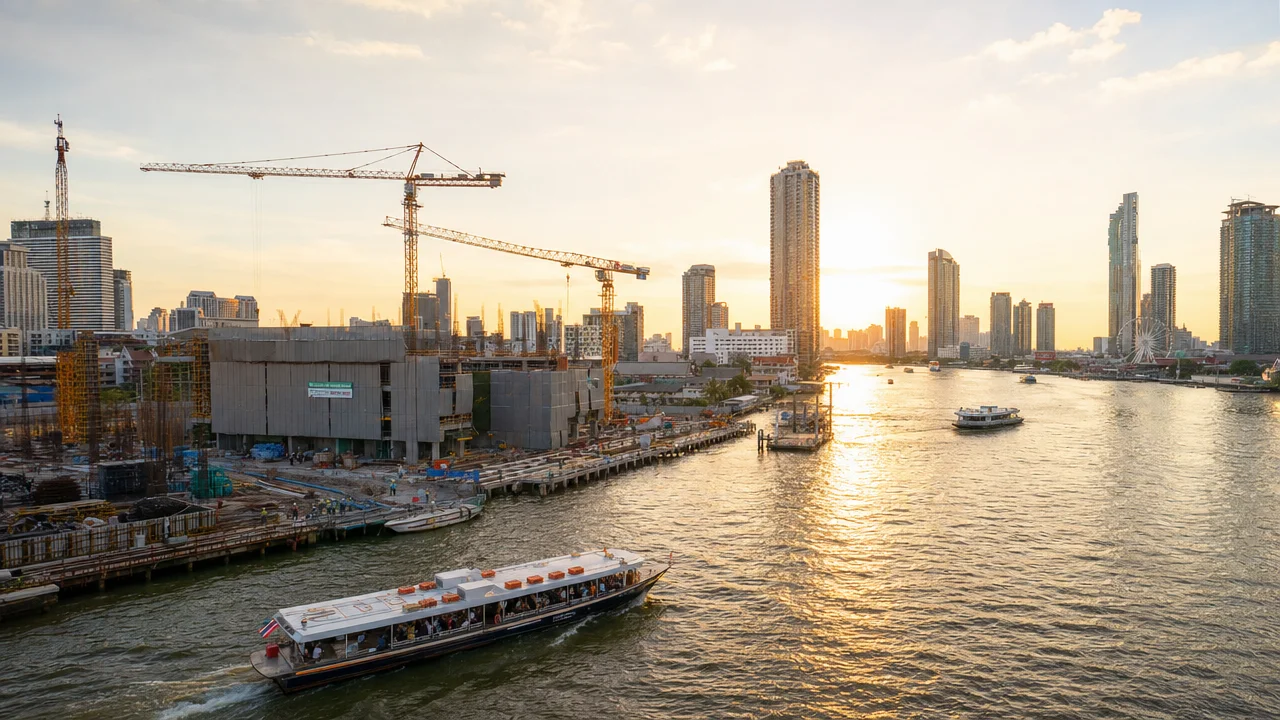
Asset World Corporation (AWC) has announced an investment of 2.9 billion baht in the construction of the new Plaza Athénée Bangkok hotel on the banks of the Chao Phraya River. The project will become part of a large-scale transformation of the company's portfolio in the ultra-premium real estate segment of the capital. The opening is scheduled for 2027, and the hotel itself will occupy a plot of more than 8,000 square meters in the Bangkok Yai district-an area that has demonstrated the highest growth in prices for waterfront commercial real estate among all districts of the capital over the past three years.
AWC's decision to build a five-star hotel on the western bank of the Chao Phraya signals a strategic shift in the geography of Bangkok's elite real estate. Until recently, investors concentrated on the eastern side of the river and areas along the BTS skytrain lines. The western bank was considered less prestigious due to limited transport accessibility and the absence of major anchor projects. The appearance of Plaza Athénée changes this logic.
Why AWC Chose This Particular Site
Asset World Corporation controls assets worth over 180 billion baht and manages 46 hotels throughout Thailand. The choice of location for the new Plaza Athénée is driven by several factors. Firstly, the site is within walking distance of the planned Orange Line metro station, scheduled to launch at the end of 2027. Secondly, the Thai government approved a master plan for the development of the Chao Phraya waterfront zone in 2025, which includes the construction of embankments, a museum quarter, and pedestrian bridges between the western and eastern banks.
According to Knight Frank Thailand, the average price of commercial real estate in the Bangkok Yai district increased by 14% during the period from 2024 to 2026. For comparison: in the traditionally prestigious districts of Pathum Wan and Watthana, growth was 6% and 8% respectively. Investors began buying up plots along the western bank back in 2024, when the government's plans became known. AWC secured the land rights for Plaza Athénée in early 2025, paying, according to unofficial data, about 450 million baht for the land alone.
What's Included in the 2.9 Billion Baht Project
The new Plaza Athénée Bangkok hotel will include 180 luxury category rooms, three restaurants overlooking the river, a spa center with an area of 1,200 square meters, and conference halls with a total capacity of up to 400 people. The architectural concept is being developed by an international firm that previously designed Rosewood hotels in Hong Kong and Singapore. The building will be executed in the style of modern tropical modernism using natural stone, teak wood, and panoramic glazing.
The hotel's integration into the AWC ecosystem deserves special attention. The company owns Empire Tower shopping centers, a restaurant chain, and entertainment venues throughout Bangkok. Plaza Athénée guests will have access to an exclusive loyalty program that includes discounts at partner establishments, priority restaurant reservations within the group, and yacht transfers between AWC properties along the river. Such a vertical integration model is rarely found among Thai developers and allows the company to retain customers within its own infrastructure.
Construction has already begun. Foundation work started in March 2026, with the frame construction planned for the fourth quarter of this year. AWC has engaged Italian-Thai Development as the contractor, which built most of the skyscrapers in the Silom area and has experience working with waterfront sites where reinforced pile foundations are required due to soft soils.
How the Project Affects Bangkok's Luxury Real Estate Market
The emergence of a major hotel project on the western bank of the Chao Phraya triggers a chain reaction in the residential real estate market. Over the past six months, three developers have announced plans to build premium-class condominiums within a one-kilometer radius of the Plaza Athénée site. Sansiri is launching a project with 120 units at an average price of 18 million baht for an 80-square-meter apartment. Ananda Development is planning a 200-apartment tower with its own boat pier. Both companies directly reference AWC's investment in press releases as a factor increasing the district's investment attractiveness.
According to CBRE Thailand estimates, the launch of Plaza Athénée will add about 600 new jobs to the western waterfront zone and increase tourist flow by 25-30% by 2028. This creates demand for serviced apartments and commercial spaces. Rental rates for retail spaces within a 500-meter radius of the construction site have risen from 800 baht per square meter per month at the beginning of 2025 to 1,100 baht in mid-2026.
The Bank of Thailand noted growth in foreign investor activity in Bangkok's commercial real estate segment in its second-quarter 2026 report. The share of purchases by non-residents increased from 12% in 2024 to 18% in the first half of 2026. Analysts link this trend to the strengthening Thai baht, stable rental yields (6-8% annually for the premium segment), and the launch of major infrastructure projects such as the Orange Line metro and the new Suvarnabhumi Airport terminal.
Risks and Limitations for Investors
AWC's investment in Plaza Athénée looks convincing on paper but carries specific risks. The western bank of the Chao Phraya still lags behind eastern districts in terms of transport accessibility. Until the Orange Line metro launches at the end of 2027, the main ways to reach the site are river ferries or cars through congested bridges. During rush hours, the journey from central Silom to the Bangkok Yai district takes 40-50 minutes.
Construction risks also cannot be dismissed. Waterfront sites require complex engineering preparation: reinforced piles, drainage systems, protection against seasonal flooding. In 2023, developer Supalai faced project delays on the western bank due to unforeseen geological problems, which increased the budget by 15%. AWC has publicly stated that all geological surveys are completed, but market history shows that waterfront construction rarely stays within initial timelines.
Another factor is competition. Bangkok already has more than 200 five-star hotels operating, including Mandarin Oriental, Peninsula, and Four Seasons on the Chao Phraya waterfront. Plaza Athénée will have to compete for customers in a segment where brand loyalty plays a key role. AWC is counting on synergy with its own retail and entertainment assets, but the success of this strategy will only become clear two to three years after opening.
Tax Context: What Has Changed for Commercial Property Owners
Since 2020, Thailand has operated under a new land and building tax law that replaced outdated house and land taxes. According to the Land and Building Tax Act B.E. 2562, commercial real estate is taxed at a progressive rate from 0.3% to 1.2% of the assessed value depending on the property's use. Hotels fall into the commercial use category with a base rate of 0.7% for properties valued over 50 million baht.
In December 2024, the government extended property tax reduction measures until June 30, 2027. The rate for commercial properties has been temporarily reduced by 90%, meaning an actual burden of about 0.07% instead of 0.7%. For a hotel worth 2.9 billion baht, this is the difference between 20.3 million baht per year and 2 million baht. After the preferential period ends, AWC will face a substantial increase in tax payments, which must be factored into project payback calculations.
The government has also extended the reduction of registration fees when purchasing residential and commercial real estate. The standard 2% rate has been reduced to 0.01% for properties valued up to 7 million baht with simultaneous registration of ownership and mortgage. The measure is valid until June 30, 2027, and is aimed at stimulating transactions amid a market slowdown. For commercial properties above 7 million baht, the standard 2% rate applies, which for the Plaza Athénée site amounted to about 9 million baht in registration fees.
What This Means for Buyers in Pattaya
AWC's investment in the western bank of the Chao Phraya directly affects the Pattaya market through the mechanism of capital redistribution. Large Thai developers are limited in resources and must choose between projects in Bangkok and on the coast. When AWC directs 2.9 billion baht to a capital hotel, it means the company has fewer funds for new launches in Pattaya. Similar logic applies to Sansiri, Ananda, and other players following AWC to the western bank.
For buyers from Russia, this creates a window of opportunity. While the attention of major developers is focused on Bangkok, the Pattaya market is experiencing a shortage of new premium projects. According to real estate agency Colliers, in the first half of 2026, only 8 new Class A condominiums were launched in Pattaya versus 14 in the same period of 2025. The decrease in supply with stable demand from foreigners maintains prices at 120-150 thousand baht per square meter in central areas.
The second effect is increased interest in the secondary market. Investors who are not ready to wait for new projects to be completed are switching to ready-made apartments. The average exposure time for properties on the secondary market in Pattaya has decreased from 180 days in 2024 to 120 days in mid-2026. Sellers have gained more negotiating power and are less willing to agree to discounts.
The third point concerns transport accessibility. The success of AWC's project on the western bank of the Chao Phraya depends on the launch of the Orange Line metro. If the line opens on time and shows high passenger traffic, this will strengthen arguments in favor of building high-speed rail connections between Bangkok and Pattaya. The Bangkok-Pattaya high-speed railway project has been discussed since 2017 but has been constantly postponed due to budget constraints. Growth in passenger traffic on new metro lines could push the government to accelerate implementation.
Practical Steps for Investors
If AWC's Chao Phraya project generates interest as an indicator of trends, it's worth paying attention to several specific actions. First-monitoring condominium launches within a one-kilometer radius of Plaza Athénée. Developers typically open sales 18-24 months before construction completion, meaning the first projects will appear on the market at the end of 2026-beginning of 2027. Purchasing at the foundation stage provides a 15-20% discount relative to the price of a completed property.
Second-tracking rental rate dynamics in the western waterfront zone. If rates continue to grow at 10-15% annually, this will confirm the district's viability as an investment destination. Rental data is published quarterly by CBRE, Knight Frank, and Colliers agencies in open reports in English.
Third-analyzing government infrastructure development plans. Thailand's Ministry of Transport publishes updated construction schedules for metro lines and roads on its official website. A delay in the Orange Line launch of even six months could significantly affect investment returns in the western waterfront zone.
For those considering a purchase in Pattaya, the current situation is favorable. The shortage of new premium-class launches means that quality properties on the secondary market or the last lots in projects under construction have potential for 8-12% value growth over the next two years. The key success factor is choosing a location with ready infrastructure (schools, hospitals, shopping centers within a 2-kilometer radius) and legal transaction cleanliness. Verification of title documents through the Land Office and confirmation of no encumbrances takes 3-5 working days and costs 5-7 thousand baht, but protects against 90% of typical problems when buying real estate in Thailand.