AWC Launches 50 Billion Baht Real Estate Fund: What's Behind the Biggest Deal of 2026
Asset World Corp, Thailand's largest hotel and commercial real estate developer, has announced the launch of a Real Estate Investment Trust (REIT) with initial assets valued at up to 50 billion baht. Listing on the Stock Exchange of Thailand is scheduled for 2026. The fund will be named Asset World Corp REIT (AWR) and will become a platform for the company's stable income-generating assets, while AWC itself focuses on developing new projects. The decision was made by the board of directors of the company, controlled by the family of billionaire Charoen Sirivadhanabhakdi, owner of the TCC Group conglomerate.
The strategy of splitting the business into two parts-growing development and stable income-generating assets-reflects AWC's attempt to achieve a more fair market valuation of its portfolio. The company's capitalization after the 2019 IPO did not reflect the growth of assets from 220 billion baht, creating a gap between book and market value. The fund should close this gap and attract institutional investors seeking predictable returns.
Fund Structure: Five Assets at Launch and Annual Additions
AWR's initial portfolio will include approximately five premium properties from AWC's current portfolio of 61 projects. The company plans to add one to two assets annually, depending on market conditions. Priority is given to freehold properties-unlike leasehold land, such assets have no expiration date and maintain value over the long term.
The registered capital of the subsidiary structure will be 29.99 million baht, divided into 2,999,999 ordinary shares at 10 baht each. AWC will retain a 99.99997% stake. Registration is expected by the end of August 2026. Assets transferred to the fund are valued at within 25% of AWC's total assets according to second quarter 2026 reports.
Wallapa Traisorat, CEO of AWC and daughter of Charoen Sirivadhanabhakdi, emphasized that the fund will become part of the Integrated Real Estate Platform. AWC will act as the "Development Engine," handling projects with high growth potential, while AWR will hold mature assets with clear yield.
Which Properties Will Enter the Portfolio: Hotels, Shopping Centers, and Mixed-Use
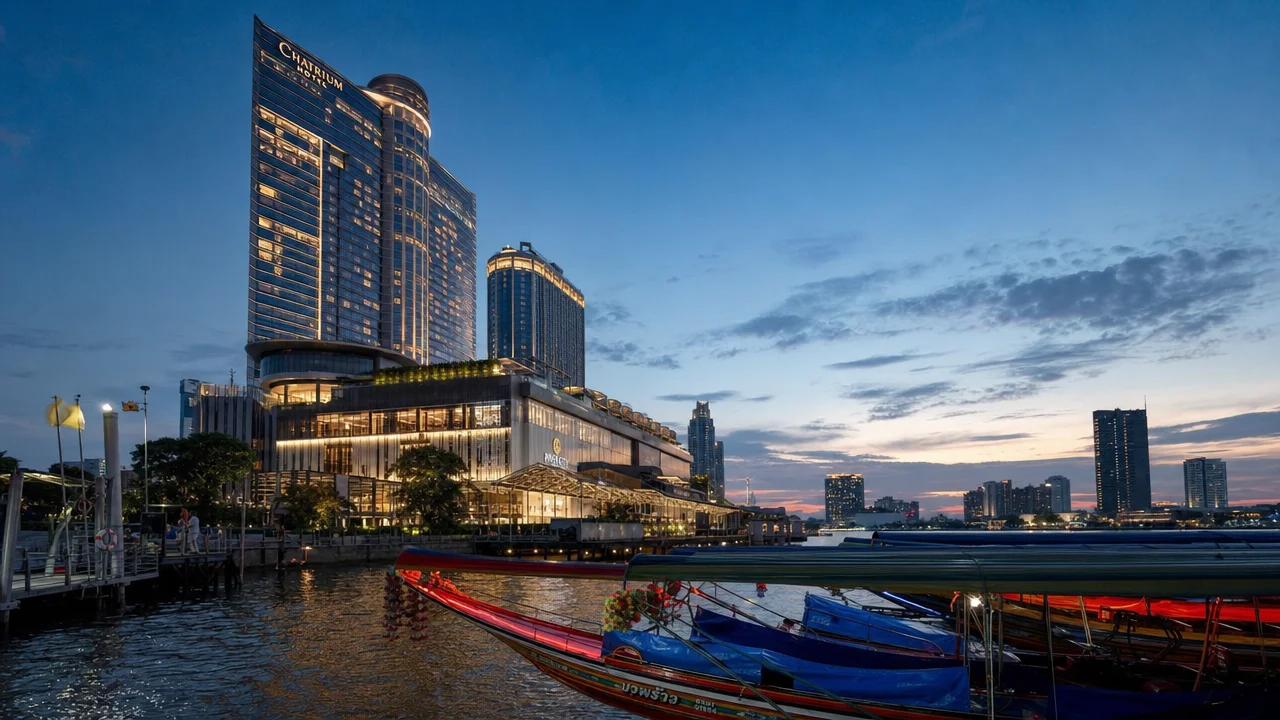
The company is considering transferring to the fund properties with full ownership, stable operating history, and proven ability to generate income. The list will include both hotel and commercial assets. Among potential candidates are properties along the Chao Phraya River, part of the AWC Riverside Journey concept, which unites 11 points from Yaowarat (Chinatown) to the Bangkok Yai district.
One of the new projects, River Garden, will be converted into an ultra-luxury Plaza Athénée hotel, 18 stories high with 146 rooms. The building area will exceed 20,000 square meters, investments are estimated at 2,900 million baht, opening is scheduled for 2571 in the Thai calendar (2028 Gregorian). The property will combine hotel services, wellness, restaurants, and commercial spaces.
In addition to hotels, the portfolio may include retail assets like Asiatique The Riverfront Destination, which showed growth in attendance and rental income. In the second quarter of 2026, AWC's commercial segment generated 2,517 million baht in revenue, up 13.4% year-on-year. Segment EBITDA was 2,137 million baht, up 13.2%.
AWC Financial Performance: Hotel Segment Recovery and F&B Growth
In the second quarter of 2026, AWC reported revenue of 5,502 million baht (+5.6% year-on-year), net profit of 1,468 million baht (+4.6%), and EBITDA of 2,850 million baht (+4.6%). The hotel segment grew 5.7% to 2,761 million baht due to recovering demand in Bangkok and record revenue per available room (RevPAR) in Pattaya (+169%) and Chiang Mai (+31%).
The flow of Chinese tourists to AWC properties increased by 32%, which was reflected in food and beverage revenues-the F&B segment added 7.3% and reached 900 million baht. The company continues to expand its hotel portfolio: by 2573 in the Thai calendar (2030 Gregorian), the area will grow from 504,000 to 660,000 square meters (+31%). Plans include development of Lanna Thique in Chiang Mai and Weng Nakhon Kasem on Yaowarat.
Why AWC Chooses REIT Instead of Direct Asset Sales
Creating a fund allows AWC to monetize mature assets without losing control over brand and operational management. REIT provides liquidity for reinvestment in new projects while maintaining long-term relationships with properties through management contracts. The model also reduces debt burden: AWC's cost of capital is 2.46%, with the interest coverage ratio remaining high.
Thailand's REIT market has experienced difficulties in recent years, causing investor caution. Wallapa Traisorat acknowledged these concerns but expressed confidence that a portfolio of quality freehold assets managed by global hotel and retail brands will attract both local and international capital. Historically, land prices in Thailand have grown 9-14% annually, creating additional potential for fund asset value growth.
The company also expects interest from institutional investors seeking stable dividends. REITs are required to distribute at least 90% of net profit among unitholders, making them attractive to pension funds and insurance companies.
Placement Timeline and Terms: IPO for Local and Foreign Investors
The initial public offering (IPO) of fund units is scheduled for 2026. The issue volume will be approximately 30,000 million baht, with the offering open to both Thai and foreign investors. Final timing depends on market sentiment and investor readiness. Financial advisors have already been appointed to structure the deal.
Details on specific assets to be included in the first tranche are expected in September 2026. Board approval at this stage is in principle-the final decision will be made after completing due diligence, asset valuation, deal structure development, and obtaining regulatory approvals.
| Parameter | Value |
|---|---|
| Fund Name | Asset World Corp REIT (AWR) |
| Initial Asset Value | Up to 50,000 million baht |
| IPO Volume | ~30,000 million baht |
| Number of Initial Assets | ~5 properties |
| Portfolio Additions | 1-2 properties per year |
| Ownership Type | Freehold |
| Listing Year | 2026 |
| AWC Share in Management Company | 99.99997% |
REIT Market Competition and AWC's Position
Thailand's REIT market has several dozen funds, but most focus on office and retail real estate. Hotel REITs remain rare due to tourism demand volatility and difficulty in assessing profitability. AWC is betting on portfolio diversification-a combination of hotels, shopping centers, and mixed-use projects should reduce risks and ensure stable cash flow.
The company also uses partnerships with global brands: Marriott International, Universal Destinations & Experiences, EMM Williams Productions. Projects like Kung Fu Panda in Yaowarat, DreamWorks Water Park in Pattaya, and Avatar: Guardians of EYWA at Asiatique create additional tourist attractions and increase asset recognition.
What This Means for Buyers in Pattaya
The launch of AWR indirectly affects Pattaya's residential real estate market through several channels. Growth in institutional investment in Thailand's commercial and hotel real estate increases confidence in the country as a destination for long-term investments. This stabilizes the baht exchange rate and reduces devaluation risks for buyers holding assets in Thai currency.
AWR's success may push other major developers to create similar funds, increasing the supply of liquid instruments for investors. Part of the capital released from REITs will return to development-AWC has already announced a 31% portfolio expansion by 2030. New projects in Pattaya, including Moxy Pattaya The Aquatique and DreamWorks Water Park, will improve the resort's infrastructure and support housing demand in adjacent areas.
For private investors considering purchasing a condominium in Pattaya, it's important to note that increased activity from institutional players typically precedes residential real estate price growth with a 12-18 month lag. Areas near new AWC commercial and entertainment properties-Jomtien, Pratumnak, Naklua-may show leading dynamics.
Foreign buyers should monitor changes in REIT legislation: if regulators expand opportunities for non-residents to directly invest in Thai real estate funds, this will open an alternative investment channel alongside physical real estate purchases. While AWR has not yet disclosed conditions for foreign participation, given the stated focus on international capital, restrictions may be minimal.
Risks and Limitations of the REIT Model for Retail Investors
Despite the appeal of stable dividends, REITs carry specific risks. Unit prices depend on interest rates: when they rise, alternative instruments (bonds, deposits) become more competitive, putting pressure on fund quotes. The Bank of Thailand maintains rates at 2.25%, but any changes in monetary policy will affect AWR's valuation.
Operational risks are related to dependence on tourist flow. Although AWC diversifies its portfolio, hotel assets remain sensitive to external shocks-pandemics, political crises, changes in visa policy. The fund also depends on management quality: if AWC as operator cannot maintain high occupancy and RevPAR, unit yields will decline.
Liquidity of Thai REITs is inferior to shares of large companies. Spreads between bid and ask prices can reach 2-3%, increasing transaction costs for short-term trading. For investors planning to hold units for less than three years, this creates additional expenses.
Conclusions: AWC Restructures Business Model for Institutional Demand
Creating AWR is part of AWC's long-term strategy to become an integrated real estate platform where development and asset management are organizationally separate but operationally connected. The fund will allow the company to raise capital for new projects without diluting existing shareholders' stakes and reduce financing costs through source diversification.
For Thailand's real estate market, the launch of AWR signals sector maturity and readiness of major players to work according to international corporate governance standards. The successful placement could become a catalyst for similar deals by other developers, increasing market depth and attracting new institutional investors.
For retail investors, AWR will offer access to premium assets that were previously unavailable for direct investment. However, before participating in the IPO, it's necessary to assess one's own risk tolerance, investment horizon, and understanding of REITs as an asset class. Details of placement terms, expected returns, and specific portfolio composition will become known closer to September 2026-until then, any investment decisions remain premature.