
Record Housing Surplus Amid Construction Boom
Thailand faces a paradox: 1.64 million unoccupied residential units across the country, yet developers launch new projects every quarter. The Bank of Thailand recorded this figure in its 2025 report, noting the concentration of vacant housing in Bangkok and the Eastern Seaboard, including Pattaya. Meanwhile, the volume of new construction permits for residential complexes has grown 11% over the past 18 months.
The reasons for this imbalance lie not in developer irrationality, but in market structure, tax incentives, and financing characteristics. Let's examine the mechanisms that sustain construction activity even amid massive oversupply.
Geography of Oversaturation: Where Vacant Properties Have Accumulated
Greater Bangkok has accumulated approximately 580,000 unoccupied units, accounting for 35% of the nationwide figure. Chonburi Province, where Pattaya is located, adds another 142,000 vacant condominiums and houses. The Pratumnak, Jomtien, and Wongamat areas show vacancy rates above 28% in the condominium segment priced from 3 to 7 million baht.
Phuket and Samui show lower absolute numbers-47,000 and 19,000 units respectively-but the relative share of vacant housing there reaches 22-24%. The reason is that a significant portion of purchases were made by foreigners for investment rental, which didn't materialize after the pandemic-related tourism decline.
Thailand's Ministry of Finance in its quarterly review for March 2026 indicated that 63% of unoccupied units are owned by legal entities-developers, investment funds, and banks that acquired assets through foreclosure. The remaining 37% belong to individuals, often foreign buyers who were unable to rent out the properties or use them personally.
Why Developers Don't Stop Launching New Projects
The first reason is the pre-sales model and bank financing. Major developers in Thailand obtain credit lines for specific projects at the land plot stage with approved EIA (Environmental Impact Assessment). Banks require achieving 30-40% pre-sales to activate the tranche, but don't require complete sales before construction completion.
Once a developer reaches the minimum pre-sales threshold, they're obligated to complete the project per contract with the bank and buyers. Even if market conditions have deteriorated, stopping construction incurs penalties, lawsuits, and loss of banking licenses for future projects. Therefore, developers complete the building to handover, and unsold units transfer to the company's balance sheet or are handed to the bank against debt.
The second reason is tax benefits for economy-class housing construction. The Thai government extended until June 30, 2027, a program of reduced registration fees: 0.01% instead of the standard 2% on transfer and 0.01% instead of 1% on mortgage registration for properties valued up to 7 million baht. The Cabinet approved this decision on June 30, 2026, publishing two Ministry of Interior notifications in the Royal Gazette on July 1, 2026.
Developers orient toward this program, launching townhouses and condos in the 2.5-6.9 million baht price corridor, expecting demand from Thai buyers who have access to preferential mortgages. The Bank of Thailand simultaneously eased loan-to-value limits from July 1, 2026, to June 30, 2027, allowing banks to lend up to 90% of property value to first-time buyers. This created an artificial spike in approved loan applications, which developers interpret as a signal for new launches.
The third reason is a land asset retention strategy. Major holdings like Sansiri, AP Thailand, and Land & Houses own land banks in premium locations. If they don't develop a plot within 5-7 years, its cadastral value will increase, raising tax on unused land. Launching a project freezes the tax base and allows land amortization through construction costs, even if sales are slow.
Who's Buying New Housing With Such Surplus
Demand structure has shifted. Foreign buyers, who comprised up to 35% of condominium sales in Pattaya in 2018-2019, now account for only 18-22% of transactions in 2025-2026. The Condominium Act limits the foreign ownership share to 49% of total project area, and many buildings have already exhausted this quota.
The main buyer now is Thai middle class from Bangkok, purchasing second properties in Pattaya or Hua Hin for weekends. These buyers use the government's preferential fee program and mortgages at 3.5-4.5% annually for up to 30 years. They don't consider investment rental a priority, so apartments may remain vacant 8-10 months per year.
The second category is speculators working on resale. They buy at the pre-sales stage with 15-25% discounts, then resell 12-18 months after project completion with 8-12% markup. If the market doesn't grow, they hold the asset or rent it to a management company under guaranteed rental yield programs of 4-5% for 3 years, which some developers offer.
The third category is buyers under the Thailand Property Visa program, requiring investments from 3 million baht in real estate to obtain a long-term visa. Thailand's Ministry of Foreign Affairs registered approximately 4,200 such visas in 2025, and most applicants chose condominiums in Pattaya and Phuket. However, this flow is insufficient to absorb the surplus: 4,200 transactions versus 142,000 vacant units in Chonburi Province alone.
Financial Risks for Developers and Banks
Unsold units on a developer's balance sheet generate constant expenses: utility payments to the condominium juristic person, property tax of 0.02-0.1% of cadastral value annually, depreciation, and credit line servicing. If a developer holds 200 unsold studios at 2.5 million baht each, annual expenses total approximately 3-4 million baht just for maintaining vacant assets.
Banks that acquired real estate through foreclosure are forced to sell it at 20-35% discounts from original prices to clear their balance sheets. The Bank of Thailand in its 2025 financial stability report indicated that the share of non-performing loans in the developer financing segment rose to 4.8%, twice the pre-crisis level of 2019.
Some mid-sized developers have already announced debt restructuring or land asset sales to major holdings. Public bankruptcies are still few, but Colliers Thailand analysts forecast a consolidation wave in 2027-2028, when small players won't be able to service loans and will be absorbed by top-10 developers.
Government Measures: Incentives Instead of Restrictions
The Thai government isn't imposing a moratorium on new construction, preferring to stimulate demand. The 0.01% reduced fee program operates until mid-2027, and the Cabinet is already discussing extending it for another year. The logic is that the construction sector contributes 8-9% of GDP and provides employment for 2.4 million people, so abruptly stopping construction would lead to social problems.
The Ministry of Finance is also considering a tax deduction for first-time homebuyers up to 200,000 baht from the transaction amount, applicable to income tax over 5 years. This should push young Thais toward buying instead of renting.
For foreign buyers, rules remain unchanged: condominiums can be purchased as freehold while observing the 49% limit and providing proof of bank transfer from abroad (FET). Houses and land are available only through 30-year leasehold or corporate structures, which became legally riskier after the Supreme Court decision of March 18, 2025. The court invalidated several nominee schemes where foreigners controlled Thai companies through powers of attorney.
What This Means for Buyers in Pattaya
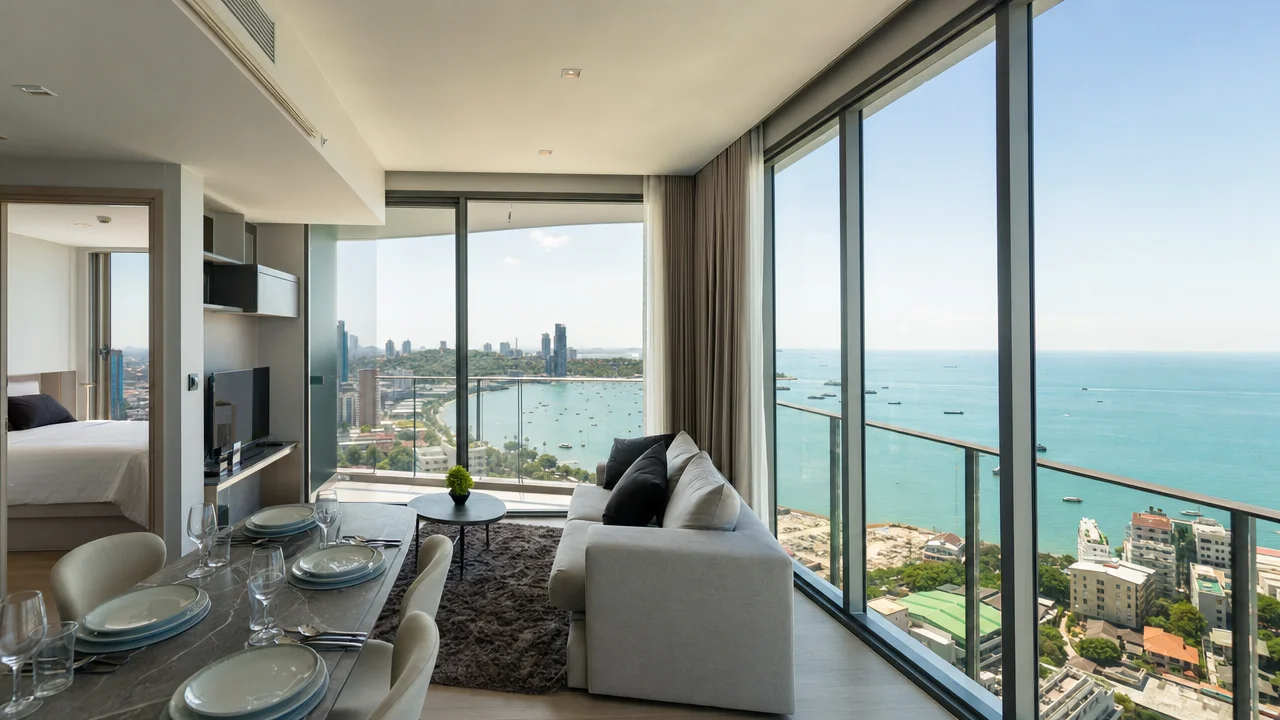
Oversupply creates a buyer's market. Discounts on ready condominiums in Pattaya reach 18-25% from initial pre-sales prices, especially in projects completed in 2023-2024. Developers offer 24-36 month installments without interest, free furniture packages, and payment of transfer fees.
For Russian-speaking buyers, the key point is verifying the foreign ownership quota before making a deposit. If the building has already exhausted the 49%, registration at the Land Office will be rejected, even if the purchase agreement is signed. Request written confirmation of available quota from the condominium juristic person, certified no earlier than 30 days before transfer.
The second point is liquidity on resale. Condominiums in buildings with high shares of vacant units (above 40%) are harder to sell because banks are reluctant to approve mortgages on such properties, considering them risky. Check occupancy levels through the management company or juristic person before purchase.
The third point is rental income. Guaranteed yields of 5% annually that some developers promise often work only the first 2-3 years and are financed from the developer's own funds, not actual rentals. After the guarantee period ends, actual occupancy may drop to 30-40%, yielding 1.5-2% before expenses.
Buying in conditions of surplus is advantageous if you plan personal use and are ready to hold the asset for 7-10 years, waiting for market recovery. Short-term speculation is now risky: prices in Pattaya have stagnated since 2024, and resale transaction volume dropped 14% over the past year according to the Real Estate Information Center of Thailand.
Forecast: When Will the Market Absorb the Surplus
CBRE Thailand analysts estimate the absorption period for current surplus at 4-6 years, provided new construction decreases by 30-40%. However, such reduction isn't yet observed. If developers continue launching projects at current rates, surplus could grow to 2 million units by end of 2027.
The key factor is tourism recovery and rental demand. The Ministry of Tourism and Sports of Thailand forecasts 38-40 million foreign tourists in 2026, 15% higher than 2025, but still below the 2019 peak of 39.8 million visits. Until tourism returns to pre-crisis levels, investment demand for condominiums will remain weak.
The second factor is visa policy changes. If the government simplifies obtaining Thailand Property Visa or introduces a new long-term visa category for remote workers with an investment threshold of 5-10 million baht, this could add 8-12 thousand transactions annually. But such decisions haven't been made yet.
The third factor is market consolidation. Major developers are buying problematic assets from small builders, repositioning them, and bringing them to market under their own brands at discounts. This accelerates absorption but simultaneously lowers the average price per square meter in the segment.
Conclusions: How to Act in Oversaturated Conditions
Buy ready properties, not pre-sales. Discounts on completed housing are currently higher, and you see actual construction quality, infrastructure, and building occupancy levels. Pre-sales make sense only in projects by top-5 developers with proven reputations.
Verify the developer's financial condition. Request audited statements for the past 2 years and check debt-to-assets ratio. If it exceeds 70%, there's risk the company won't complete the project on time or will go bankrupt.
Avoid buildings with occupancy below 50% in the first 18 months after completion. This indicates weak demand, and reselling an apartment there will be difficult. Clarify this information from the condominium juristic person before making a deposit.
Consider purchase as a long-term investment for 7+ years. Short-term speculation in conditions of oversupply and stagnant prices won't yield profit. If you need liquidity in 2-3 years, choose other instruments.
Work with a lawyer specializing in real estate to verify foreign ownership quota, title history, and bank transfer correctness. Errors at the transfer stage can lead to registration denial, and recovering money from the developer will be difficult.