

Jomtien Becomes Investment Hub with Legal Monthly Rentals
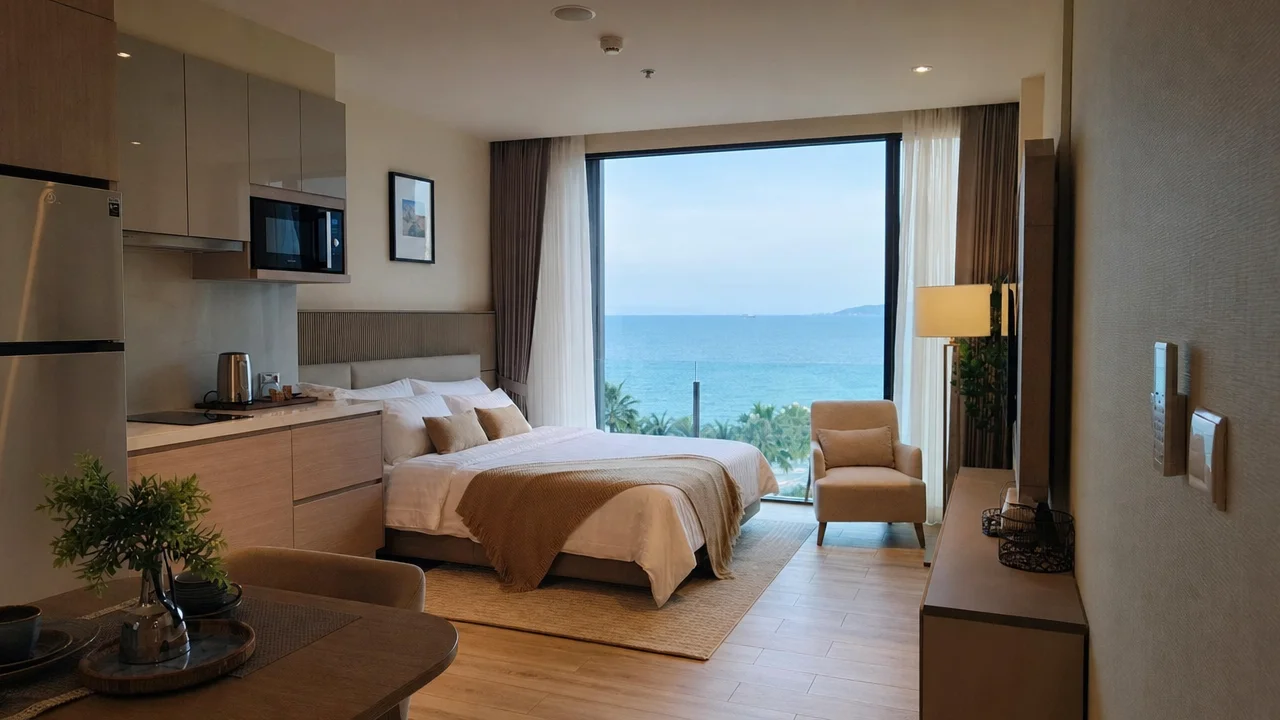
Condominiums in the Jomtien area attract foreign investors with stable returns of 6 to 10% per annum with a legal minimum rental period of one month. According to 2025 market data, foreign buyers purchased 14,899 condominiums in Thailand, of which approximately 33% were in Chonburi Province-the administrative unit that includes Pattaya and Jomtien. Total transaction volume involving foreigners reached 60.9 billion baht, with foreign buyers accounting for 14.7% of all condominium sales in the country. Jomtien stands out among Pattaya districts due to its combination of tourist demand, affordable entry prices, and legal clarity on short-term rentals.
Legal Framework for Monthly Rentals in Thailand
Thai legislation permits condominium rentals for periods of one month or longer without requiring a hotel license. Rentals for less than 30 days are legally classified as hotel operations and require corresponding permits, which private apartment owners cannot obtain. The one-month minimum allows owners to legally work with tourists, digital nomads, and seasonal residents, generating a stable flow of tenants.
Thailand's visa policy supports demand for monthly rentals. Tourist visas and visas on arrival are often granted for up to 60 days, encouraging travelers to plan stays of at least one month. The Jomtien area welcomes guests virtually year-round, reducing seasonality and ensuring more even occupancy rates compared to classic resort destinations.
Factors Behind 6-10% Returns in Jomtien
The 6-10% annual return range is formed by several factors characteristic of the Jomtien market in 2026.
Affordable Entry Price
Condominium prices in Jomtien remain lower than in central Pattaya or Wongamat. Studios can be purchased for 1.6-2.6 million baht (50,000-80,000 USD), one-bedroom apartments for 1.9-3.8 million baht (60,000-120,000 USD), and two-bedroom units for 3.8-6.4 million baht (120,000-200,000 USD). The low investment base while maintaining rental rates comparable to other Pattaya areas increases the percentage return.
Stable Tourist Demand
Jomtien is located along a 6-kilometer coastline, creating space for diverse projects and maintaining interest from tourists who prefer a quieter atmosphere compared to central Pattaya. The area attracts families, long-term travelers, and remote workers. Proximity to central Pattaya (approximately 5 kilometers) allows tenants easy access to entertainment and business facilities while maintaining a quiet residential environment.
Infrastructure Development
The government's Eastern Economic Corridor (EEC) project includes expansion of U-Tapao International Airport and construction of a high-speed railway linking Bangkok to U-Tapao. Upon project completion, travel time between the capital and Pattaya will be reduced to 45 minutes, strengthening demand for coastal housing, including Jomtien. U-Tapao Airport is approximately 30 kilometers from Jomtien, making the area convenient for international travelers.
Comparison of Rental Rates and Returns
Rental rates in Jomtien vary depending on property type, beach proximity, and project quality. Below are average monthly rates and estimated annual returns for different condominium categories.
| Unit Type | Purchase Price (baht) | Monthly Rent (baht) | Annual Income (baht) | Return (%) |
|---|---|---|---|---|
| Studio | 1,600,000 - 2,600,000 | 12,000 - 18,000 | 144,000 - 216,000 | 6.0 - 9.0 |
| 1 bedroom | 1,900,000 - 3,800,000 | 15,000 - 25,000 | 180,000 - 300,000 | 6.3 - 9.5 |
| 2 bedrooms | 3,800,000 - 6,400,000 | 25,000 - 40,000 | 300,000 - 480,000 | 6.5 - 7.9 |
Calculations are based on average annual occupancy of 80-90% and do not include management expenses, utilities, and taxes. Properties with sea views or in new projects can generate rental income 15-25% above average values, raising returns to the upper end of the range or higher.
Tax Support Measures for Buyers in 2026
Thailand's Cabinet of Ministers approved an extension of the registration fee reduction program for property purchases on June 30, 2026. Two draft notifications from the Ministry of Interior were approved and published in the Government Gazette on July 1, 2026. The measures are effective until June 30, 2027.
Under the program, the ownership transfer registration fee is reduced from 2% to 0.01% of the assessed value, and the mortgage registration fee from 1% to 0.01% of the loan amount. Benefits apply to residential buildings, commercial buildings, land with such structures, and condominiums, provided the purchase price, assessed value, and mortgage amount do not exceed 7 million baht. The mortgage fee reduction applies only when mortgage and ownership transfer are registered simultaneously.
Important limitation: benefits apply exclusively to Thai citizen buyers. Foreign buyers, including those purchasing condominiums under the 49% foreign quota, pay standard fees of 2% and 1%. The 2025 program, which ran from April 2025 to June 2026, was also aimed only at Thai citizens.
The Ministry of Finance estimates that the measure stimulates property transactions worth approximately 540.8 billion baht annually, increases investment by 305.8 billion baht, and contributes to GDP growth of 1.06% per year compared to a scenario without such measures.
Land and Buildings Tax 2026
From January 1, 2026 (Buddhist year 2569), Thailand applies the full land and buildings tax rate without the general discounts applied in previous years. The Land and Buildings Tax Act 2019 (Buddhist year 2562) replaced previous taxes on houses, land, and local development.
Tax is calculated based on the official assessed value of land and buildings, determined by the Land Department for the 2023-2026 assessment cycle. For residential property valued up to 50 million baht, the rate is 0.02%, from 50 to 75 million baht-0.03%, from 75 to 100 million baht-0.05%, over 100 million baht-0.1%.
Condominium owners in Jomtien whose property is used for residence or rental pay tax at residential rates. Vacant land or buildings not used for their intended purpose for three consecutive years are subject to an additional 0.3% charge on top of the base rate starting in 2026.
Tax is paid annually by the end of April. Late payment incurs penalties and possible fines. Owners must independently file a declaration with the local Land Department office or municipality.
Foreign Quota and Ownership Registration
Foreign nationals can own condominiums in Thailand with full ownership rights (freehold) provided they meet the foreign quota requirement. The Condominium Act 1979 (Buddhist year 2522) limits foreign ownership in each project to 49% of the building's total area. The remaining 51% must be owned by Thai citizens or legal entities controlled by Thai citizens.
Before purchasing, it is necessary to confirm that the selected unit falls within the foreign quota. If the quota is exhausted, a foreigner cannot register ownership in their name. The project management company or developer must provide information on quota availability.
When registering ownership transfer at the Land Department office (Land Office), the foreign buyer must present documentation confirming legal import of currency into Thailand in an amount equal to or exceeding the purchase price. Typically this is a bank certificate of international transfer (Foreign Exchange Transaction Form) noting the purpose of funds-condominium purchase. Without this document, registration in a foreigner's name is impossible.
What This Means for Buyers in Pattaya
Jomtien presents interest for investors focused on rental income and moderate capital growth. Returns of 6-10% per annum are achievable with active property management, correct pricing, and maintaining high occupancy. The legal minimum rental period of one month opens access to a broad audience: tourists, digital nomads, seasonal residents, and remote workers.
The registration fee reduction to 0.01% applies only to Thai citizens, so foreign buyers should budget for the full 2% ownership transfer fee and 1% mortgage fee. When purchasing a 3 million baht apartment, standard fees will be 60,000 baht for transfer and 30,000 baht for mortgage (if applicable), plus 0.5% stamp duty and legal service costs.
Infrastructure projects under the Eastern Economic Corridor will strengthen the region's connectivity with Bangkok and international markets. Expansion of U-Tapao Airport and launch of the high-speed railway are expected in coming years, which may increase demand for Jomtien property and support price growth in the medium term.
Buyers are advised to verify foreign quota availability before paying a deposit, request from the developer or seller a copy of the title deed (Chanote, Nor Sor 4), and confirm absence of encumbrances. Working with a lawyer or licensed agency reduces risks during due diligence and ownership registration.
Rental income in Jomtien depends on quality of management, marketing, and seasonal demand fluctuations. Properties located on the beachfront or in projects with developed infrastructure (pool, fitness, security) show higher occupancy and allow premium rates. Investors should account for annual management expenses (typically 30-50 baht per square meter per month), utilities, insurance, and land and buildings tax when calculating net returns.
Conclusion
Jomtien combines affordable entry prices, legal monthly rentals, and stable tourist demand, making the area attractive for investors focused on rental income. Returns of 6-10% per annum are achievable with active management and proper property positioning. Infrastructure development under the Eastern Economic Corridor and proximity to U-Tapao Airport support long-term property value growth potential. Foreign buyers should consider quota limitations, full registration fees, and currency import requirements when planning investments.