
Scale of the Problem: Numbers That Don't Add Up
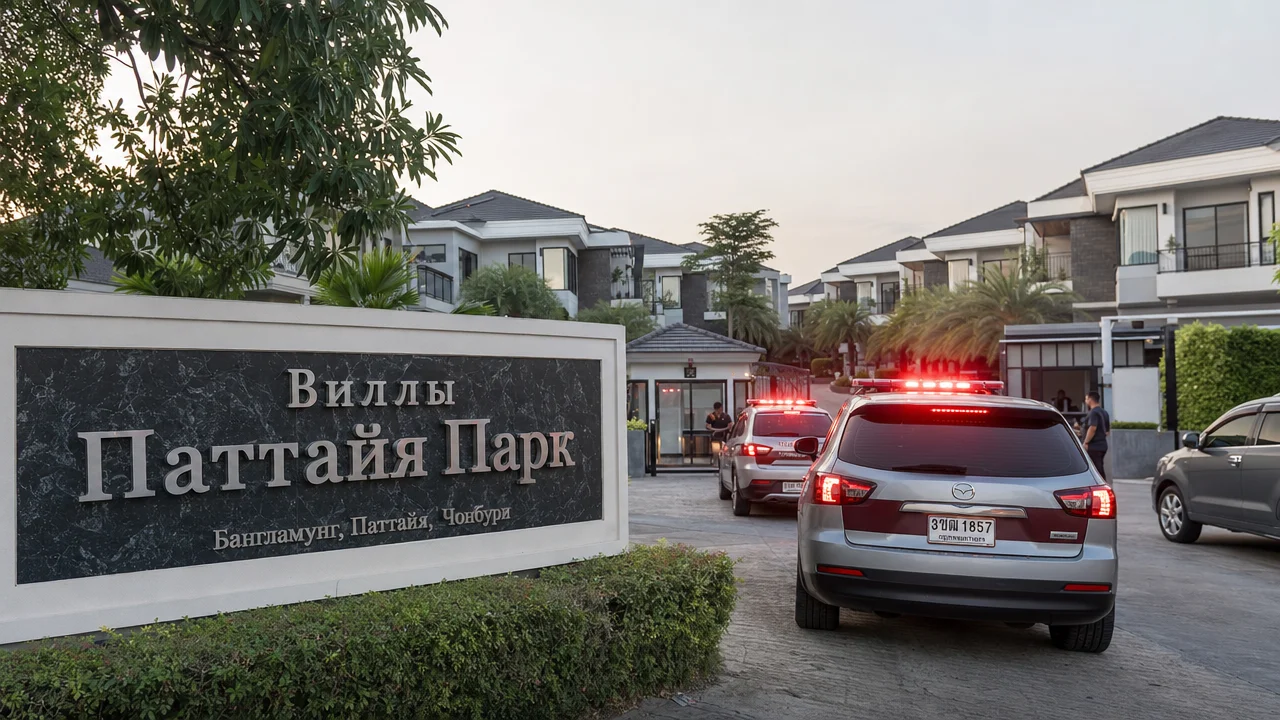
In Chonburi Province, authorities have identified 14,264 companies showing signs of nominee structures. Of these, only 33 were targeted in the first wave of investigations, resulting in the arrest of four Russians and asset seizures worth 235.2 million baht. The total value of properties in the case exceeds 5 billion baht - 775 private houses across six residential complexes, registered through 495 companies. The gap between suspicious structures and actual prosecutions reaches a ratio of 55:1. This enforcement gap creates a false sense of security among foreign investors who continue using grey schemes, believing the probability of inspection is negligible.
Why Most Nominee Companies Remain Untouched
Chonburi Governor Narit Niramaiwong announced the creation of special task forces to combat foreign nominee schemes. Inspections of thousands of companies revealed approximately 350 structures with clear signs of foreign land control - 549 plots with a total area of 1,100 rai worth over 1.3 billion baht. Sounds impressive, but the mathematics shows otherwise. Of 76,343 registered legal entities in the province, 28,463 have foreign shareholders. The Department of Business Development identified 14,264 companies as potentially nominee structures - that's one in five companies with foreign participation.
The reason for selectivity is simple: resources. A full investigation of one case requires deep analysis of bank statements, corporate documents, shareholder interrogations, and cross-checks with tax authorities. Authorities focus on the most obvious violations - companies without real operations owning expensive property, where Thai shareholders cannot explain the origin of funds. In Chonburi, they found two Thai accountants owning shares in 186 companies worth over 216 million baht - a classic sign of a mass nominee scheme.
Selection Criteria: Who Gets Targeted First
Analysis of Pattaya raids shows a clear pattern. Of the 33 companies targeted in the first wave of searches, 19 used Thai nominees (19 cases related to 16 land plots with a total area exceeding 5 rai), while 14 companies exceeded the permissible foreign ownership share in land ownership (14 cases, 16 plots exceeding 4 rai in area). The total value of seized assets in the first cases - 235.2 million baht.
Russian groups used Russia-registered websites for marketing and renting houses in local projects, promoting them as "Russian villages" with Russian names. This attracted authorities' attention. Deep investigations revealed six residential projects with approximately 775 private houses worth over 5 billion baht, registered through 495 companies. Of these, 435 had foreign shareholders, including 19 suspected nominee companies and 14 where foreigners owned more than 50% of shares while owning land.
Police obtained four arrest warrants for Russians and 41 search warrants. All four were detained. They seized company registration documents, accounting records, computers, mobile phones, and large volumes of electronic data for further investigation.
Risk Table: When a Nominee Structure Becomes a Target
| Risk Factor | Low Inspection Risk | High Inspection Risk |
|---|---|---|
| Property Type | Condominium under foreign quota (freehold) | Villa on land through Thai company |
| Asset Value | Up to 5 million baht | Over 15 million baht |
| Company Activity | Real business with turnover, staff, tax reporting | Zero activity, only asset is land |
| Thai Shareholders | Real partners with verified income | Accountants or developer's relatives owning shares in dozens of companies |
| Marketing | Standard rental through Thai platforms | Open advertising on foreign websites as "Russian village" |
| Banking Operations | Transparent transfers with documents | Thai shareholders cannot explain source of funds for share purchase |
New Registration Rules: Digital Barrier for Fictitious Structures
From 2026, company registration requires verification of Thai partners' bank statements for the last three months. Thai shareholders must provide concrete proof of funds origin, showing investments belong to them personally. This radically changes the situation. Previously, it was enough to find a Thai willing to sign founding documents for 10,000 baht. Now a nominee must demonstrate a legal capital source sufficient to purchase shares in a company owning land worth millions of baht.
The Land Department, together with the Department of Business Development, launched cross-checks. The algorithm is simple: if a Thai company owns land but conducts no real business, the only asset is a plot with a villa, and Thai shareholders cannot confirm the source of funds for share purchase, this is a red flag. The secondary property market sensitively reacts to these risks - selling an asset registered to a questionable company is virtually impossible.
What Happens to Seized Property
Previously, when a nominee scheme was detected, the state gave up to one year for voluntary asset sale. This left investors a chance to recover at least part of their invested capital. The Cabinet is developing strict amendments: if a nominee scheme is detected, full land confiscation by the state will be applied without right to receive any proceeds. Confiscated property is put up for open auction within 180 days.
Thais who agreed to become nominee shareholders for easy money face large fines and real prison terms. Fictitious businesses are liquidated. Land and buildings registered to such companies are subject to seizure. Punishment becomes severe enough to deter potential nominees, but so far insufficient to change the behavior of the mass of foreign investors.
Why the Enforcement Gap Is More Dangerous Than Total Control
Paradox of the situation: selective inspections create more risks than systematic control. If authorities checked all 14,264 suspicious companies, the market would quickly clean up - investors would switch to legal schemes, developers would stop offering grey options. Instead, the 55:1 ratio between identified and punished creates an illusion of impunity.
Investors reason as follows: if 33 out of 14,264 companies were checked, the probability of investigation is 0.23%. This is lower than the risk of a car accident. Many consciously take the risk, especially when buying inexpensive villas worth 5-8 million baht. The logic is understandable: if you saved 30% on taxes and legal services, even with a 0.23% probability of confiscation, the mathematical expectation is positive.
The problem is that selection criteria for inspections are opaque. Nobody knows why authorities checked these 33 companies and not the other 14,231. Open advertising on Russian websites? Competitor's complaint? Random sampling? This unpredictability turns investment into roulette. Honest investors who used nominee schemes unknowingly or on advice of unscrupulous agents bear the same risks as conscious violators.
Legal Alternatives: Three Paths Without Nominees
Three legal paths remain for foreigners to own property. First - condominium under foreign quota (freehold). If you bought an apartment within the 49% foreign quota, your ownership is 100% protected. You own the property directly, your name is entered in the chanote. No companies, no nominee partners. The law is entirely on the owner's side. Authorities emphasize there are no questions for such owners.
Second path - long-term land lease (leasehold) for up to 30 years with renewal option (30+30+30 years). The contract is registered at the Land Department. It's absolutely legal, the state recognizes tenant rights. The catch: renewal is not guaranteed by law but depends on the landlord's goodwill. Contract structure and developer reputation are critically important.
Third - corporate ownership with genuine law compliance. A Thai company can own land if it conducts real business, has staff, pays taxes, and Thai shareholders are genuine partners with verified income. Such a structure requires annual expenses for accounting, audit, tax reporting - from 50,000 to 150,000 baht per year. But risks are minimal.
Audit of Existing Structures: Three Action Scenarios
If you already own a villa through a Thai company, conduct an audit. First option - independent structure review with a Thai lawyer, not the one who created the company. The lawyer should check: does the company conduct real business, can Thai shareholders confirm the source of funds for share purchase, does the foreign participation share comply with law, is there tax reporting for recent years.
Second scenario - conversion to leasehold if the company raises doubts. Some developers offer to re-register the villa from corporate structure to long-term lease. You lose formal land ownership but gain transparency and protection from confiscation. This path suits if you plan to use the property personally, not as an investment for resale.
Third option - asset sale before the structure comes under inspection. The condominium market in Bangkok and Phuket hasn't dropped amid tightening. Demand for freehold units has grown - investors are restructuring toward legal formats. Selling a villa in a nominee company is harder: buyers demand a 15-20% discount for risks, or insist on re-registration before the deal.
What This Means for Pattaya Buyers
Pattaya and the Eastern Seaboard are at the epicenter of inspections. Chonburi is precisely the province where four Russians were detained and assets worth 235.2 million baht were seized. Bang Lamung, Naklua, Jomtien districts are filled with projects registered through nominee structures. Russian-speaking buyers constitute a significant share of the villa market, and many properties purchased in 2018-2023 were registered precisely through questionable companies.
If you're planning to buy a villa in Pattaya, refuse developers' offers to open a new Thai company with nominees. This is a trap. Use legal leasehold or buy townhouses and condominiums within legally permitted quotas. If a developer insists on corporate structure, demand full transparency: who are the Thai shareholders, what is their income, how will they confirm the origin of funds during inspection.
For those who already own a villa through a company: conduct an audit before the end of 2026. Land offices in Chonburi are operating in enhanced mode, cross-checks with the Department of Business Development continue. If your company conducts no real business, has no staff, and has filed zero reports for years, you're in the risk zone. The enforcement gap means not everyone will be checked, but anyone can end up on the 0.23% list - selection criteria are opaque.
The market is being cleaned of grey schemes. In the medium term, this increases trust in Thai real estate as an asset class. Investors who chose legal formats win: their assets grow in value, liquidity increases, risks are close to zero. Those who continue playing roulette with nominee companies risk losing all investments without right to compensation.