
How a 4.8 Billion Baht Failed Deal Exposed a Systemic Liquidity Crisis
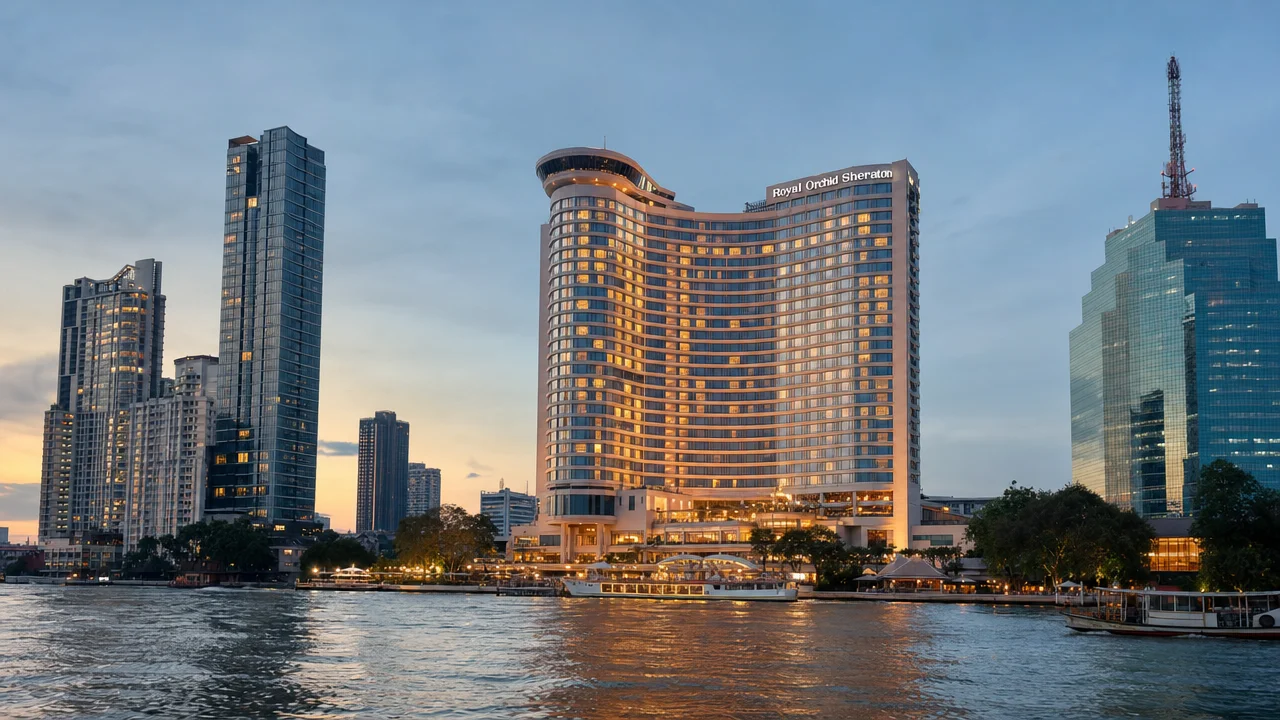
On July 14, 2026, Royal Orchid Hotels (ROH) failed to buy back its flagship Royal Orchid Sheraton hotel on the Chao Phraya riverside for 4,873 million baht, as required by the contract with investment trust GROREIT. Management company Wanin Asset Management and trustee MFC were forced to publicly announce the breach of contract terms. GROREIT's unit price plummeted 15% in a single trading session. But most importantly, the story revealed that the problem lies not with one company, but with how the entire REIT Buy-Back segment operates in Thailand after the COVID crisis.
Anatomy of the Deal: How GROREIT Was Created and Why It Was Supposed to Disappear After Five Years
In July 2021, during the pandemic, ROH sold the freehold ownership rights to the Royal Orchid Sheraton hotel to investment trust GROREIT for 4.5 billion baht. The price was below market valuation-the company itself indicated the asset value was over 5 billion baht. Simultaneously, ROH leased the hotel back and continued managing it under the Marriott Sheraton brand.
The deal structure provided for a mandatory buyback after five years-July 14, 2026-at a fixed price of 4,873 million baht excluding VAT. The trust was to use the received funds to repay a 1,350 million baht loan from the Government Savings Bank, pay returns to investors, and self-liquidate according to Securities and Exchange Commission regulations.
This scheme is called REIT Buy-Back. It was authorized in February 2021 specifically for hoteliers and developers urgently requiring liquidity. The seller receives money now at a reduced price but retains the right to buy back the asset later-also below market value. Investors lock in returns for five years and exit with profit. Everyone is satisfied, as long as the seller finds the money for the buyback.
Why ROH Couldn't Close the Deal: Versions from Both Sides
Early morning on July 15, ROH published an explanation on the Stock Exchange of Thailand. The company insisted it "has the intention and ability" to buy back the hotel, but the deal collapsed because MFC, as trustee, changed the fund transfer procedure at the last moment. ROH claims the new requirements contradicted the contract, and company representatives even appeared at the Land Office on July 14 to document MFC's breach.
Management company Wanin and trustee MFC hold a different position. Thanahoti Rungsittiwat, MFC managing director, explained that the problem was not financing per se, but the mechanism and conditions for transferring funds between lender, buyer, and seller. The deal could not close on the scheduled date due to disagreement on these conditions.
A source from the real estate sector familiar with the details told Thansettakij publication that the ROH situation reflects a broader liquidity problem across the entire industry, not an isolated corporate dispute. Many developers and management companies now operate on a "Liquidity First" strategy-preserving cash is more important than business expansion. Borrowing costs remain high, and selling hotels, office buildings, or land to raise funds has become more difficult than in previous cycles.
What's Happening with the Asset Now: 30-Day Ultimatum and Auction Preparation
After the deal collapsed, Wanin and MFC took the following steps:
- Sent a letter to ROH demanding fulfillment of purchase and lease agreement obligations within 30 days (deadline expires mid-August 2026).
- Notified Starwood Hotels & Resorts Worldwide that ROH's lease term has expired, and MFC is temporarily assuming hotel management client functions through the Marriott network to keep the business operating.
- Contacted the Government Savings Bank requesting loan repayment extension, restructuring, and agreement to terms modifications, since the trust did not receive the expected funds from ROH.
If ROH fails to meet requirements within 30 days, the trust plans to convene a unitholders meeting to approve selling the hotel at auction. Proceeds will go to investor payouts.
The hotel was purchased by the trust in 2021 for approximately 4.5 billion baht. The asset's appraised value exceeds the trust's obligations, but a time-pressured sale may reduce the final price. Debt to the Government Savings Bank totals 1,350 million baht at MLR-1.6% rate (about 4%), generating interest expenses of 60-70 million baht per year.
False Recovery: Why Rising Numbers in H1 2026 Don't Reflect Reality
The GROREIT conflict occurred against apparently positive real estate market statistics. In Q2 2026, new project launches reached 80 billion baht-growth both quarter-over-quarter and year-over-year. Presales also increased, and the number of ownership transfers in H1 grew compared to last year.
But removing one ultra-luxury project worth about 37 billion baht from calculations, total Q2 launches drop to 50 billion baht-one of the lowest levels in recent years.
Presales growth is partially explained by the abnormally low 2025 base, when an earthquake forced many developers to postpone condominium launches. Current growth appears stronger than actual demand recovery.
Increased H1 2026 transfers also relate to low comparison base. In 2025, many buyers postponed ownership registration awaiting Bank of Thailand easing of loan-to-value (LTV) measures. This made Q1 2025 figures abnormally low. When compared to 2026, growth seems significant, though actual transaction volume hasn't increased.
A sector source predicts that in H2 2026, when the comparison base becomes higher, sales, transfer, and launch growth rates will slow, and the market picture will become clearer.
Why GRAND and Other Developers Can't Sell Assets
The liquidity problem isn't limited to ROH. Grand Asset Hotels & Property (GRAND) tried selling several assets-hotels, office buildings, and land plots along the Chao Phraya River-to raise funds. But current market conditions make quickly closing deals difficult. Buyers are scarce, the process drags on, disrupting cash flow plans.
Many developers and management companies now follow a "Liquidity First" strategy. They focus on preserving cash rather than business expansion. Financing costs remain high, and selling major assets-hotels, offices, land-has become harder than in previous market cycles.
Risks for GROREIT Investors: Time, Price, and Uncertainty
GROREIT unitholders face three risk categories:
Time Risk
The original plan envisioned returning funds and liquidating the trust after five years. Now the process may stretch at least 30 days, and if it reaches auction, unitholder meetings, or litigation-several months or even years. During this time, the trust continues bearing loan servicing costs to the Government Savings Bank.
Market Risk
For those forced to sell units on the secondary market, the 14%+ single-day price drop became a real loss. Though the underlying asset value hasn't changed, the market prices in uncertainty. Investors who sold before resolution locked in losses.
Final Value Risk
The hotel's appraised value exceeds trust obligations, but appraisal and actual sale price may not match. Especially if the sale occurs within compressed timeframes under pressure. Interest expenses, operational costs, and possible legal costs will be deducted from proceeds, reducing net returns for unitholders.
Implications for the REIT Market: Isolated Case or Systemic Problem
Chawinda Hanratanakun, president of the Association of Asset Management Companies (AIMC), stated that impact on the overall REIT market may be limited, but problems concentrate in the hotel trust segment, which suffered severely during COVID.
However, the structural question remains open: many Buy-Back trust funds have terms around five years. This time may be insufficient for full economic and real estate market recovery. Finding a large sum for asset buyback becomes challenging. If the original owner's credit rating remains acceptable, the contract term can be extended (rollover), but this requires all parties' consent and additional costs.
If the owner faces liquidity problems and can neither buy back the asset nor negotiate an extension, the trust must sell the asset on the open market. Under weak demand and high rates, this may lead to sales below appraised value and investor losses.
What This Means for Property Buyers in Pattaya
The ROH and GROREIT conflict doesn't directly concern Pattaya's residential real estate market, but signals important trends affecting all market participants.
Developers in Pattaya and the Eastern Seaboard also operate under high loan rates and limited liquidity. If major players like ROH or GRAND cannot quickly sell assets or close deals, this indicates weak demand from institutional investors and funds. For home buyers, this means developers will be more flexible negotiating price, installments, and bonuses-they need cash.
H1 2026 sales and transfer growth statistics look positive but are based on an abnormally low 2025 base. Real demand hasn't grown as strongly as figures show. In H2, when the comparison base becomes higher, growth rates will slow. Buyers shouldn't rush fearing they'll miss a "boom"-it remains a buyer's market.
Investors considering REITs or other collective real estate investment instruments should carefully study deal structure, especially regarding Buy-Back trusts with short terms. Promised returns may not materialize if the original owner cannot buy back the asset. Direct purchase of a Pattaya apartment or villa with freehold ownership or long-term leasehold provides more control and transparency than participation in complex financial structures with multiple intermediaries.
Finally, the situation underscores the importance of checking developer financial stability before buying under-construction property. If a company has liquidity problems, project completion deadlines may shift, and in worst case, the project may be frozen. Due diligence should include analysis of developer financial statements, debt load, and completed project history.
Conclusions: Lessons for Investors and Buyers
The ROH and GROREIT conflict exposed systemic problems in Thailand's investment trust and real estate market overall. High rates, weak institutional demand, and liquidity preservation strategy instead of growth create an environment where even major deals collapse.
Buyers and investors in Pattaya and other Thai regions should view the current situation as negotiating opportunity, but with heightened attention to counterparty financial health. Beautiful growth figures in reports may hide weak real demand. Direct property ownership remains a more reliable and understandable instrument than participation in complex financial structures with unpredictable outcomes.