Russians Take Second Place in Condominium Purchases in Thailand
Russian buyers purchased 962 residential units in Thailand during the first nine months of 2026, taking second place after Chinese investors. Total foreign condominium transactions reached 10,703 units worth 52.3 billion baht, representing a 38% increase compared to the same period in the previous year. The data was published by the Real Estate Information Center, a government center under the management of the Government Housing Bank.
Chinese buyers maintained their lead with 4,991 purchased apartments, accounting for 46.6% of total foreign transactions. Their investments were valued at 24.7 billion baht. Russian citizens took second place, showing notable growth in activity compared to previous periods.
Geography of Demand: Chonburi Leads, Bangkok Follows
Chonburi Province, including Pattaya and the eastern coast, accumulated 41.9% of all foreign transactions during the reporting period. Bangkok, the capital region and main air gateway of the country, took second place with a 37.5% share. The remaining 20.6% was distributed among other provinces, including Phuket, Samui, and northern regions.
Vichai Viratkapan, acting director of the Real Estate Information Center, commented on the statistics: "Thai condominiums maintain demand among foreign buyers. Purchases are made both for investment and as a second home in Thailand."
The distribution by province reflects established preferences of foreigners. Chonburi attracts with its proximity to the sea, developed infrastructure, and Eastern Economic Corridor industrial zones. Bangkok offers liquidity, a developed rental market, and transport accessibility.
Market Structure: Who Buys and How Much They Spend
The average cost of an apartment purchased by foreigners was 4.88 million baht. Chinese buyers showed an average transaction price of 4.95 million baht, which is close to the overall market level. Russian investors traditionally prefer the segment from 3 to 7 million baht, focusing on ready-made properties with furniture and sea views.
The 38% year-on-year growth in foreign transactions is linked to several factors. Recovery of tourist flow after pandemic restrictions increased interest in resort real estate. The Thai government extended fee benefits for Thai citizens until June 30, 2027, reducing the transfer fee and mortgage registration fee to 0.01% for properties valued up to 7 million baht. The measure does not apply to foreigners but indirectly supports the market by improving overall liquidity.
Legal Framework for Foreign Buyers in 2026
Thai legislation allows foreign citizens to own condominiums with full ownership rights (freehold) subject to two conditions. First: the foreign ownership share in the building cannot exceed 49% of the total area of all units. Second: the purchase amount must be transferred to Thailand from abroad in foreign currency with registration of a Foreign Exchange Transaction (FET) form at a Thai bank.
Buyers who do not fall within the 49% foreign quota can purchase an apartment in the Thai quota through a long-term lease (leasehold) structure for a period of 30 years with the possibility of extension, or through registration of a Thai company. The second option requires legal support and compliance with corporate regulations.
In practice, the foreign quota in popular projects in Pattaya and Bangkok fills up quickly. Buyers are advised to check the availability of the quota before making a deposit. The condominium juristic person is obligated to provide written confirmation of the remaining foreign quota as of the transaction date.
Factors Driving Russian Demand Growth
Russian buyers have increased their presence in the Thai market for several reasons. Direct flights from Moscow to Bangkok and Phuket have recovered to pre-pandemic levels, reducing travel time and flight costs. The ruble has stabilized relative to the baht after the volatility of 2022-2023, improving purchasing power.
Russian citizens prefer ready-made properties on the secondary market, avoiding the risks of under-construction projects. A typical request includes a studio or one-bedroom apartment of 28-45 m² within 300-800 meters from the sea, with furniture, appliances, and a management company providing rental services.
Pattaya's secondary market in July 2026 showed moderate activity. According to an analytical report by AMS, resale prices are declining on average by 6% from asking prices. Buyers gained more opportunities for negotiation, especially in projects with a high share of vacant units.
Comparative Table: Top 5 Countries by Real Estate Purchases
| Country | Number of Units | Market Share | Average Transaction Value (million baht) |
|---|---|---|---|
| China | 4,991 | 46.6% | 4.95 |
| Russia | 962 | 9.0% | ~4.5-5.2 (estimate) |
| Other countries | 4,750 | 44.4% | ~4.8 |
Impact of Tourist Flow on Investment Demand
Tourist flow directly affects rental income yield. During the first half of 2026, Thailand received more than 18 million foreign tourists, approaching the government's target of 35-40 million for the full year. Western tourists showed growth due to lower aviation fuel prices, which made tickets cheaper.
Russian tourists returned to Pattaya, Phuket, and Samui after a two-year break. Long-term apartment rentals for 3-6 months became a popular alternative to hotel accommodation. Condominium owners in Pattaya report occupancy rates of 60-75% in low season and 85-95% in high season (November-March) with proper management.
Short-term rental yields in Pattaya amount to 5-8% annually before taxes and management expenses. Long-term rentals provide 4-6% annually but reduce operational risks and property wear.
Financial Conditions and Transaction Taxation
Foreign buyers pay standard fees when registering a transaction at the Land Office. The transfer fee is 2% of the assessed property value. Stamp duty of 0.5% applies if the seller owned the property for less than 5 years. Capital gains tax is calculated on a progressive scale depending on the ownership period.
Buyer and seller typically split the transfer fee equally unless the contract provides otherwise. Legal services for due diligence cost 15,000-35,000 baht depending on the complexity of the property. A notarized power of attorney for a representative at registration costs 3,000-8,000 baht.
Annual owner expenses include utility payments to the management company (30-80 baht per m² per month), property tax (0.02-0.1% of assessed value for residential properties), and contributions to the building's sinking fund if not paid at purchase.
Risks and Checks Before Purchase
Buyers need to verify several critical aspects before signing a contract. First: availability of free foreign quota in the building. The condominium juristic person must provide a current certificate with a stamp. Second: the financial condition of the management company and reserve fund. Buildings with depleted reserve funds postpone major repairs, which reduces apartment values.
Third: verification of the seller's title documents. The condominium title must be registered in the seller's name without encumbrances. Fourth: physical inspection of the apartment and common areas. Hidden defects, leaks, wall cracks may require expensive repairs.
An independent Thai real estate lawyer checks the purchase and sale agreement before signing. Service costs are 20,000-40,000 baht. Saving on legal support leads to risks: incorrect FET form registration, missing hidden encumbrances, errors in tax calculations.
Transaction Process: From Reservation to Registration
A typical secondary market transaction takes 4-8 weeks. The buyer makes a reservation deposit of 50,000-100,000 baht after viewing the apartment. The parties sign a reservation agreement with a condition for deposit return if the inspection reveals critical defects.
The buyer transfers the main amount from abroad in foreign currency. A Thai bank converts the funds to baht and issues a FET form for amounts from 50,000 USD and above. Conversion must occur in Thailand, otherwise the Land Office will refuse to register foreign ownership.
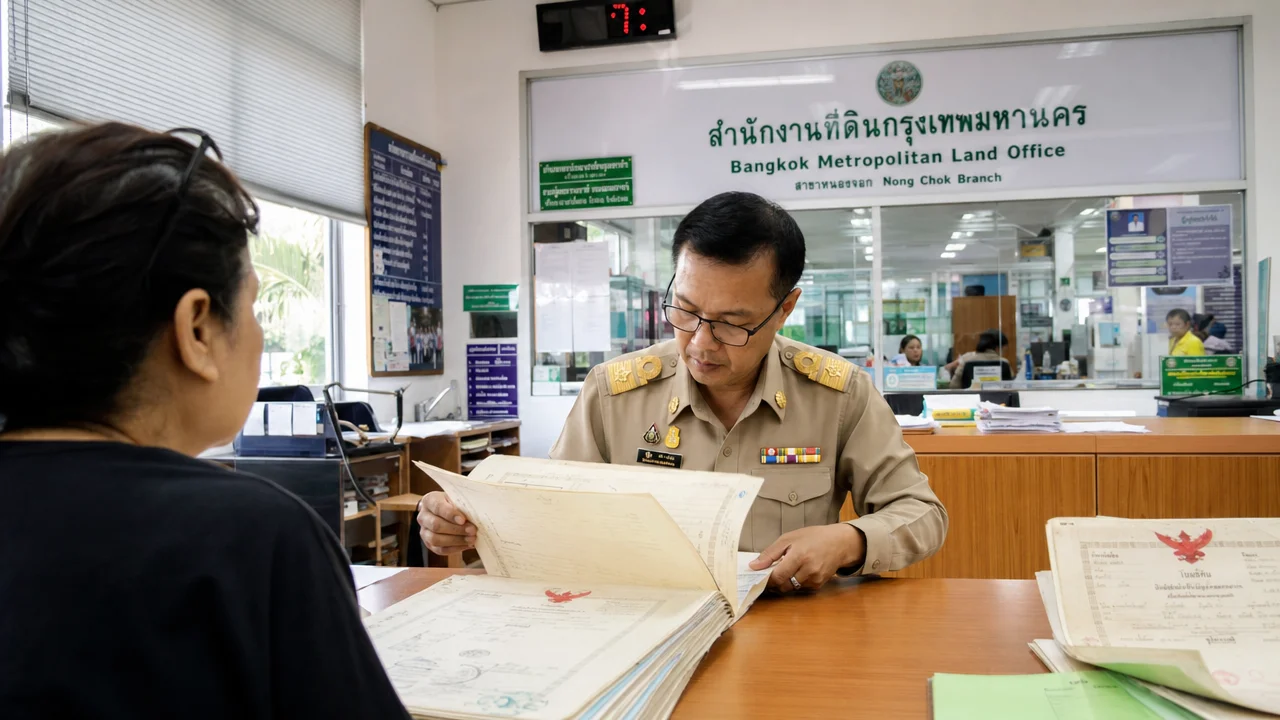
The parties meet at the Land Office to register the transfer of ownership. The procedure takes 2-4 hours. The buyer can send a representative with a notarized power of attorney. After registration, a new title deed is issued in the buyer's name.
What This Means for Buyers in Pattaya
The growth of Russian presence in the Thai real estate market creates competition for quality properties in Pattaya. The foreign quota in popular projects near Jomtien and Pratumnak beaches fills up faster, reducing choices for new buyers. Resale prices are still declining, providing an opportunity to negotiate a 5-8% discount from the asking price.
Extension of government fee benefits for Thai citizens until June 2027 indirectly supports the market by increasing overall liquidity. Although foreigners do not receive direct benefits from reduced fees, improved market sentiment facilitates future apartment resales.
Buyers from Russia are advised to act in stages. First, check the availability of the foreign quota in the selected project. Then organize the transfer of funds through a bank with experience working with foreigners (Bangkok Bank, Kasikornbank, Siam Commercial Bank). Hire an independent lawyer to check documents before making a large deposit.
Current market conditions are favorable for buyers ready to conduct a thorough property inspection. Supply exceeds demand in the secondary housing segment, providing space for negotiations. Investors focused on rental income should realistically assess occupancy and operational expenses, avoiding inflated yield forecasts.
Forecast for the End of 2026
Analysts expect the positive dynamics of foreign purchases to continue until the end of 2026. The tourist season from November to March traditionally increases interest in real estate. Russian buyers may strengthen their second-place position if air connections remain stable and the ruble does not show sharp volatility.
Chinese investors will maintain their lead due to the size of the middle class and Thailand's geographical proximity. Government incentives for the domestic market will indirectly support the foreign segment through overall improvement in liquidity and sentiment.
Buyers are advised to monitor discussions of a bill to increase the foreign quota from 49% to 75% and extend the land lease term to 99 years. As of mid-2026, the proposal remains at the discussion stage and has not become law. Structuring a purchase based on the adoption of changes is premature, but monitoring developments is useful.