Why Thai Youth Choose Rent Instead of Mortgages
The Thai property market is undergoing a quiet revolution. Local buyers are massively abandoning property purchases, preferring long-term rentals. The reason is simple: banks have tightened loan conditions, and condominium prices have risen to levels unaffordable for the middle class. According to Bank of Thailand data for the first quarter of 2024, mortgage approvals fell by 18% compared to the same period in 2023 - the worst indicator in eight years.
This trend is especially noticeable in Central Pattaya, where the cost per square meter in new projects has reached 120,000-150,000 baht. For a Thai buyer with a salary of 25,000-35,000 baht per month, this means that a 28 m² studio for 3.5 million baht requires a down payment of 1.05 million baht and a monthly payment of about 18,000 baht for 30 years. Banks require that the payment does not exceed 40% of income, which automatically excludes most applicants.
How Tightening Credit Conditions Created "Generation Rent"
The Bank of Thailand introduced new lending rules in 2023 to prevent the growth of household debt. Now banks are required to check the Debt Service Ratio more strictly. If previously it was possible to get a mortgage with a DSR of 50%, now most banks do not approve applications with an indicator above 35%.
The situation was aggravated by inflation. The cost of living in Thailand increased by 4.2% in 2023, while salaries increased by only 2.1%. Young Thais aged 25-35 - the main group of first-time buyers - found themselves caught between rising housing prices and stagnant incomes.
The result is predictable. According to a CBRE Thailand report for the second quarter of 2024, the share of Thai buyers in new condominium projects in Pattaya decreased from 42% in 2022 to 28% in 2024. Developers who focused on local demand are forced to revise strategies and switch to foreign investors.
Growth in Long-Term Rental Demand: Facts and Figures
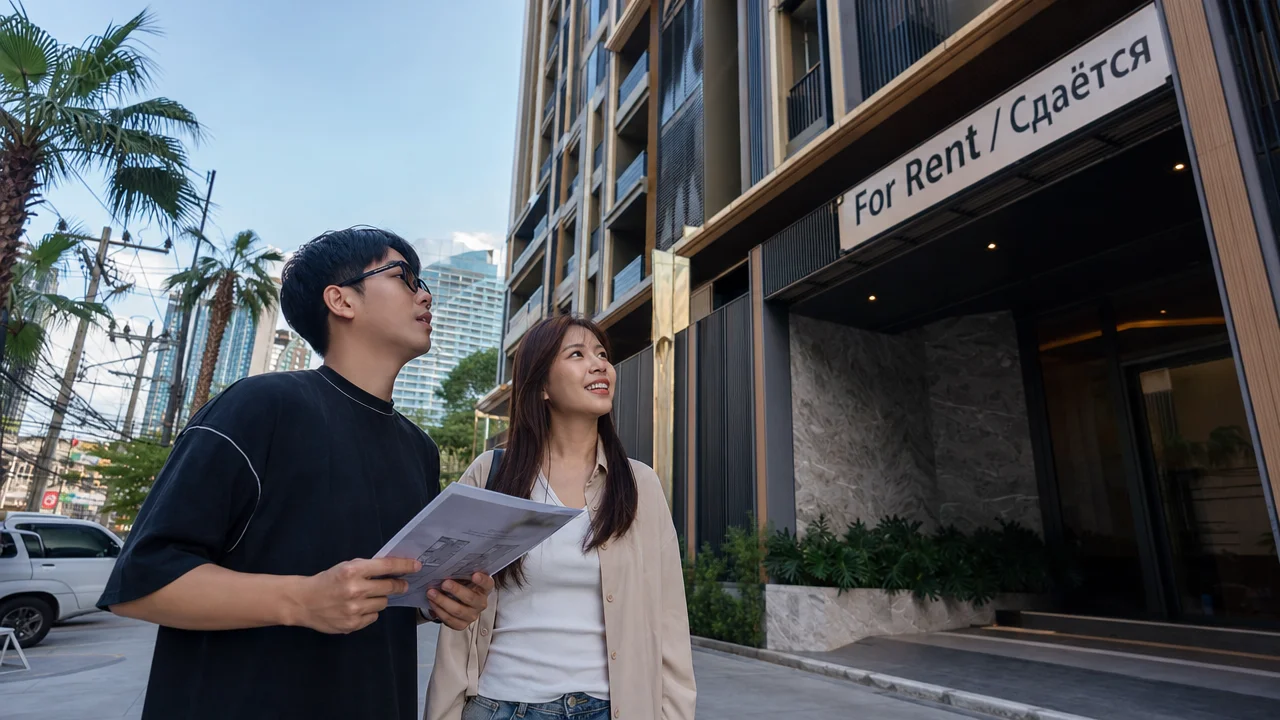
Refusal to buy does not mean that Thais have stopped needing housing. They simply rent it. Demand for long-term rentals in Central Pattaya has grown by 23% over the past two years. The average rental cost for a studio in the Beach Road area is 8,000-12,000 baht per month, for a one-bedroom apartment - 12,000-18,000 baht.
For a Thai tenant, this is more profitable than a mortgage. With a rent of 10,000 baht per month, they pay 120,000 baht per year and can move at any time. When buying the same studio for 3.5 million baht, they will pay 1.05 million baht upfront, then 18,000 baht monthly - and will be tied to this apartment for decades.
Developers have responded to the trend. Sansiri, one of Thailand's largest developers, launched a "Rent-to-Own" program in its Pattaya projects. The tenant rents an apartment for three years and can then purchase it with a discount equal to the amount of rent paid. The program is aimed at young Thais who cannot collect the down payment immediately but are willing to accumulate it through rent.
How Demand Structure is Changing in Central Pattaya
Central Pattaya has historically attracted foreign buyers: Russians, Chinese, Europeans. Thai buyers preferred Naklua or South Pattaya areas, where prices are lower and infrastructure is oriented toward locals. But now even in these areas, Thais are moving to rentals.
Condominium owners in Central Pattaya have faced an interesting situation. Previously, they rented apartments short-term to tourists through Airbnb or Booking for 1,500-2,500 baht per night. But after the pandemic, tourist flow has not fully recovered, and many have switched to long-term rentals to Thais.
Example: an investor from Moscow bought a 30 m² studio in the Arcadia Beach Continental project in 2020 for 2.4 million baht. Until 2022, he rented it to tourists and received 8,000-10,000 baht per month unstably. In 2023, he found a Thai couple working in the tourism industry who rented the apartment for 9,000 baht per month for two years. Income became predictable, and furniture wear decreased.
Why Thai Tenants Are More Profitable Than Tourists for Investors
Long-term rental to Thais has several advantages over short-term rental to tourists. First, stability. A tourist rents an apartment for a week, a Thai tenant - for one or two years. This means fixed income without vacancies.
Second, lower management costs. With short-term rentals, you need to constantly clean the apartment, change linens, meet guests, solve problems. Management companies charge 20-30% of income for this. With long-term rentals, the tenant takes care of the apartment themselves, pays utilities, and does not require daily service.
Third, wear and tear. Tourists treat rented housing carelessly: stains on sofas, broken dishes, damaged appliances. Thai tenants live in the apartment as if it were their own, so furniture and appliances last longer.
According to a Property Perfect survey conducted in 2024 among 340 condominium owners in Pattaya, 62% noted that switching to long-term rentals reduced their operating costs by 25-40%, although nominal income fell by 10-15%.
Which Pattaya Areas Benefit from Rental Growth
Not all areas of Pattaya are equally attractive to Thai tenants. Central Pattaya with its nightlife and tourist infrastructure remains a secondary choice. Thais prefer areas with good schools, hospitals, markets, and shopping centers.
The most in-demand are Pratumnak Hill, Jomtien, and South Pattaya. Here, studio rental costs 7,000-11,000 baht, one-bedroom apartment - 10,000-15,000 baht. Nearby are schools, Bangkok Hospital Pattaya, shopping centers Central Festival and Terminal 21.
In the Naklua area, rental demand is also growing, especially in projects along Naklua Road. Thai families value this area for its proximity to local markets, temples, and less touristy atmosphere. One-bedroom apartment rental here is 9,000-14,000 baht.
Central Pattaya attracts young Thais working in hotels, restaurants, tourist agencies. They are willing to pay 10,000-13,000 baht for a studio to live close to work and not spend time commuting.
How Developers Are Adapting to "Generation Rent"
Developers have noticed the trend and started changing layouts and pricing. Projects oriented toward tenants have appeared: smaller area but better location and infrastructure.
Example: the Dusit Grand Condo View project in Jomtien offers studios from 24 m² at a price from 1.8 million baht. The developer positions the project as investment-oriented, with a guaranteed return of 6% per year for three years. The target audience is investors who will rent apartments to Thai tenants.
Some developers are launching their own rental management programs. LPN Development offers a "Guaranteed Rent" service: the company itself rents an apartment from an investor for five years at a fixed rate of 5% per annum, and then rents it to Thai tenants. The investor receives stable income without hassle.
Risks and Pitfalls of Long-Term Rental in Pattaya
Long-term rental to Thais is not without risks. The first is payment delays. Thai tenants may lose their jobs or face financial difficulties, especially during the low tourist season.
The second risk is early termination of the contract. Thai law protects tenants, and evicting a non-payer is more difficult than it seems. The process can take three to six months, during which the owner receives no income.
The third risk is damage. Although Thai tenants are usually more careful than tourists, there are exceptions. A deposit of one to two months' rent does not always cover the damage.
To minimize risks, owners should work through agencies that check tenants, collect references from previous residences, and monitor payment timeliness. The agency commission - one month's rent - pays for itself with peace of mind and reliability.
What This Means for Buyers in Pattaya
For a Russian-speaking investor buying a condominium in Pattaya, the growing demand for long-term rentals from Thais opens new opportunities. Previously, profitability depended on tourist flow, which is unstable and seasonal. Now you can focus on local tenants and receive predictable income year-round.
When choosing an apartment for investment, it is worth considering the preferences of Thai tenants. They value proximity to work, schools, hospitals, and local markets. Projects in Jomtien, Pratumnak Hill, and South Pattaya will rent more easily than in the tourist center on Walking Street.
The optimal format is a studio or one-bedroom apartment of 28-35 m² costing 2.5-3.5 million baht. Such housing is easy to rent to Thais for 9,000-13,000 baht per month, which gives an annual return of 4-5% excluding capital appreciation.
It is important to work with a management company or agency that specializes in long-term rentals to local residents. They know how to draw up a contract according to Thai law, how to check a tenant, and how to act in case of problems.
Another point: the decline in the share of Thai buyers in new projects means that developers are increasingly dependent on foreign investors. This may lead to more flexible payment terms, discounts, and bonuses for buyers from Russia, China, and Europe. If previously developers could afford a rigid pricing policy, counting on local demand, now they are interested in attracting foreigners.
Finally, the rental trend among Thais reduces competition in the secondary market. Local residents who previously saved for a purchase now remain tenants. This means that the supply of housing for investors is growing slower than it could, and prices in the secondary market remain stable.
Forecast: What Will Happen to the Rental Market in Pattaya in 2025-2026
The tendency of Thais to refuse to buy housing will continue at least until the end of 2025. The Bank of Thailand does not plan to ease lending conditions, and inflation continues to pressure middle-class incomes. Demand for long-term rentals will grow, especially in areas with developed infrastructure.
For investors, this means a stable tenant market. Vacancy in projects oriented toward long-term rentals will remain low - 5-8% versus 15-20% in projects for short-term tourist rentals.
Developers will continue to adapt: more compact studios, more guaranteed return programs, more partnerships with management companies. Projects that ignore the rental trend and rely only on tourists will experience difficulties with sales and occupancy.
For a buyer from Russia planning to invest in Pattaya real estate, now is a good time. Prices in the primary market have stabilized after the pandemic, competition from Thai buyers has decreased, and rental demand is growing. A properly chosen apartment in the right area will bring stable income and appreciate in value as the tourist market recovers and Thailand's economy grows.