


U-Tapao - Bangkok High-Speed Railway: How the EEC Infrastructure Project is Changing Pattaya's Real Estate Market in 2026
The construction of the high-speed railway between Bangkok and U-Tapao Airport remains one of Thailand's largest infrastructure projects. Upon completion, the line will reduce travel time between the capital and Pattaya to 45 minutes. This change is already influencing demand from foreign property buyers in Chonburi Province. According to the Real Estate Information Center (REIC), in 2025 foreigners purchased approximately 14,900 condominiums throughout Thailand, with about 33% in Chonburi Province, where Pattaya is located. The total transaction volume involving foreign buyers reached 60.9 billion baht.
What is the EEC Project and Why is it Important for Pattaya
The Eastern Economic Corridor (EEC) is a government development program for three provinces: Rayong, Chonburi, and Chachoengsao. The Thai government launched the EEC to transform the region into a high-tech industrial and logistics hub for Southeast Asia. The project includes construction of new highways, expansion of U-Tapao Airport, modernization of Laem Chabang and Map Ta Phut ports, and creation of a high-speed railway line.
Pattaya is located in the center of this development zone. The distance from the city to Bangkok is approximately 120 kilometers, to Rayong - 60 kilometers. Currently, the drive takes 1 to 1.5 hours depending on traffic. The high-speed railway will reduce this time to 45 minutes, effectively making Pattaya a Bangkok suburb for daily commutes.
U-Tapao High-Speed Railway: Current Project Status
The high-speed line will connect three airports: Suvarnabhumi (Bangkok), Don Mueang (Bangkok), and U-Tapao (Rayong). The total route length is approximately 220 kilometers. The design speed will reach up to 250 kilometers per hour. The line will pass through several stations, including a stop in the Pattaya area.
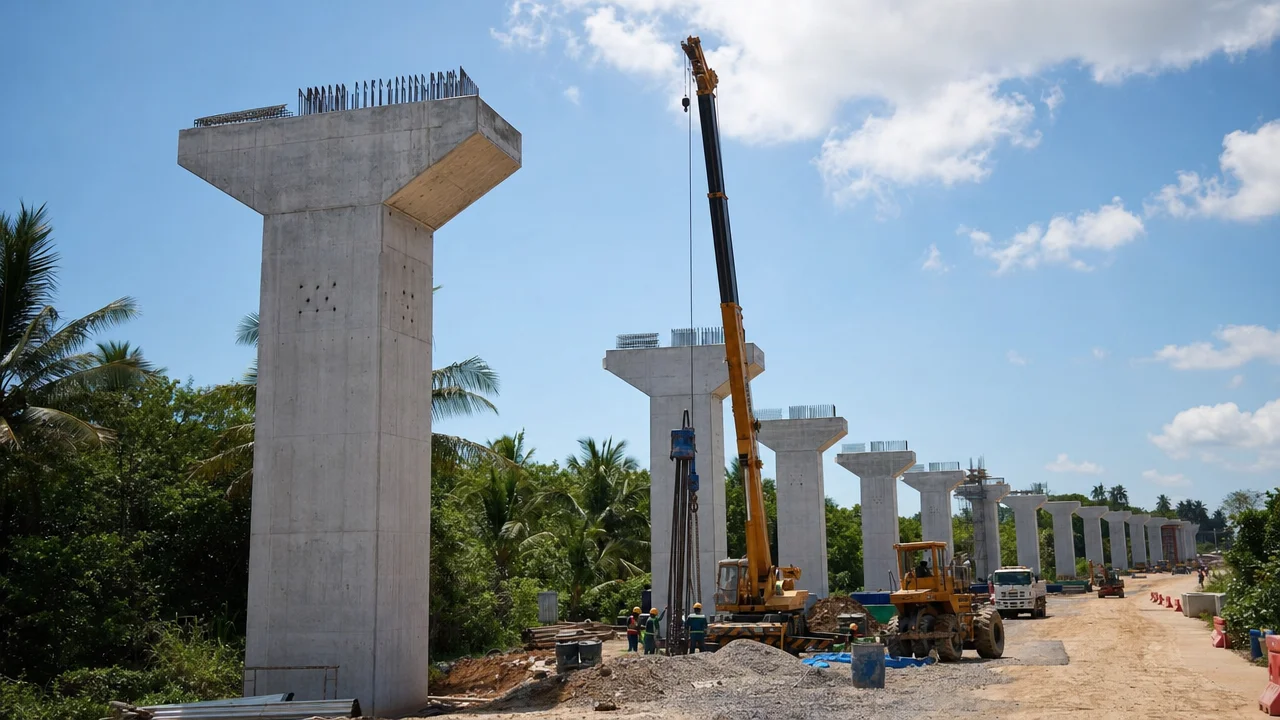
Construction began in 2020. As of mid-2026, work continues, although launch dates have been postponed several times. The government forecasts construction completion by 2028-2029. The project implementation contract was awarded to a consortium led by Charoen Pokphand Group together with China Railway Construction Corporation.
U-Tapao Airport Expansion and Passenger Growth
U-Tapao Airport is located approximately 40 kilometers south of central Pattaya. Originally a military facility, it is gradually transforming into a major international airport. Under the EEC, the government plans to increase U-Tapao's capacity to 15 million passengers annually by 2030, and in the long term - to 60 million.
The expansion includes construction of a new terminal, additional runways, and cargo complexes. The number of international flights is growing. Airlines from China, Russia, and India have already opened direct routes to U-Tapao. This reduces Pattaya's dependence on Bangkok airports and makes the city more accessible to tourists and investors.
Impact of EEC Infrastructure on Pattaya's Real Estate Market
Infrastructure improvements directly affect property demand and prices. According to CBRE Thailand, the average price of a new condominium in Pattaya increased from 108,000 baht per square meter in 2025 to 114,000 baht in the first quarter of 2026 - a growth of 5.6%. Analysts forecast further growth to 118,000-122,000 baht by year-end.
Premium beachfront projects show even more significant dynamics. According to Knight Frank and Hipflat, the average price in elite beachfront complexes rose from 158,000 baht per square meter in 2025 to 173,000 baht in 2026 - a 9.5% increase. The forecast for the end of 2026 is a range of 180,000-200,000 baht.
Growth in New Projects
Developers are actively launching new projects in anticipation of growing demand. In 2025, approximately 10,100 new units were introduced in Pattaya. In 2026, this figure grew to 11,500 units - an increase of 14%. According to CBRE and Colliers, approximately 13,000 additional residential units are in the planning stage and may enter the market within the next two years.
Most new projects are concentrated in areas with good transport accessibility: Jomtien, Pratamnak, Wongamat, Naklua. Developers are betting on buyers who plan to use Pattaya as a base for working in Bangkok or as a place for long-term rental to foreign residents.
Rental Yield and Long-Term Rental Demand
The high-speed railway increases Pattaya's attractiveness for long-term rentals. Foreigners working in Bangkok will be able to live on the coast and commute to the office in 45 minutes. This creates a new tenant segment - high-income professionals seeking quality housing for periods of six months or more.
According to GlobalPropertyGuide, the average gross yield from long-term rental of condominiums in Pattaya is 6.1-6.5% annually. In Naklua and East Pattaya areas, this figure reaches 7-8%. In Jomtien - 5.5-7.5%. Premium properties in Wongamat show 4.5-6.5%, which is still higher than in most European cities.
Important note: from July 2026, Thailand is tightening regulation of short-term rentals. The government is preparing a new law (Accommodation Act) that will strengthen control over platforms like Airbnb and establish stricter requirements for owners renting property for less than 30 days. Buildings without a hotel license will effectively be unable to legally rent apartments on a daily basis. This is pushing the market toward long-term rentals, which stabilizes yield and reduces risks for investors.
Government Support Measures for the Real Estate Market in 2026
The Thai government has extended the property purchase fee reduction program for Thai citizens. Initially, the program was to end on June 30, 2026, but the cabinet approved an extension for one year - until June 30, 2027.
Preferential Program Conditions
The program applies to the following property types:
- Houses
- Condominiums
- Commercial buildings
Conditions:
- Buyer must be a Thai citizen
- Purchase price and Land Office appraised value do not exceed 7 million baht
- Mortgage amount does not exceed 7 million baht per contract
| Parameter | Standard Rate | Preferential Rate (until 30.06.2027) |
|---|---|---|
| Registration fee for ownership transfer | 2.0% | 0.01% |
| Mortgage registration fee | 1.0% | 0.01% |
Fees are calculated on the greater of: Land Office appraised value or actual purchase price.
The Ministry of Finance forecasts that the program will support transactions worth approximately 540 billion baht annually and create additional investment of 305 billion baht compared to normal activity levels.
Important: the program does not apply to foreign buyers. Foreigners pay standard fees. However, the program indirectly affects the entire market by increasing liquidity and supporting prices.
Foreign Ownership Quotas and Possible Changes in the EEC
Under current legislation, foreigners can own no more than 49% of the total condominium area under full ownership rights (freehold). The remaining 51% must belong to Thai citizens. This restriction operates at the individual building level, not nationwide.
Once the foreign quota in a project is filled, a foreign buyer can purchase an apartment only under long-term lease terms (usually 30 years with renewal option) or through registration of a Thai company. Neither of these options provides the same legal protection as direct ownership.
As of mid-2026, the 49% limit has not changed. The government is discussing the possibility of raising the quota to 75% in EEC zones to attract foreign capital. However, the bill has not yet been adopted. Any developer claims that a higher quota is already available should be verified especially carefully.
Tourism and Its Impact on the Rental Market
Tourism remains the main driver of short-term and medium-term rentals in Pattaya. According to the Tourism Authority of Thailand and the Ministry of Tourism and Sports, Chonburi Province received approximately 17 million tourists in 2025. Pattaya accounted for the majority of this flow.
At the national level, Thailand received approximately 37.5 million foreign tourists in 2025. This volume supports gross short-term rental yields in the range of 8-11% for condominiums with hotel licenses in premium beachfront locations. If tourist flow drops to 30 million (for example, due to reduced Chinese tourist flow or a global economic downturn), yields could fall by 1-2 percentage points.
It's important to understand: legal short-term rentals are only possible in buildings with a hotel license. The Hotel Act B.E. 2547 prohibits rental of residential premises for less than 30 days without an appropriate license. In 2024-2025, control has intensified: condominium management companies and the Provincial Administration Department conduct regular inspections. Buyers focused on short-term rental income need to verify the specific building's hotel license.
Recovery of Demand from Western Tourists
According to the AMS market report for July 2026, there is growth in long-term rental bookings (from one month) from Western tourists. Falling oil prices and improving economic conditions in Europe are stimulating demand. Agencies are already recording increased advance bookings for the 2026-2027 high season.
This is a positive signal for property owners focused on monthly rentals. Western tenants typically pay higher than Asian tourists and stay longer, which reduces costs for tenant turnover and cleaning.
What This Means for Buyers in Pattaya
The construction of the high-speed railway and expansion of U-Tapao Airport create specific opportunities for property buyers in Pattaya but require a careful approach to property selection.
Location Selection Considering Transport Accessibility
Buyers should pay attention to areas that will benefit most from the new infrastructure. Projects near future high-speed railway stations and main highways will show faster price growth. The areas of Naklua, East Pattaya, and Jomtien are located on major transport arteries and already demonstrate active construction.
However, it's important to verify the legal status of the land and the developer's possession of all permits. Projects on leasehold land or without a complete set of documents carry increased risks, especially in conditions of growing demand and accelerated construction.
Focus on Long-Term Rentals
Tightening regulation of short-term rentals makes long-term rentals (from 30 days) a more reliable strategy. Buyers should choose properties attractive to professional tenants: good layout, quality finishing, workspace, fast internet, parking.
Projects with management companies offering guaranteed rental programs may be interesting to investors who don't want to search for tenants themselves. However, the terms of such programs need to be studied especially carefully: commission percentage, minimum contract term, responsibility for repairs.
Verification of Foreign Quota and Legal Cleanliness
Before reserving an apartment, it's necessary to obtain written confirmation from the developer or management company about the availability of space in the foreign quota (49%). If the quota is filled, direct registration to a foreigner is impossible.
It's also important to verify:
- Presence of the correct type of land document (Chanote / Nor Sor 4)
- Absence of encumbrances and debts on the property
- Compliance of actual layout with approved project
- Presence of all construction and operation permits
Work with licensed agencies that conduct full legal due diligence before the transaction. Saving on professional services can result in losing the entire investment amount.
Consideration of Government Programs for Thai Buyers
Although the fee reduction program doesn't directly apply to foreigners, it affects overall market liquidity. Activity of Thai buyers supports prices and makes resale easier. Projects where apartments in the Thai quota are available under preferential conditions often sell out faster, which indirectly increases the value of units in the foreign quota.
Buyers should monitor news about a possible increase in the foreign quota in EEC zones. If the bill is adopted, this will open access to more properties under full ownership terms and may accelerate price growth in the region.
Conclusion
The high-speed railway between Bangkok and U-Tapao is not just a transport project. It's a catalyst for structural changes in Pattaya's real estate market. Reducing travel time to 45 minutes turns the city into a capital suburb, opens a new segment of professional tenants, and increases tourist flow through the expanded airport.
Property prices are already responding: average growth of 5.6% per year, premium segment - 9.5%. The number of new projects has grown by 14%. Rental yield remains competitive - 6-8% for long-term rentals, which is higher than most European markets.
However, buyers need to consider legal changes: tightening control over short-term rentals, the need to verify foreign quotas, the importance of working with licensed agencies. Correct location choice, focus on long-term rentals, and thorough legal verification are key factors for successful property investment in Pattaya in 2026.