Why European Investors Choose Wongamat Over EU Markets
The Wongamat neighborhoods in Pattaya are experiencing an unusual influx of buyers from Europe. These are not tourists planning to winter here, but rather affluent residents of Germany, France, and Switzerland who are moving part of their capital from bank deposits and bonds into condominiums on the Gulf of Siam coast. The reason is simple: the combination of legal stability, absence of property tax, and predictable baht exchange rate makes Thai assets a competitive alternative to European capital preservation instruments.
According to Royal Property, an agency with 12 years of experience in the Thai market, the share of European buyers in Wongamat's premium condominium segment grew from 18% in 2023 to 31% in the first quarter of 2026. At the same time, the share of Russian and Chinese investors decreased as they switched to more affordable areas in central Pattaya.
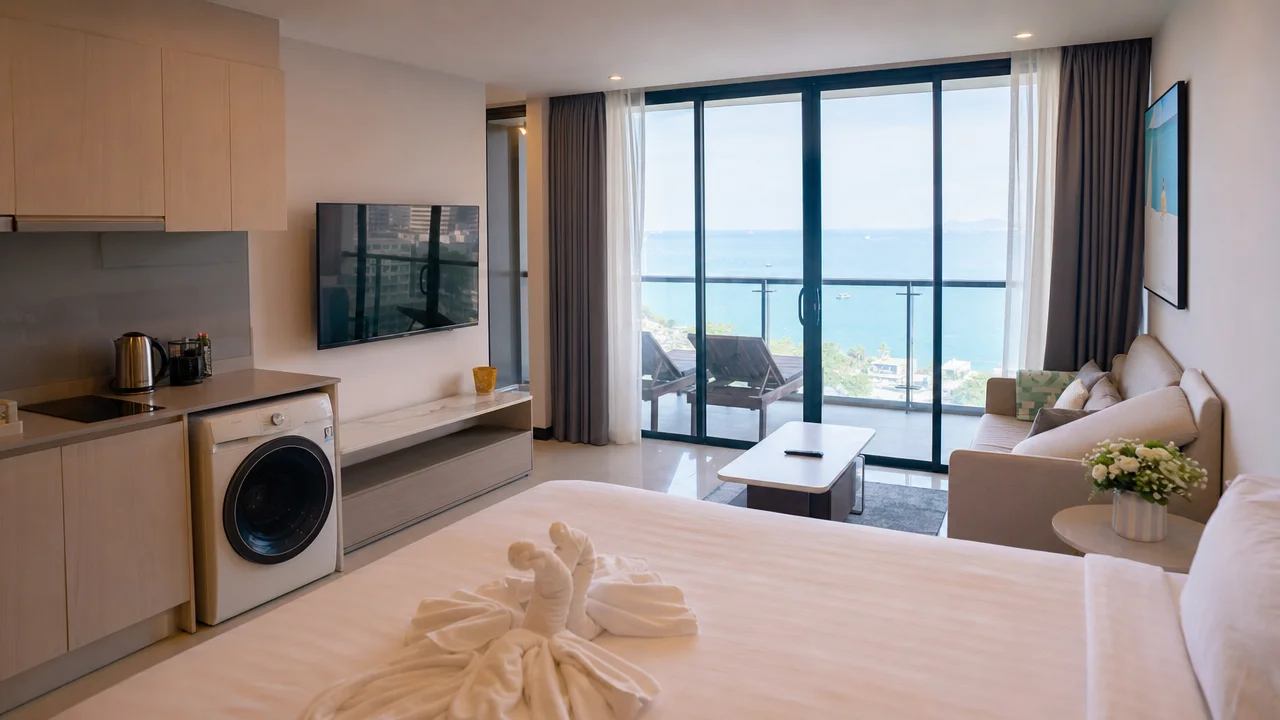
Wongamat occupies the northern part of Pattaya's coastal strip. The area begins right after Central Festival and stretches to the border with Naklua district. It concentrates projects priced from $150,000 to $400,000 for a studio or one-bedroom apartment of 28-45 m². Development consists of high-rise towers with direct sea views, well-developed infrastructure within the complexes, and minimal distance to the beach.
Freehold Legal Model and Absence of Ownership Tax
A foreigner can register an apartment in a condominium as full ownership under the freehold model. There is one restriction: at least 51% of apartments in the building must belong to Thai citizens. This quota is called foreign quota and is controlled by the Land Office at the transaction registration stage.
The buyer receives a Chanote document for the apartment, which confirms ownership rights. The apartment can be sold, bequeathed, or rented out without additional permits. The ownership period is unlimited.
Thailand does not charge an annual property tax for individuals owning an apartment for personal residence. The only payment is a monthly contribution to the building management fund, which covers maintenance of common areas, security, pools, and fitness centers. The contribution amount is 35-60 baht per square meter per month. For a 30 m² studio, this is 1,050-1,800 baht, or $30-52.
Comparison with Europe shows the difference. In France, the property tax (taxe foncière) for a 40 m² apartment in Nice is about 800-1,200 euros per year. In Germany, Grundsteuer for a similar apartment in Munich reaches 600-900 euros annually. In Thailand, this payment is absent.
Baht Exchange Rate: Stability Without Volatility
One of the factors attracting European investors is the behavior of the Thai baht. The baht-to-dollar rate has remained in the range of 32-36 baht per dollar since 2020. There are fluctuations, but they are not comparable to the volatility of the Turkish lira, Argentine peso, or even Russian ruble.
For an investor from Germany buying an apartment for $200,000, currency risk is limited to euro-dollar fluctuations rather than unpredictable devaluations. The baht is pegged to a basket of currencies and controlled by the Bank of Thailand, which conducts conservative monetary policy.
According to the CBRE Thailand report for 2025, the average rental yield for a condominium in Wongamat is 6.2% annually in dollars. This is higher than the yield on German government bonds (Bunds), which in 2026 hovers around 2.1%, and comparable to medium-risk corporate bond yields.
Why Wongamat Rather Than Central Pattaya or Phuket
Wongamat outperforms central Pattaya districts in three parameters: distance to the sea, development density, and tenant profile.
In central Pattaya (Pratumnak, Jomtien districts), competition in the short-term rental market is higher. The old stock of condominiums built in 2010-2015 creates excess supply. Occupancy in low season drops to 40-50%. In Wongamat, development is newer, projects are oriented toward long-term rentals to expats and winter residents who rent apartments for 6-12 months.
Phuket is more expensive. The average price for a beachfront studio in the Kamala or Surin area is $250,000-350,000 versus $150,000-220,000 in Wongamat. Rental yields in Phuket are lower: 4.8-5.5% annually according to Knight Frank Thailand data for 2025. The reason is high operating costs and seasonal demand.
Rental Demand Structure in Wongamat
Wongamat's rental market is divided into two segments. Short-term tourist rentals work during high season from November to March. Occupancy reaches 75-85%, the nightly rate for a 30 m² studio is 1,500-2,200 baht. Monthly income during peak period can exceed 60,000 baht.
Long-term rentals provide stable year-round income. Expats working in Bangkok or on the Eastern Seaboard rent apartments in Wongamat for weekends and holidays. The long-term rental rate for a studio is 18,000-28,000 baht per month. Annual income is 216,000-336,000 baht, or $6,200-9,600.
Example: a buyer from France purchased a 32 m² studio in a first-line Wongamat project for 6.8 million baht ($195,000) in February 2025. The apartment is rented through a management company using a mixed model: short-term rental in high season, long-term in low season. Net annual income after deducting management company commission (25%) and operating expenses was 420,000 baht, or $12,000. Yield - 6.15%.
Currency Risk and Ways to Reduce It
Currency risk exists. An investor from Europe calculates results in euros. If the euro strengthens against the dollar and baht, the real value of the asset and income will decrease in euro terms.
Ways to reduce risk:
Buying an apartment with payment in baht directly, without conversion through dollars. Bank transfer from a European bank to a Thai bank goes at the SWIFT rate, which is often more favorable than the exchange rate at exchange offices.
Opening a multi-currency account at a Thai bank (Bangkok Bank, Kasikorn Bank). Rental income can be stored in dollars or euros without converting to baht.
Portfolio diversification. If an investor owns property in both Europe and Thailand, currency risk is distributed between two assets.
According to Colliers Thailand, 68% of foreign condominium buyers in Pattaya in 2025 opened an account at a Thai bank to manage rental income. This reduces conversion costs and simplifies tax reporting.
What This Means for a Buyer in Pattaya
For Russian investors considering Pattaya, the growing European interest in Wongamat means three things.
First: prices in Wongamat are rising faster than in other Pattaya districts. According to Royal Property real estate agency, the average price of a studio in new Wongamat projects increased by 8.3% from January 2025 to January 2026. In central Pattaya, the increase was 3.1%. If you're planning to buy in Wongamat, you shouldn't delay.
Second: competition for foreign quota units is intensifying. European buyers prefer projects with ready infrastructure and sea views. Quotas in such projects fill up faster. Checking for available foreign quota spaces should be the first step before reserving an apartment.
Third: the long-term rental model is becoming a priority. European owners are not interested in short-term rentals with high guest turnover. They transfer apartments to management companies that look for tenants for 6-12 months. If you plan to rent out the apartment, choose projects where the management company works with long-term contracts.
Current step for a buyer: request from the agency a list of Wongamat projects with available foreign quota and occupancy history for the past 12 months. Compare short-term and long-term rental yields for a specific project. Check the developer's reputation through completed projects. Agencies with experience in the Thai market provide this data free of charge at the consultation stage.
Conclusion: An Asset for Capital Preservation, Not Speculation
Condominiums in Wongamat are not suitable for speculative strategies with quick resale. Market liquidity is lower than in Bangkok or Phuket. The average listing period for a property when selling is 4-7 months.
But for the task of capital preservation with moderate income, Wongamat works. The freehold legal model protects ownership rights. Absence of property tax reduces ownership costs. Stable baht exchange rate minimizes currency risk. Rental yield of 6-8% annually is higher than European bonds and comparable to dividend yields of second-tier stocks.
For an investor looking for an alternative to bank deposits with yields of 1-2% annually, a condominium in Wongamat is a working tool. But purchase requires checking the developer, analyzing the management company, and calculating real maintenance costs. Thailand's real estate market does not forgive a superficial approach.