Asset World Corp Public Company Limited (AWC) has announced the transfer of five premium assets worth 48.449 billion baht to a new multi-sector real estate investment trust, AWR REIT. The transaction marks a shift to a "development engine" model, where the developer sells mature properties to a REIT and directs the released capital to new projects. For Thailand's hospitality real estate market, this is the first case where a developer forms a REIT entirely from freehold properties-without land lease.
Five Assets: Office Tower and Four Resorts
AWC's board of directors approved the sale of five properties to AWC Lifestyle Properties Real Estate Investment Trust on September 25, 2026, subject to trust formation, obtaining necessary approvals, and completing due diligence. Minimum prices are based on valuations by two independent appraisers-CBRE and Cushman & Wakefield-and exclude VAT, special business tax, stamp duty, and transaction costs.
The initial portfolio includes:
| Property | Minimum Value | Characteristics |
|---|---|---|
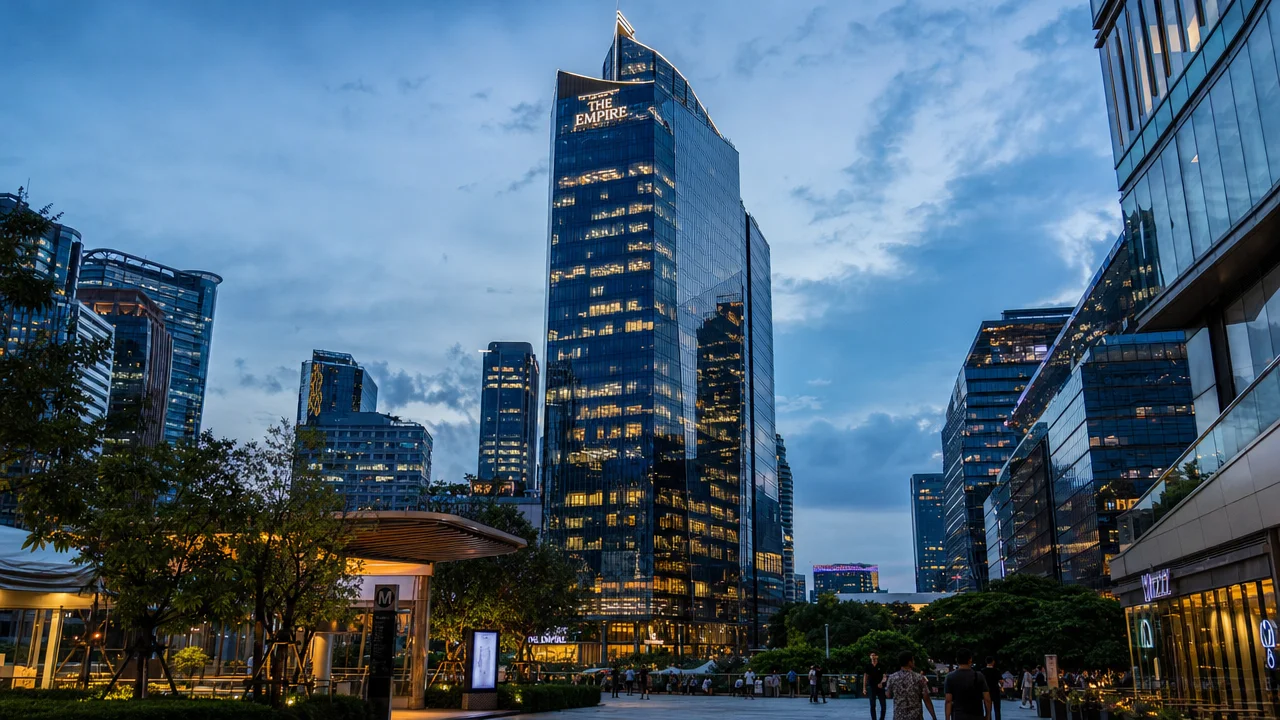
| The Empire (Bangkok) | 25.107 billion baht | Office tower, 158,021 sqm net leasable area, total area over 316,000 sqm |
| Banyan Tree Samui | 6.463 billion baht | 88 pool villas, total area 25,727 sqm |
| Pattaya Marriott Resort and Spa | 6.1 billion baht | 287 rooms and suites, total area 30,898 sqm, Na Jomtien |
| Meliá Koh Samui | 5.895 billion baht | 200 rooms and suites, total area 25,408 sqm, Choeng Mon Beach |
| Banyan Tree Krabi | 4.884 billion baht | 72 suites and villas, total area 20,666 sqm, Tubkaek Beach |
AWC emphasized that it selected mature premium properties with full ownership rights, established operational history, and potential to generate stable income across all economic cycles.
"Golden Hen" Model: From Developer to Asset Manager
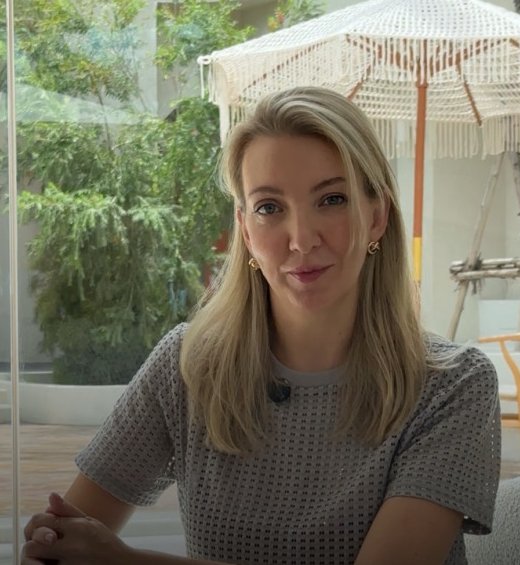
AWC's CEO and President Wallapa Traisorat described the company's future role as a "development engine." AWC will lead projects from early stages until they begin producing stable returns, then transfer them to AWR. Wallapa used the "golden hen" metaphor, which she attributed to her father Charoen Sirivadhanabhakdi.
According to the concept, AWC develops assets until they become cash flow generators, while AWR becomes a "golden hen farm"-a holder of mature assets generating regular distributions to unitholders. Proceeds from selling mature properties are directed to the next generation of projects.
Wallapa explained at a briefing on October 2, 2026: "An ordinary hen lays well only for the first one to three years, then productivity drops. Our golden hen continues laying eggs and growing without stopping. We work with a full ownership model, so we don't worry about declining productivity over time."
Why Full Ownership Is AWR's Key Advantage
AWR will become the only trust among Thailand's six largest REITs where all assets are held in full ownership. Two competing trusts are built entirely on leasehold land, while others hold 49% to 77% of properties with full ownership rights.
The difference is critical for long-term investors. Land leases in Thailand are typically concluded for 30 years with the possibility of extending for another 30 years, but renewal is not guaranteed. When the lease expires, the asset's value drops to zero if the landowner refuses to renew the contract or demands new terms. Full ownership eliminates this risk.
According to AWC, the conservative baseline valuation by CBRE and Cushman & Wakefield assessed the initial portfolio at 48.1 billion baht versus a book value of 33.6 billion baht. AWC's total investment value is capped at 51.39 billion baht. At the actual transfer price of 48.45 billion baht, AWC expects to record approximately 10 billion baht in net development profit after retaining up to 28%.
Dependence on Hospitality Sector Growth Forecasts
Since AWC already accounts for The Empire at fair value, the 25 billion baht valuation provides only 1.5 billion baht gain over book value. About 13 billion baht of the total 14.5 billion baht difference comes from the four hotel properties, which are accounted for at cost.
The valuation relies on hospitality sector yield forecasts at a time when growth at established resorts is slowing. AWC's hotel revenue grew 33% in the first half of 2026, but most growth came from Pattaya Marriott, which opened in July 2025. For the other three resorts, revenue grew approximately 5%, while EBITDA growth slowed from 30% in 2024 to 10% in 2025 and dropped below 5% in the first half of 2026.
Nevertheless, AWC forecasts portfolio EBITDA growth from 1.54 billion baht in 2024 to 2.79 billion baht by 2028-an average annual rate of 16%. This forecast is embedded in the asset valuation.
Debt Reduction Versus Return on Equity
Proceeds from asset sales will be split between debt repayment and shareholder distributions. Wallapa noted that the current debt-to-equity ratio of 0.9 is already among the lowest in Thailand's real estate sector, but the target of 0.6 aligns with international standards.
Reducing leverage strengthens the balance sheet but creates a potential obstacle to return on equity. AWC is revising its five-year strategic plan to balance financial stability and return on equity. The company expects management fees, share in REIT distributions, development profits, and reduced depreciation to compensate for lost cash flow from transferred assets.
AWC has not yet decided whether initial gains will result in special dividends beyond the standard 40% payout policy. Management acknowledged that ultra-low leverage could dilute return on equity.
IPO Over 30 Billion Baht and Investor Structure
AWC is considering an initial public offering of AWR units worth approximately $1 billion USD-over 30 billion baht. The company plans to subscribe to no more than 28% of units, maintaining long-term relationships with AWR while allowing external investors to participate.
The proposed investor structure allocates more than half of units to domestic investors, with foreign institutional investors receiving no more than 50%. AWC wants to attract both institutional and retail investors in Thailand and abroad, positioning AWR as a major investment platform for premium Thai real estate.
The trust manager has submitted an application to Thailand's Securities and Exchange Commission. The offering is scheduled for late 2026 or early 2027.
Dual Role and Interest Protection Mechanisms
AWR's initial portfolio is split between office/retail (54% of rental income) and hospitality (46%). To manage conflicts of interest-AWC serves as developer, master lessee, and REIT manager-SCB Asset Management will become trustee with a "golden share" in the master lessee subsidiary. SCB will receive voting rights on key operational decisions, including hotel brand changes and annual budget approvals.
Dr. Paithoon Wongsasuttikul, CEO of the REIT management company, noted that AWC's retained 28% stake aligns interests with unitholders without reducing market liquidity. At least 72% of units will be placed among public investors, with over 50% targeted at domestic institutional and retail participants.
Target Returns and AWC's Profit Model
AWC expects the future profit model to include approximately 70% regular income and 30% capital gains, management fees, and development profits. The company targets double-digit total returns for AWR investors, though actual returns will depend on final acquisition structure, financing costs, and future operating performance.
AWC estimates accumulated fair value gains in the commercial real estate portfolio at approximately 45 billion baht, which have not yet been realized through sales. The initial transfer to AWR may allow AWC to recognize approximately 5 billion baht in fair value gains.
What This Means for Buyers in Pattaya
The sale of Pattaya Marriott Resort and Spa for 6.1 billion baht as part of the AWR portfolio confirms several trends important for Pattaya real estate investors.
First, institutional valuation of a resort in Na Jomtien-an area considered secondary just five years ago-shows how quickly demand geography is changing. Marriott opened in July 2025 and within a year became one of five assets selected for the flagship REIT of Thailand's largest development group. Na Jomtien district has gained institutional-level recognition on par with Samui and Krabi.
Second, the 6.1 billion baht valuation for 287 rooms provides a benchmark of approximately 21.3 million baht per key for a premium resort with full land ownership. For comparison: the average condominium price in Pattaya in Q2 2026 was 3.8 million baht per unit. The gap between hotel assets and residential real estate shows where institutional capital is moving.
Third, AWC's emphasis on full ownership versus leasehold explains why projects with Chanote (Nor Sor 4) on the Eastern Seaboard trade at a 15-25% premium to leasehold equivalents. Institutional buyers are willing to pay to eliminate the risk of lease renewal after 30 years. Private investors buying freehold villas or condominiums acquire the same structural asset as REITs.
Finally, AWC's model-develop, stabilize, sell to REIT, and reinvest-may become standard for major developers. If other developers follow suit, the market will see more mature projects offered to institutional buyers. For retail investors, this means increased competition for quality freehold assets in liquid locations like Pattaya.
Conclusions
AWC's strategy to transfer 48.4 billion baht in assets to AWR REIT demonstrates the Thai real estate market's transition to an institutional capital model. Developers no longer hold mature properties on balance sheets indefinitely-they sell them to trusts, lock in development profits, and direct capital to new projects.
For investors, the key signal is the freehold premium. AWR will become the only trust with a portfolio entirely of freehold properties, eliminating leasehold expiration risk. Private buyers acquiring Chanote properties in Pattaya or on islands obtain the same structural asset that institutional investors are willing to value at a double-digit premium.
Pattaya Marriott's inclusion in AWC's top 5 assets confirms that Na Jomtien has reached institutional recognition. The district is no longer considered secondary-it competes with Samui and Krabi for capital from Thailand's largest developers.