Record Oversupply in Bangkok's Condominium Market
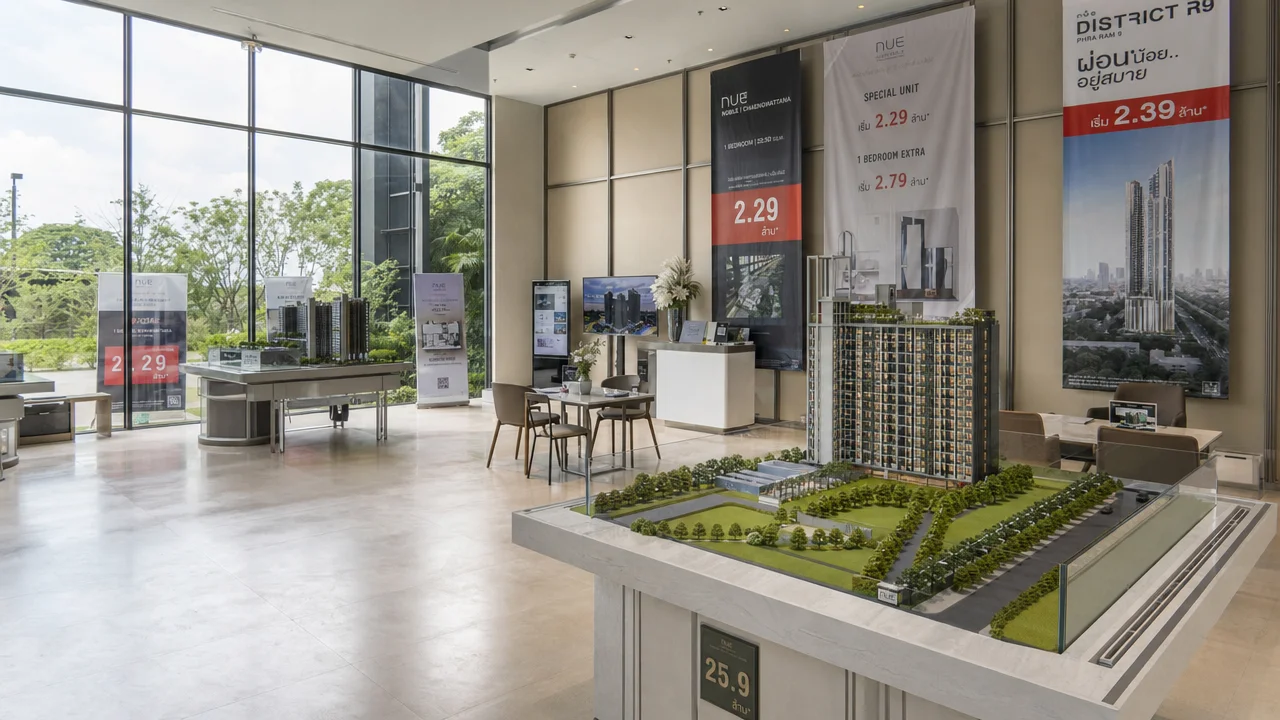
Bangkok's condominium market is facing an unprecedented overproduction crisis. As of the end of 2025, the volume of unsold units in capital projects exceeded 350,000 units. Real estate agency analysts forecast that at current sales rates, it will take at least six years to completely clear this inventory. The pressure of excess supply is already spreading to the Pattaya resale market, where owners are forced to reduce prices to attract buyers.
Scale of the Oversupply Problem
The figure of 350,000 unsold condominiums reflects the cumulative result of the 2018-2022 construction boom, when developers launched projects anticipating sustained demand from foreign investors and Thai speculators. The COVID-19 pandemic disrupted these calculations. Border closures in 2020-2022 cut off Chinese and Russian buyers, who accounted for up to 40% of demand for new builds in the premium segment.
The Bank of Thailand in its first quarter 2025 report recorded that the share of completed but unsold units in capital projects reached 28.4%. This is the highest value in the past 15 years. For comparison: in 2019, the similar indicator was 11.2%.
The problem is compounded by geographical concentration. The Phra Khanong, Ratchada, Ramkhamhaeng districts and outer BTS rings show vacancy rates above 35%. Developers who launched projects anticipating metro line expansions faced delays in infrastructure work and falling buyer interest.
Six-Year Inventory Liquidation Horizon
The six-year sell-off forecast is based on the current rate of market absorption of new units. In 2025, the average sales figure in capital projects was approximately 58,000 units. If the pace continues at this level, complete inventory liquidation will not be completed before 2031.
However, reality may be harsher. Thailand's Ministry of Finance in its 2026-2027 budget forecast indicates a slowdown in domestic lending growth. Tightened requirements for mortgage borrowers introduced by the Bank of Thailand in August 2024 reduced application approvals by 18% compared to the previous year.
Major developers are already adjusting their strategy. Sansiri, one of the leading developers, announced a 30% reduction in new project launches in 2026. The company will focus on selling existing inventory through installment programs and discounts of up to 15% off the original price.
Price Pressure on the Resale Market
The excess of new builds creates downward pressure on resale housing prices. Owners of apartments purchased in 2018-2020 for investment purposes are finding that their assets are losing liquidity. The gap between primary and secondary market prices has narrowed to minimal values.
According to CBRE Thailand, the average resale price of condominiums in Bangkok in the fourth quarter of 2025 was 127,400 baht per square meter. This is 8.3% below the 2019 peak values. In areas with high concentrations of new projects, the decline reaches 12-14%.
Secondary housing owners are forced to compete with developers offering flexible payment schemes, zero commissions and free furniture. Private sellers cannot provide such conditions, which reduces their competitiveness.
Government Support Measures for the Real Estate Market
The Thai government has extended the program to reduce registration fees when purchasing housing. The Cabinet of Ministers on June 30, 2025 approved the extension of the preferential rate of 0.01% for registration of ownership and mortgage until June 30, 2027. The standard rate is 2%.
The benefit applies to residential houses, townhouses, commercial buildings and condominiums priced up to 7 million baht. The Ministry of Finance estimates that the measure stimulates transactions worth approximately 540,810 million baht annually and adds 1.06% to GDP growth.
The Ministry of Interior issued two corresponding announcements published in the Government Gazette. The fee reduction is designed to ease the burden for Thai citizens wishing to purchase their own housing and support activity in the real estate sector.
However, experts note that fiscal incentives do not eliminate the structural problem of overproduction. The fee reduction helps buyers save 100,000-140,000 baht on a 7 million transaction, but does not solve the issue of excess supply.
Table: Comparison of Registration Fees
| Fee Type | Standard Rate | Preferential Rate (until 30.06.2027) | Savings on 5 Million Baht Transaction |
|---|---|---|---|
| Ownership Registration | 2.0% | 0.01% | 99,500 baht |
| Mortgage Registration | 1.0% | 0.01% | 49,500 baht |
| Total Savings | - | - | 149,000 baht |
Restrictions for Foreign Condominium Buyers
For foreign investors considering purchases in an oversupplied market, unchanged legal frameworks apply. The Land and Building Tax Act B.E. 2562 (2019) establishes the tax base for condominiums based on the preliminary assessed value fixed by the provincial property valuation committee.
Foreigners can own a condominium on a freehold basis if the foreign quota in the building does not exceed 49% of the total registered area. As of 2026, this restriction remains in force for all projects in Pattaya, Bangkok and other cities.
A foreign buyer must provide the Land Office with confirmation of a bank transfer in foreign currency (Foreign Exchange Transaction Form, abbreviated as FET or FETF). The document is issued by a Thai bank and confirms that the funds arrived from abroad. Without this certificate, registration of ownership in a foreign person's name is impossible.
Land under private houses, villas and townhouses in Pattaya cannot be in direct ownership of a foreigner. Alternative structures include long-term lease (leasehold), superficies right or usufruct. These mechanisms require careful legal verification and proper registration at the land department.
What This Means for Buyers in Pattaya
The oversupply of the capital market has a direct impact on pricing and seller strategies in Pattaya. Owners of secondary condominiums in Jomtien, Pratumnak and Wongamat face increased competition. Buyers have more opportunities to negotiate discounts.
Over the past eight months, the average asking price on the Pattaya resale market has decreased by 4-6% in dollar terms. Projects completed in 2019-2021 show the greatest pricing flexibility. Owners are willing to accept offers 10-12% below the initial listing price.
For investors, this is a window of opportunity. The market is shifting in favor of buyers. Verification of the legal cleanliness of the property becomes critical: ensure that the condominium has a valid ownership certificate, the foreign quota is not exhausted, and the building is not encumbered with debts to the management company.
Pay attention to the liquidity of the area. Projects near Wongamat Beach and central Pattaya maintain demand thanks to tourist infrastructure. Remote locations such as Bang Saray or Huay Yai require deeper analysis of growth prospects.
The extension of preferential registration fees until June 2027 gives foreign buyers additional savings. On a transaction worth 5 million baht (approximately 140,000 US dollars), savings will be almost 150,000 baht. These funds can be directed toward renovation or legal support.
The current situation favors those buying for personal residence or long-term rental. Speculative investments with a resale horizon of 1-2 years carry increased risk due to excess supply pressure.
Market Development Forecast for 2026-2027
Knight Frank Thailand analysts forecast market stabilization no earlier than the second half of 2027. The key factor will be the recovery of international tourism and the return of Chinese buyers, whose share in Bangkok's new build segment reached 22% before the pandemic.
The Bank of Thailand maintains the base interest rate at 2.50%, which supports the affordability of mortgage lending for Thai borrowers. However, tightened debt-to-income ratio requirements limit the number of approved applications.
Developers are reorienting toward the 3-5 million baht housing segment, where demand from the Thai middle class remains relatively stable. Premium projects priced above 10 million baht per unit will face a prolonged sell-off period.
For Pattaya, the forecast is moderately positive. The city retains attractiveness for retirees and remote workers from Russia, Europe and China. Projects with strong management companies, developed infrastructure and proximity to the sea will continue to find buyers even amid overall market slowdown.
Recommendations for Buying in an Oversupplied Market
Before concluding a transaction, conduct an independent market value assessment of the property. The seller's asking price may be inflated by 8-15% relative to actual transactions in similar projects. Use recent transaction data to justify your offer.
Request the full package of documents from the seller: ownership certificate (Chanote or Nor Sor 4 Jor for land, condominium documents for apartments), house registration extract (Tabien Ban), confirmation of no arrears on utility payments and contributions to the building management fund.
Check the foreign quota in the building through the Land Office. Even if the seller claims the quota is available, obtain official confirmation directly from the land department of the district where the property is located. The procedure takes one working day.
For transferring funds, use a Thai bank with experience working with foreign property buyers. Bangkok Bank, Kasikorn Bank and Siam Commercial Bank issue the necessary FET certificates on the day the foreign currency transfer is received. Keep originals of all bank documents: they will be required during Land Office registration.
Hire an independent lawyer to verify the cleanliness of the transaction. The service costs 15,000-25,000 baht, but protects against hidden encumbrances, unregistered liens or ownership disputes. The lawyer will also accompany the registration process and verify the correct calculation of taxes and fees.
Conclusion
The oversupply of Bangkok's condominium market with an unsold unit volume of 350,000 and a six-year liquidation horizon creates unprecedented conditions for buyers. The pressure of excess supply is spreading to the Pattaya resale market, opening opportunities for price negotiations and selection of properties with optimal value-quality ratios. The extension of government registration fee benefits until mid-2027 reduces transaction costs. A successful purchase requires thorough verification of legal cleanliness, understanding of restrictions for foreign owners and realistic assessment of liquidity prospects for the chosen location.