
Chonburi - 33% of all foreign transactions: why Pattaya surpasses all regions except Bangkok
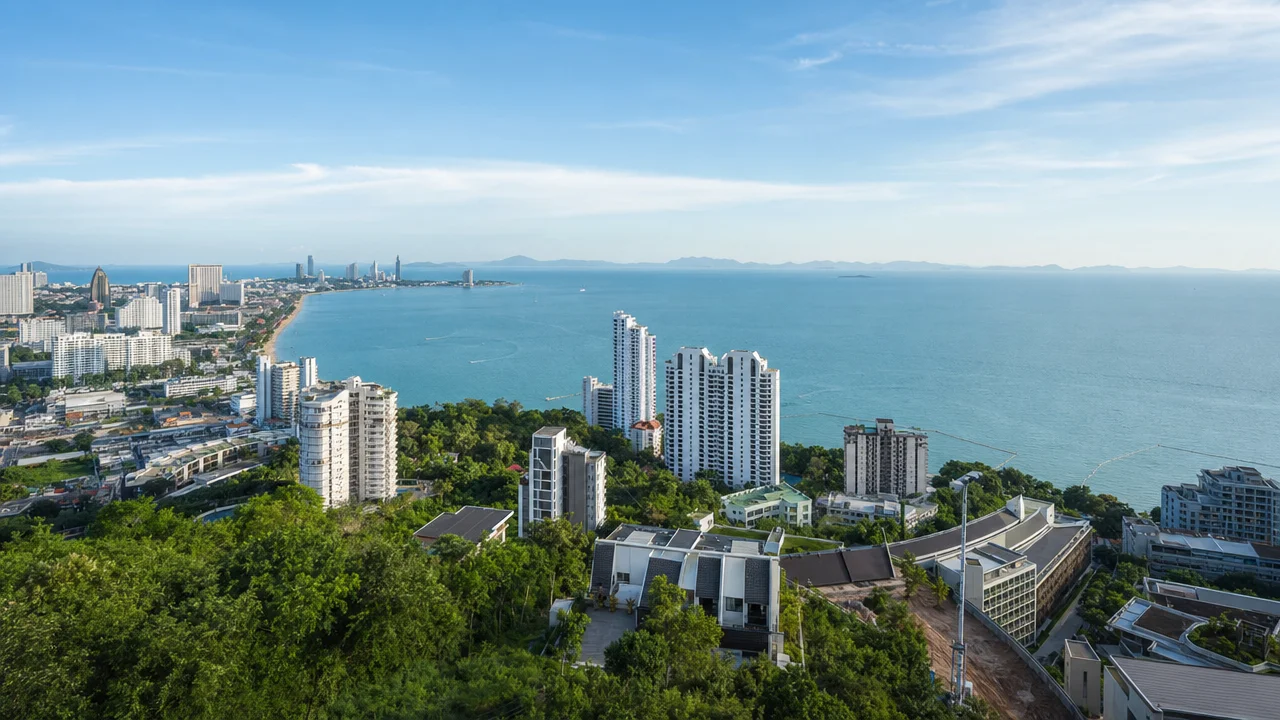
In 2025, foreigners purchased 14,899 condominiums in Thailand. Of these, approximately 4,900 units - almost one-third - were in Chonburi province, where Pattaya is located. Together with Bangkok, these two regions accounted for more than 75% of the total volume of foreign investment in the country's residential real estate. This data is provided by the Real Estate Information Center (REIC) - a government property market monitoring center under Thailand's Ministry of Finance. Chonburi's share was 33.4%, second only to the capital but significantly ahead of Phuket, Samui and other resort provinces. Let's examine why Pattaya maintains this position and what is happening in the market in 2026.
Structure of foreign demand: figures and geography
In 2025, the total volume of transactions involving foreign buyers reached 60.9 billion baht - a 2.2% increase over the previous year. The share of foreigners in total condominium sales nationwide was 14.7%. The average price per unit in the foreign quota was approximately 4.1 million baht.
The geography is concentrated. Bangkok took the largest share thanks to business demand, proximity to embassies and the largest pool of expat tenants. Chonburi took second place thanks to Pattaya, which attracts retirees, digital nomads and investors focused on tourist rentals. The remaining 76 provinces accounted for less than a quarter of transactions.
An important detail: according to CBRE Thailand estimates, the average price per square meter in new Pattaya projects in the first quarter of 2026 was 114,000 baht - a 5.6% increase over the year. For comparison, in the premium segment on the first beachfront line (Wongamat, Na Jomtien) prices reach 173,000-200,000 baht/m². Studios start from 1.8-2.5 million baht, one-bedroom apartments - from 2.2 to 4.5 million, two-bedroom - from 4.5 to 7 million baht depending on location and project class.
Why Pattaya specifically: four structural advantages
Tourist flow and long-term rentals
Pattaya annually receives a significant portion of the 37.5 million international tourists who arrived in Thailand in 2025 (Ministry of Tourism and Sports data). The city operates year-round, without a pronounced dead season. Western tourists - Germans, Scandinavians, British - traditionally rent accommodation for periods from one month, which is legal and does not require a hotel license.
Under Thailand's Hotel Act B.E. 2547, rentals of less than 30 days in a building without a hotel license are prohibited. Enforcement intensified in 2024-2025: condominium juristic persons and the Provincial Administration Department conduct regular inspections. In 2026, the government is developing a new bill - the Accommodation Act - which will place responsibility on platforms like Airbnb and tighten control over short-term rentals. Pattaya's market has already shifted toward monthly rentals: according to AMS Property Consultants, requests from Western long-term tourists for the 2026-2027 high season are growing, and advance bookings are increasing.
Gross rental yields from long-term rentals in Pattaya are 6-8% for standard projects in the mid-price category (Naklua, East Pattaya), 5.5-7.5% in Jomtien and 4.5-6.5% in premium Wongamat. In buildings with hotel licenses and professional management, short-term rentals can yield 8-11% gross returns, but such properties are in the minority, and buyers must verify the license before the transaction.
Proximity to Bangkok and EEC infrastructure corridor
Distance from the capital - 120 km, driving time - 1-1.5 hours. Pattaya is at the center of the Eastern Economic Corridor (EEC) - a government program for industrial and logistics development in Chonburi, Rayong and Chachoengsao provinces.
The key project is the Bangkok - U-Tapao high-speed railway, which will reduce travel time to 45 minutes. U-Tapao Airport, located 40 km south of Pattaya, is expanding: a new passenger terminal is being built, and the number of international flights is increasing. According to government plans, the airport will become the country's third international hub after Suvarnabhumi and Don Mueang.
These investments strengthen Pattaya's position as a permanent residence, not just a weekend resort. Demand for real estate from working expats and Thai buyers from Bangkok is growing in parallel with tourist demand.
Urban environment modernization
Over the past three years, Pattaya has launched projects to move overhead power lines underground (in Pratamnak, Wongamat, parts of Jomtien). New shopping centers have opened - Terminal 21 Pattaya, Central Pattaya - and marinas and residential complexes with international management standards are being built.
The city is gradually shedding its image as exclusively a "sex tourism" destination and positioning itself as a modern seaside metropolis. Rising living standards, improved medical services (international clinics Bumrungrad Pattaya, Bangkok Hospital Pattaya) and educational infrastructure are attracting families with children and long-term residents.
Affordable entry point and high liquidity
The average cost of a studio in Pattaya is 1.8-2.8 million baht (50,000-80,000 USD), a one-bedroom apartment - 2.2-4.2 million baht (60,000-120,000 USD). This is 1.5-2 times lower than in central Bangkok districts, and comparable to Phuket, but with higher liquidity: the number of transactions in Chonburi is almost three times that of Phuket.
The secondary market is active. According to Hipflat and GlobalPropertyGuide, the number of resale listings in Pattaya in the first quarter of 2026 increased by 8% compared to the same period in 2025. Exposure time for liquid projects is 60-90 days, indicating a healthy balance of supply and demand.
Foreign quota and legal framework in 2026
Under Thailand's Condominium Act B.E. 2522, foreigners can own no more than 49% of the total building area as full ownership (freehold). The remaining 51% is reserved for the Thai quota.
To register under the foreign quota, a buyer must provide the Land Office with a Foreign Exchange Transaction Form (FET), confirming that funds came from abroad. Without this document, registration in a foreigner's name is impossible.
Important: the quota is calculated at the level of a specific building, not nationwide. Popular projects may exhaust the foreign quota even during construction. Before reserving, request written confirmation of the available balance from the developer or condominium juristic person.
If the foreign quota is closed, buyers have two options: long-term land lease (leasehold) for 30 years with possible renewal by agreement, or purchase through a Thai company (which requires professional legal structuring and carries risks if improperly executed).
In May 2026, a proposal to increase the foreign ownership limit to 75% in EEC zones and extend leasehold terms to 99 years was discussed. The bill is under consideration and has not yet been adopted. Any promotional materials referring to an already existing 75% quota are premature.
Government incentives for Thai buyers: extension until June 2027
In June 2026, the Cabinet of Ministers approved the extension of a program reducing registration and mortgage fees at the Land Office for Thai citizens purchasing property in the Thai quota. The program, launched in 2025, was scheduled to end on June 30, 2026, but has been extended for one year - until June 30, 2027. Official implementation - after publication in the Royal Gazette.
| Parameter | Standard rate | Preferential rate (until 30.06.2027) |
|---|---|---|
| Transfer registration fee | 2.0% of appraised value | 0.01% |
| Mortgage registration fee | 1.0% of loan amount | 0.01% |
| Property price limit | - | ≤ 7 million baht (purchase price and Land Office appraisal) |
| Mortgage limit | - | ≤ 7 million baht per contract |
| Who can use | Thai citizens and foreigners | Thai citizens only |
The Ministry of Finance forecasts that the measure will support transactions worth 540 billion baht annually and attract an additional approximately 305 billion baht in investments compared to the normal level.
Foreigners are not covered by the program and pay full fees (2% + 1%). However, the indirect effect is positive: stimulating Thai demand reduces pressure on the foreign quota, improves developers' financial condition and accelerates project completion.
Market dynamics in 2026: low season with signs of recovery
The first half of 2026 is traditionally low season for Pattaya sales. However, at the level of specific projects, positive shifts are noticeable.
According to AMS Property Consultants (July 2026), the number of advance bookings from Western tourists for the 2026-2027 high season is growing. Lower oil prices in the first half of the year had a positive effect on European tourists' purchasing power and airfare costs.
The number of foreign transactions in Chonburi in the first quarter of 2026 is estimated at approximately 1,050 units (extrapolation based on REIC national statistics and regional share). This is 3-5% higher than the same period in 2025.
Rentals: requests for monthly contracts are recovering. Rates in the 25-35 m² segment (studio, one-bedroom) in mid-range projects - 12,000-18,000 baht/month; in premium complexes with sea views - 20,000-35,000 baht/month. Average long-term rental occupancy in the first quarter of 2026 was around 72%, 4 percentage points higher than 2025.
What this means for buyers in Pattaya
Chonburi's dominance in the structure of foreign demand is not coincidental, but the result of a stable combination of factors: tourist flow, transport accessibility, government infrastructure support and relative affordability.
For investors, this means three practical conclusions.
First: liquidity. One-third of all foreign transactions occur in one region. The secondary market here is more active than in Samui or Hua Hin. Selling an apartment in a liquid Pattaya project within 60-90 days is realistic if the price is market-appropriate.
Second: legal clarity is critical. High transaction concentration attracts regulatory attention. Checking remaining foreign quota, FET certificate availability, absence of Chanote encumbrances and compliance with rental rules (30+ days without hotel license) are mandatory steps. Working with a lawyer specializing in transactions with foreigners pays for itself many times over.
Third: long-term rental as the main model. Short-term rentals are becoming obsolete due to tightening legislation and the upcoming Accommodation Act. Projects with hotel licenses are exceptions, rare, and command a premium. The majority of investors should focus on contracts from 30 days, which yield 6-8% gross returns and require less operational effort.
Extension of the fee reduction program for Thai buyers until June 2027 indirectly supports the market: developers sell out the Thai quota faster, projects are delivered on time, management operates more stably. Foreign buyers benefit from overall market health, even if they cannot use the benefit themselves.
Finally, EEC infrastructure projects - high-speed railway, U-Tapao expansion - work for long-term growth. If in May 2026 the government does adopt a law increasing the foreign quota to 75% in EEC zones, demand for Pattaya will receive additional momentum. For now, this is a possible upside scenario, but not the base forecast.
Pattaya's market in 2026 is in a phase of structural restructuring: from speculative short-term rentals to sustainable long-term rentals, from chaotic growth to regulated development. For buyers who understand the rules of the game and choose projects with open eyes, this is one of the most transparent and liquid markets in Southeast Asia.