

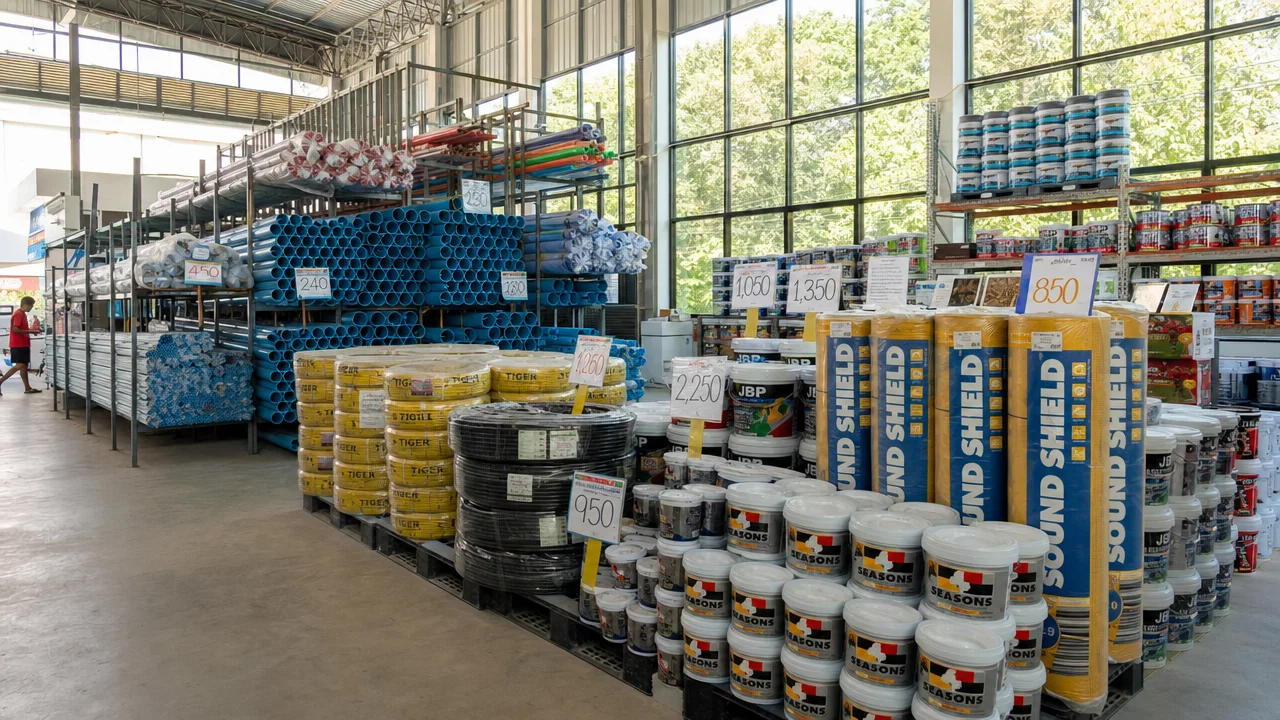

The construction materials cost index in Thailand has reached a 44-month high - since July 2022 - amid escalating conflict in the Middle East and oil prices rising above $110 per barrel. Developers in Jomtien, Pratumnak, and Naklua have already raised prices on new projects by 12-18% compared to first quarter 2026 prices, while contractors are fixing contracts for a maximum of 90 days instead of the standard six months. For buyers planning villa construction or purchasing an apartment in a new development, this means one thing: the cost per square meter is growing faster than in the past three and a half years.
Why the construction materials index has soared to July 2022 levels
According to data from the Siam Commercial Bank Economic Intelligence Center (EIC), published in April 2026, the cost of basic construction materials - steel, cement, plastics, paints, insulation, and pipes - has increased an average of 8-12% since the beginning of the year. For the premium segment, which uses imported materials, growth reaches 15-18%. The reason is a sharp jump in oil and logistics prices following the escalation of the Middle East situation in March 2026.
Thailand consumes about 124 million liters of petroleum products per day and imports almost all crude oil. Any supply disruptions through the Strait of Hormuz push prices up, and then the wave transfers to the production of steel, cement, chemicals, and plastics. The EIC notes that if prices remain at $110-120 per barrel, the index could grow another 5-7% by the end of the second quarter.
The Home Builder Association of Thailand (HBA) recorded first quarter 2026 market volume at 47 billion baht. HBA President Anantakorn Amorwatii warned that construction price growth of 3-5% will begin from late April, but for premium projects and individual construction, growth could reach 10-15% depending on material choices and contractor.
How Jomtien developers are reacting to rising costs
Developers in Pattaya, Jomtien, and Naklua face dual pressure: cost increases of 12-18% with limited ability to raise prices due to weak domestic demand and high competition. Kiatnakin Phatra Financial Group (KKP) forecasts that the sharp rise in global oil prices will lead to approximately 10% increase in housing costs in Thailand in 2026, with the strongest impact expected in the mass segment - townhouses, duplexes, and condominiums priced up to 3 million baht.
Developers who have already launched projects and signed contracts with contractors before March 2026 continue implementation at old prices. But new launches are being delayed or released with prices 12-18% higher than similar properties six months ago. For example, a 28-square-meter studio in a new Pratumnak project that cost 2.8 million baht in January is listed at 3.15 million baht in April - an increase of 12.5%.
Contractors are no longer willing to fix prices six months ahead. The standard contract term has been reduced to 60-90 days, and some require price revision every 30 days if the materials index changes by more than 3%. For buyers planning individual construction, this means the need to set aside a reserve of 10-15% of the budget for possible price increases during the process.
Which materials have risen most in price
Steel and rebar have increased 10-14% since the beginning of the year. Cement has risen 8-10%. Plastic pipes, insulation, and paints - by 12-15%. Imported finishing materials - porcelain tiles, plumbing, fixtures - have grown 15-20% due to increased container shipping costs from Europe and China.
According to KKP's corporate lending division, developers of new projects are already forced to factor in higher costs into prices, raising housing costs by 5-10%. For projects using imported finishes and equipment - such as premium condominiums in Wongamat or villas in Pratumnak - growth reaches 12-18%.
The most vulnerable segment is mass housing priced up to 3 million baht, where buyers already face limited purchasing power. Here developers cannot fully pass cost increases to buyers and are forced to cut margins or postpone new project launches.
2026 forecast: market decline of 5-15%
Siam Commercial Bank Economic Intelligence Center forecasts that total residential property transfer value nationwide in 2026 could decrease 5% year-over-year to 824 billion baht. With a prolonged Middle East conflict, the decline could deepen to 10-15%. This makes the war a new external shock for a market already weakened by household debt, low purchasing power, and strict mortgage requirements.
For Greater Bangkok, EIC forecasts the launch of 39,000 new residential units in 2026 - 5% less compared to the previous year. This figure could drop by as much as 10% if the conflict situation persists. In Pattaya and the Eastern Seaboard, the situation is similar: developers are postponing new launches until the end of the year, awaiting stabilization of material and fuel prices.
High interest rates intensify market pressure. The Bank of Thailand may maintain rates at 2.5-3% or even raise them if inflation caused by rising oil prices exceeds the target range. For buyers, this means higher monthly mortgage payments and reduced housing affordability.
Developer strategy: sell old, postpone new
In Thailand's condominium market, developers are showing caution: actively promoting projects with already agreed construction costs, but restrained about new launches until the end of the current year. Rising energy prices increase costs, but developers continue implementing planned projects thanks to contracts with contractors concluded in advance.
Price growth in the current year is expected to remain limited, and sales pace will likely be restrained, consistent with economic slowdown and declining domestic buyer confidence. A positive aspect of the current situation remains foreign demand, showing signs of recovery compared to last year. This especially concerns buyers seeking foreign residence or capital diversification, for whom Thailand remains an attractive destination.
A long-term visa scheme has been introduced, linked to condominium purchases of at least 3 million baht (about $81,500). It targets retirees, investors, and digital nomads seeking long-term stays in Thailand, particularly in regions such as Phuket, Chiang Mai, Pattaya, and Bangkok. The effectiveness of this measure in stimulating foreign demand will depend on market conditions through the end of the current year.
What this means for buyers in Pattaya
For Russian-speaking buyers planning to purchase property in Pattaya in 2026, the situation requires quick decisions. The rise in construction materials costs to a 44-month high means that prices for new projects will grow faster than in the past three and a half years. If you've found a project launched before March 2026 and selling at old prices, now is the last moment to lock in a favorable deal.
For those planning individual villa or house construction, it's important to understand: contractors no longer fix prices for six months. A 60-90 day contract is the new standard, and you'll need to set aside a reserve of 10-15% of the budget for possible price increases during construction. If your project is planned for 8-12 months, the risk of budget overrun is high.
For investors buying condominiums for rental income, price increases of 12-18% in new projects mean lower returns. An apartment that cost 2.8 million baht in January and yielded 4.5% annually now costs 3.15 million baht in April - returns drop to 4%. It makes sense to consider secondary market projects, where prices haven't yet reacted to rising construction costs.
The main practical advice: if you were planning a purchase or construction in the coming months, try to lock in the price in a contract by the end of April 2026. The Home Builder Association of Thailand forecasts growth of 3-5% from late April, but for premium projects and individual construction, growth could reach 10-15%. For a typical mid-sized project, this means an addition of hundreds of thousands of baht, for premium villas - millions.
Conclusion
The Middle East conflict has turned Thailand's construction market into a high-volatility zone. The materials index has reached a 44-month high, Jomtien developers have raised prices by 12-18%, and contractors have reduced price-fixing terms to 60-90 days. For buyers, this means the need to make decisions quickly and set aside budget reserves for possible price increases. The market is entering a phase where time is the main factor: the longer you wait, the more expensive the square meter will cost.