

Foreign buyers registered 3,292 condominiums in Thailand in Q2 2026 - a 1.4% increase compared to the same period last year. The Real Estate Information Center (REIC) under the Government Housing Bank published data on September 11, showing that transaction value grew by 20.2% to 14.803 billion baht, and the total area of transferred units increased by 8.1% to 145,140 square meters. This growth occurred against a backdrop of declining foreign share in total nationwide registrations - the Thai market accelerated sharply thanks to government stimulus measures.
Why the foreign share fell despite rising absolute numbers
In Q2 2026, foreign buyers received 10.2% of all registered condominiums in Thailand by number of units and 20.0% by value. A year earlier, these figures were higher. REIC attributes the declining share not to foreigners withdrawing, but to sharp growth in domestic demand.
The Government Housing Bank of Thailand eased loan-to-value (LTV) ratio requirements. The government reduced ownership transfer and mortgage registration fees to 0.01% each for properties valued up to 7 million baht. REIC directly points to these measures in its Eastern Economic Corridor report published four days later.
Thai buyers took advantage of the incentives. Foreigners continued registering transactions at the previous pace, but against the domestic market boom, their percentage declined. For buyers under the foreign ownership quota, this distinction is fundamental: the 49% limit of total project area is established by Article 19 bis of the Condominium Act B.E. 2522 and applies at the individual building level, not nationwide.
Chinese lead, Americans pay the most
REIC compiled a ranking of ten leading nationalities by total condominium registration value in H1 2026: China, Russia, Myanmar, USA, Taiwan, France, UK, Germany, Australia, and India.
Chinese buyers remain the largest group by number of units and value, despite a decline from last year. The average transaction value for a Chinese buyer was 3.8 million baht per unit with an area of 38.2 square meters.
Americans registered condominiums with an average value of 6.6 million baht per unit - the highest figure among all nationalities. Indians chose the most spacious apartments with an average area of 72.1 square meters per unit.
For all foreign buyers in H1 2026, the average registration was 4.3 million baht for 43.9 square meters. REIC calculated an average price of approximately 98,566 baht per square meter.
H1 2026: overall decline of 8.8%
For the period from January to June 2026, foreign buyers registered 6,533 condominiums in Thailand - an 8.8% drop compared to the same period in 2025. Transaction value decreased by 1.5% to 28.267 billion baht. The foreign share was 11.7% by number of units and 21.7% by value of all nationwide condominium registrations.
REIC explains the half-year decline by economic slowdown in Thailand and globally. Some foreign buyers postponed decisions about purchasing and investing in real estate. The second quarter showed recovery but did not compensate for the weak first quarter.
Important detail: a significant portion of 2026 registrations relates to properties purchased during construction in 2023-2024, when primary market demand was high. REIC data is based on completed registrations at the Land Department, not on bookings or contract signings. The delay between purchase and registration can range from several months to two years.
Russian buyers increased investments by 84.5%
Sunway Estates analysts recorded that Russians purchased 820 real estate properties in Thailand in January-June 2026 - a 46.4% increase from last year. Investment volume grew by 84.5% to 60.7 million dollars (2.05 billion baht).
Prian.ru noted a 41% increase in inquiries. Tranio recorded a drop in inquiries in Q1, but in Q2 the figure grew by 30.5% year-on-year - a five-year record.
Intermark Global Managing Partner Irina Mosheva noted that Thailand has established itself for Russian buyers not only as a tourist destination, but also as a market for purchasing real estate - for personal residence, seasonal vacation, and investment. The government infrastructure boom adds to the country's attractiveness.
A package of major transport initiatives with investment volume of approximately 360 billion baht includes expansion of expressways (continuation of Chalerm Maha Nakhon Expressway and Bangkok outer ring road M9), construction of new sections of double-track railways.
Demand geography: Phuket dominates, Pattaya offers affordability
In Q2 2026, 63.2% of all Russian inquiries for Thailand to Tranio were for Phuket. Chonburi, which includes Pattaya, accounted for 21.1%. Bangkok and Surat Thani each received 7.9%.
Pattaya is chosen for its more affordable purchase budget compared to Phuket. Bangkok interests buyers of urban property for living or long-term rental. Samui remains a popular destination, but it's a more intimate market with less supply.
Chonburi: 15,928 registrations in H1
In H1 2026, Chonburi registered 15,928 residential properties worth 39.249 billion baht - growth of 15.1% by units and 8.8% by value. The province accounts for 65.9% of all Eastern Economic Corridor registrations by units and 68.8% by value.
Of these, 6,329 condominiums worth 14.269 billion baht and 9,599 low-rise houses worth 24.980 billion baht. Among low-rise housing, townhouses led by volume (4,271 units), and detached houses by value (12.105 billion baht).
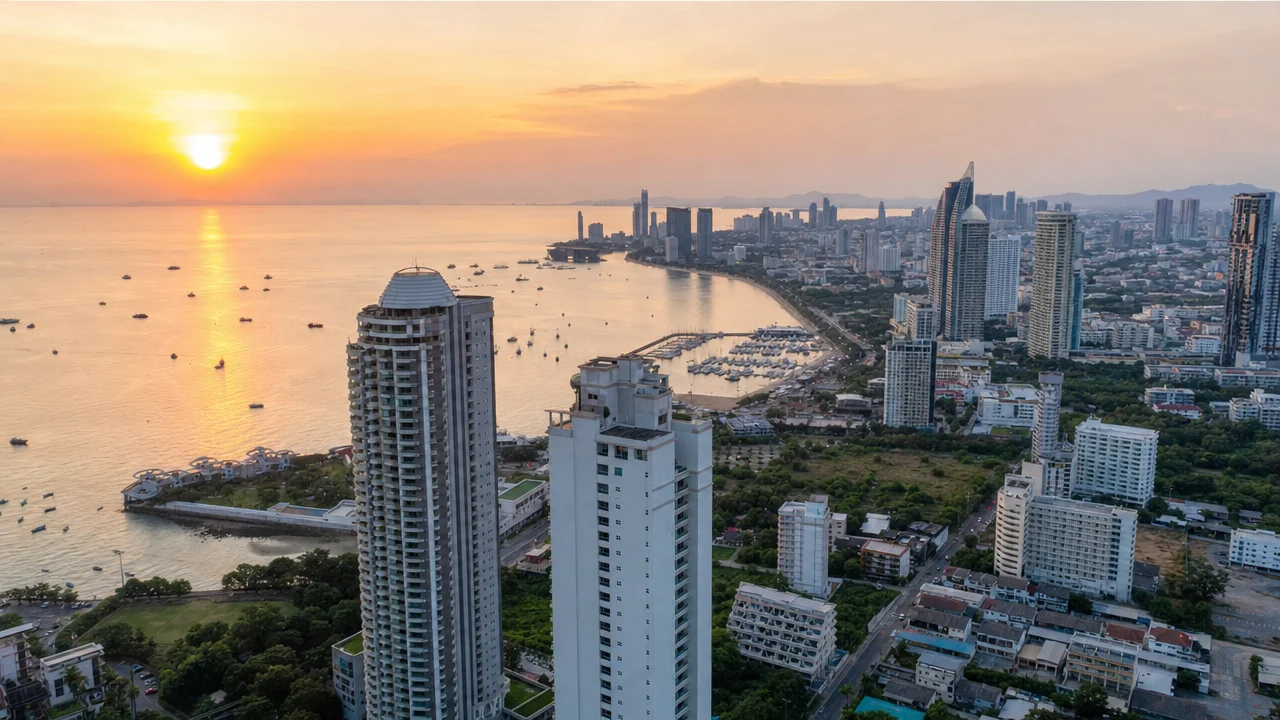
Chonburi accounted for approximately 92% of all condominium registrations in the Eastern Economic Corridor for the half-year. Most of the region's condominiums are concentrated along the Pattaya coast.
The average condominium registration in Chonburi in H1 was approximately 2.25 million baht, counting Thai and foreign buyers together. This figure is below the nationwide average for foreigners (4.3 million baht), but direct comparison is incorrect - the buyer groups are different. Foreigners tend to concentrate in newer and better-located properties than the provincial average.
What REIC statistics mean in practice
REIC data describes completed registrations at the Land Office, not sales or bookings. Figures for Q2 2026, which closed on June 30, were published on September 11. The delay is normal: registration occurs after construction completion, obtaining permits, and payment of all fees.
The next update is expected in mid-December 2026, when REIC publishes Q3 data. Quarterly statistics provide an overall market picture but don't describe a specific building, floor, or quota position.
For buyers under the foreign quota, it's important to understand: the national 10.2% share doesn't limit the available quota in a specific project. The 49% limit applies to the registered condominium as a legal entity, not to the province or country. A Pattaya project may have free quota even if nationwide statistics show high demand.
What this means for Pattaya buyers
The 46.4% growth in Russian registrations and 84.5% increase in investments in H1 2026 confirms sustained interest in Thai real estate. Pattaya receives 21.1% of inquiries - second place after Phuket. The budget difference between the two destinations remains a key selection factor.
The average condominium registration in Chonburi (2.25 million baht) is substantially lower than the nationwide average for foreigners (4.3 million baht). A Pattaya buyer gets access to a market with a wide price range - from compact studios to premium beachfront penthouses.
Government stimulus measures (fee reduction to 0.01% for properties up to 7 million baht, LTV easing) heated up domestic demand. This accelerated new project sales but didn't reduce the foreign quota. Developers reach the registration stage faster, reducing waiting time for buyers who completed payment in 2023-2024.
The infrastructure boom (360 billion baht in transport investments) directly affects the Eastern Economic Corridor. Expansion of expressways and railways improves Pattaya's connectivity with Bangkok and airports. Projects near new transport hubs gain long-term advantages.
Important point for those considering a specific project: REIC statistics reflect the overall market, not quota availability in a chosen building. Checking quota position, condominium registration status, and availability of units under foreign ownership requires requesting a Land Office extract for the specific project. Nationwide figures provide context, but purchase decisions are made based on data for the specific property.
The delay between purchasing during construction and registration means many 2026 transactions were concluded in 2023-2024. Buyers choosing ready properties with immediate registration avoid construction delay risks but pay full price without early booking discounts. The balance between price and timing remains an individual choice.
Quota verification before purchase
Before making a deposit, request from the developer or agent a copy of the latest Land Department statement for the project. This document shows total project area, area already registered to foreigners, and remaining quota.
If quota is exhausted or near the limit, the only options are purchase through a Thai company (requires structure with genuine Thai shareholders and foreign exchange control compliance) or long-term lease (leasehold for 30 years with renewal option). Both options have legal nuances and require consultation with a licensed lawyer.
Projects with large remaining quota provide more choice of units and floors. New projects typically reserve 49% for foreigners in advance, but popular buildings may exhaust quota before construction completion. Early statement request saves time and prevents disappointment at registration stage.