Real Estate Center Records 38% Surge in Foreign Buyer Transactions
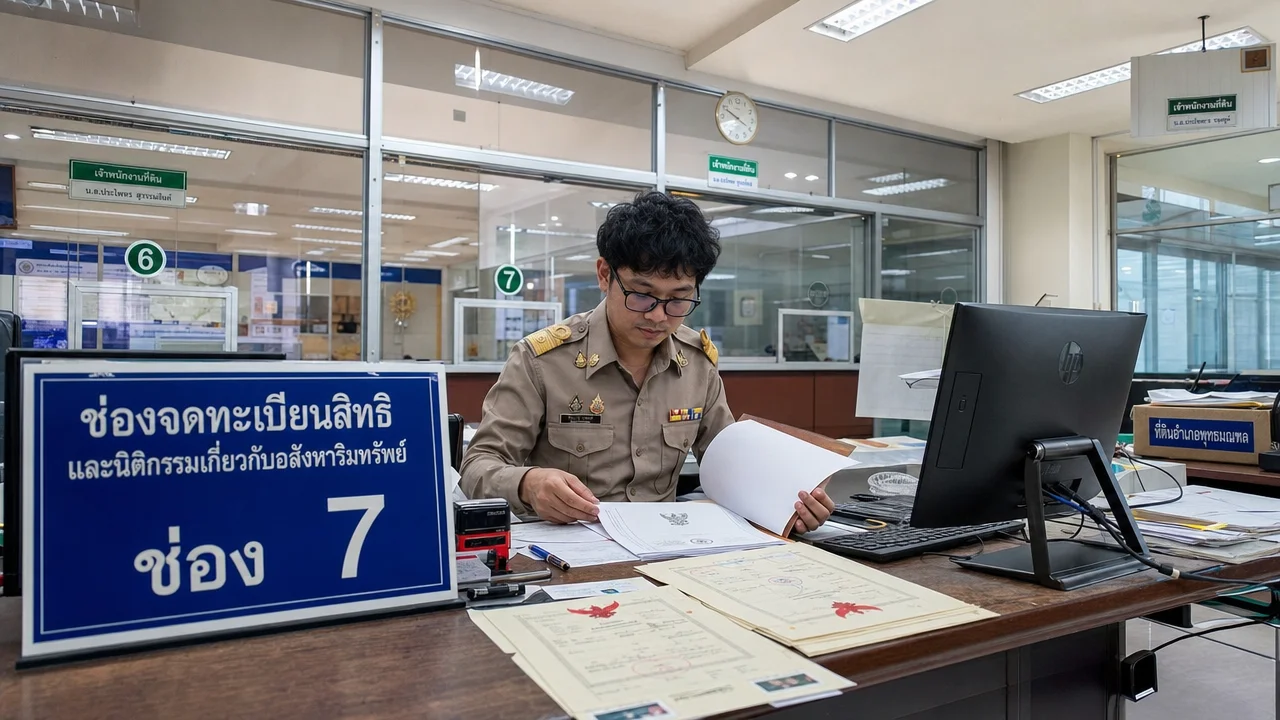
The Real Estate Information Center at the Government Housing Bank has published property registration data for January-September 2023. Foreigners purchased 10,703 residential units with a total value of 52.3 billion baht (approximately 1.5 billion USD). This represents a 38% increase compared to the same period in 2022. Chinese buyers completed 4,991 transactions-nearly half of all foreign deals-worth 24.7 billion baht. Vichai Viratkapan, acting director of the center, stated that demand is driven by two factors: investment purposes and purchasing a second home for living in Thailand.
Transaction Geography: Chonburi Leads, Bangkok Holds One-Third of Market
Land Office data shows clear concentration of purchases in two zones. Chonburi Province, including Pattaya, Bang Saen and the Eastern Economic Corridor industrial zones, attracted 41.8% of all foreign buyers. Bangkok, as the capital and main tourist hub, captured 37.5% of the market. The remaining 20.7% was distributed among Phuket, Samui, Hua Hin and northern provinces.
Chonburi attracts buyers with more than just beaches. The province hosts industrial clusters like Map Ta Phut and Amata City, where thousands of foreign specialists work. The proximity of U-Tapao Airport (45 minutes from central Pattaya) and government plans to expand it into an international hub create additional demand for rental housing. The average price per square meter in Chonburi in 2023 was 89,000 baht, 12% lower than Bangkok rates.
Who's Buying: Chinese Dominate, Russians in Top 5
Chinese citizens registered 4,991 condominiums out of 10,703-a 46.6% share. The Real Estate Center attributes this to the resumption of direct flights between China and Thailand after COVID restrictions were lifted in January 2023. The Ministry of Tourism recorded 3.2 million Chinese tourists in the first nine months of the year-four times more than in all of 2022.
Russian buyers ranked fifth by number of transactions after Chinese, Myanmar, Lao and Indian citizens. The center did not disclose exact figures for Russians, but local agencies note steady demand in the 3-6 million baht segment. The ruble's decline in late 2022 shifted interest from premium projects to studios and one-bedroom apartments in completed complexes.
Changes from 2022 to 2023: Three Key Factors
The first factor is the return of tourists. Thailand eliminated mandatory COVID-19 insurance and pre-flight testing in June 2022, but the effect only manifested in Q1 2023. The Tourism Authority of Thailand forecasts 28 million foreign arrivals for all of 2023 versus 11.2 million in 2022. Growing tourist flow directly impacts demand from investors buying condominiums for short-term rental.
The second factor is baht weakening. In September 2023, the rate reached 36.5 baht per dollar, 8% weaker than at the start of 2022. For buyers with dollars, euros and yuan, real estate became cheaper in foreign currency terms by the corresponding percentage. The Bank of Thailand did not intervene in exchange rate dynamics, preferring to support exporters and the tourism industry.
The third factor is price corrections by developers. Major developers Sansiri, Ananda Development and Origin Property reduced starting prices on new projects in Bangkok and Pattaya by 5-10% compared to 2021 launches. Simultaneously, banks tightened mortgage conditions for Thais, raising down payments from 10% to 20% for second and subsequent purchases. This pushed some Thai speculators out of the market and freed up supply for foreigners paying cash.
Legal Framework: 49% Quota and New Incentives for Thais
The Condominium Act limits the foreign ownership share in each building to 49% of total area. The remaining 51% is reserved for Thai citizens-the so-called Thai Quota. A foreigner can purchase a unit in their own name with full ownership rights (freehold) if the quota is not exhausted. Quota availability can be verified through a certificate from the condominium juristic person before registration at the Land Office.
On June 30, 2023, the Cabinet extended the program reducing registration fees for Thai citizens. The standard transfer fee is 2% of assessed value, mortgage registration fee is 1%. Under the program, both fees are reduced to 0.01% for purchases up to 7 million baht. The measure is valid until June 30, 2024. Foreigners pay full rates, but the program indirectly supports the market by stimulating Thai buyers to purchase Thai Quota units and freeing Foreign Quota for external investors.
The Ministry of Finance estimates the program will support transactions worth 540 billion baht annually and attract an additional 305 billion baht in investment compared to normal levels. The Budget Bureau received instructions to compensate for lost revenue to local administrative organizations.
New Regulatory Challenge: Short-Term Rental Law
In 2023, the government began developing new legislation (working title Accommodation Act) aimed at regulating short-term rental platforms like Airbnb. Under the current Hotel Act, renting a condominium for less than 30 days without a hotel license is illegal. In practice, this norm was widely violated.
In early 2023, following incidents involving digital locks installed on public posts for contactless check-ins, authorities issued an official warning. The new law proposes legal liability not only for owners but also for intermediary platforms. Simultaneously, the government plans to legalize small accommodation facilities outside condominiums, bringing regulation in line with market reality.
This creates a transition period for the Pattaya rental market. There's a high probability of structural shift toward monthly contracts (30+ days). Investors who bought studios for daily rental are reconsidering strategies. Monthly rental yields in Pattaya in 2023 are 4-6% annually versus 8-10% for daily rental models, but legal risks are lower.
Eastern Economic Corridor Prospects and Foreign Quota
In May 2023, expert circles discussed the possibility of increasing the foreign ownership quota in Eastern Economic Corridor (EEC) zones. Three provinces-Chonburi, Rayong and Chachoengsao-are part of this zone. No official decision had been made as of September 2023, but Thailand's Board of Investment is considering a pilot project for certain housing types.
If the quota is raised from 49% to 70% or eliminated for specific complexes, this will radically change supply in Pattaya and surrounding areas. Developers will be able to target projects primarily at foreigners, reducing dependence on Thai demand. CBRE Thailand analysts believe such a measure could attract an additional 50-80 billion baht in foreign real estate investment in the EEC within two years of implementation.
What This Means for Buyers in Pattaya
The 38% growth and return of Chinese buyers signal recovering liquidity. For those planning to buy for resale in 2-3 years, this is a positive sign: the market is emerging from the 2020-2022 slump. Average resale exposure time in Pattaya decreased from 8-9 months in 2022 to 5-6 months in Q3 2023 according to local agencies.
For rental investors, the situation is twofold. Growing tourist flow supports occupancy, but upcoming short-term rental regulation requires business model revision. If you plan to buy a studio for Airbnb, factor in a scenario of switching to monthly contracts. Units with furniture and infrastructure for long-term rental (kitchen, washing machine) become preferable to bare studios.
The extension of the fee reduction program until June 2024 does not directly apply to foreigners, but indirectly improves Thai Quota liquidity. If a developer cannot sell out the Thai quota, they often offer foreigners to purchase units through a Thai company or leasehold scheme. Activation of Thai demand reduces pressure on developers and decreases such "gray" offers.
The weak baht makes purchases more advantageous for holders of hard currencies. If the rate remains at 36-37 baht per dollar, a condominium for 5 million baht will cost $135-139 thousand versus $156 thousand at a rate of 32 baht in early 2022. The Bank of Thailand forecasts maintaining the current range until the end of 2024, so the currency window remains open.
Pay attention to projects in Chonburi outside central Pattaya. Areas like Bang Saen, Sriracha and Na Jomtien showed 6-8% price growth over nine months of 2023 with less competition from Chinese buyers who prefer central locations. For long-term ownership, these zones may offer better entry price to growth potential ratios.
Practical Steps Before Purchase
Check the Foreign Quota balance in the specific building. Request a certificate from the condominium juristic person stating that foreigners own less than 49% of the area. This document is required for Land Office registration. If the quota is exhausted, the unit can only be registered to a Thai citizen or through a 30-year leasehold.
Ensure the seller has the title deed-condominium title deed (Nor Sor 3 Gor for condominiums). Verify absence of encumbrances: mortgages, seizures, debts to the condominium juristic person. A lawyer can order a Land Office extract for 100-200 baht.
Calculate the full transaction cost. Fees for foreigners: 2% transfer fee, 1% mortgage (if applicable), 0.5% stamp duty, 3.3% property tax (if ownership less than 5 years) or income tax on progressive scale (if more than 5 years). Total burden is 3-7% of price depending on transaction structure. These costs are usually split between buyer and seller by agreement.
Open a Thai bank account before purchase. For Land Office registration, you need a Foreign Exchange Transaction Form. The bank issues it when crediting amounts from $50,000 and above with the note "for purchase of condominium." Without this certificate, a foreigner cannot register freehold, only leasehold.
Conclusions: Window of Opportunity Open, But Requires Speed
Data for January-September 2023 confirms a trend reversal after two years of stagnation. The 38% growth, return of Chinese demand and baht weakening create favorable conditions for market entry. Developers are correcting prices downward, banks are limiting Thai speculators, and the government is extending incentives-all three factors work in favor of foreign buyers.
However, the window won't stay open indefinitely. If tourist flow reaches 30-35 million by the end of 2024, as the Tourism Authority forecasts, developers will return prices to 2021 levels. Baht strengthening with export recovery will also reduce currency advantage. Buyers acting in the next 6-12 months receive maximum benefit from the current correction.
For those considering Pattaya, the key question is usage model. Investment for short-term rental requires readiness to adapt to new legislation. Purchase for personal residence or long-term rental carries fewer regulatory risks and allows calmly waiting for value growth in the medium term.