Bank of Thailand Banned Crypto as Payment Method - But Transactions Continue
On March 23, 2022, the Bank of Thailand, together with the Securities and Exchange Commission (SEC Thailand), issued an official ban on using cryptocurrency as a payment method within the kingdom. Direct acceptance of USDT or Bitcoin by a developer to a corporate wallet with subsequent transaction registration at the Land Department is prohibited. All major Thai developers (Sansiri, Origin, AssetWise, Anantara, Banyan Tree, Laguna) officially accept only Thai baht to bank accounts.
However, in 2026, purchasing condominiums with cryptocurrency in Pattaya, Phuket, or Bangkok happens daily. Digital assets work as an intermediate liquidity tool: the buyer sends USDT to a licensed Thai exchange (Bitkub, Orbix, ZipMex), the exchange converts stablecoins to Thai baht and transfers funds to the seller's bank account. This is followed by a standard transaction with issuance of the FET form - a document that Thai banks are required to provide when receiving funds in foreign currency converted to baht. Without FET, the Land Department will not register Freehold ownership for a foreigner according to Section 19 of the Condominium Act B.E. 2522.
Three Working Crypto Payment Schemes in 2026
Scheme 1: Bitkub as a Legal Bridge
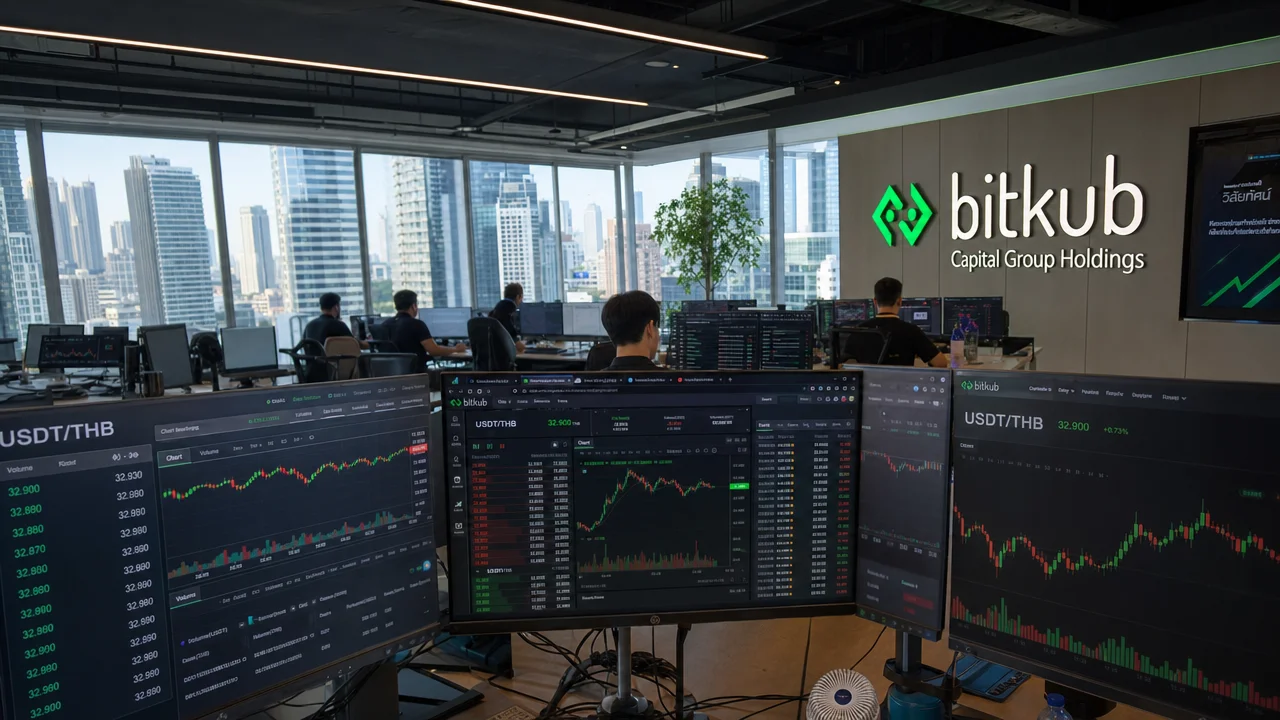
Bitkub is Thailand's largest crypto exchange, licensed by SEC Thailand in 2018. The buyer opens a verified account on the exchange (KYC procedure takes 5-10 business days for initial setup), transfers USDT from a personal wallet or international exchange (Bybit, OKX) to the Thai account. Bitkub converts stablecoins to Thai baht within the exchange's legal framework. The buyer withdraws baht to an account at Bangkok Bank, Kasikorn Bank, or SCB, then transfers funds to the developer. The developer's Thai bank issues FET marked "from cryptocurrency conversion." The Land Department has accepted such FETs since 2023.
Exchange commission is 0.25-0.5% on conversion plus bank withdrawal fee (usually 20-50 baht). Total costs - 1-1.5% of transaction amount. Payment processing time: 1-3 business days from USDT deposit on exchange to baht receipt by developer.
Scheme 2: Escrow Services for Corporate Buyers
Some major developers in Pattaya (Anchan, Layan, MGC) and Phuket (Banyan Tree) accept USDT or Bitcoin through escrow services - BitPay, Coinify, Crypto.com Pay. The buyer transfers cryptocurrency to the escrow service, which converts funds to baht and transfers them to the developer's account. The developer issues a standard FET form. Advantage for Russian buyers: bypassing sanction issues with correspondent banks. Disadvantage: escrow service commission reaches 1.5-2% of transaction amount.
Escrow scheme is suitable for transactions from 5 million baht (approximately 140,000 USD at April 2026 rates). For smaller amounts, costs are disproportionately high. Developers rarely advertise crypto payment options on official websites - information must be requested directly from the sales department.
Scheme 3: P2P Exchange Through OTC Desks
Wealthy buyers have access to OTC desks (over-the-counter) - licensed exchange offices working with large amounts. The buyer transfers USDT to the OTC desk wallet, the desk converts funds to baht and transfers them to the developer's account. OTC desks often have partnership agreements with major real estate agencies in Pattaya and Phuket. Commission: 0.5-1% for amounts from 10 million baht (approximately 280,000 USD). Speed: 1-2 business days.
Important nuance: the OTC desk must be registered in Thailand and have a currency exchange license. Using unlicensed exchangers creates a risk of bank refusal to issue FET form. Without FET, the transaction will not be registered at the Land Office.
What Thai Legislation Says
The Bank of Thailand ban from March 2022 only concerns direct use of cryptocurrency as a payment method. Converting digital assets to fiat currency through a licensed exchange or escrow service does not violate the law. SEC Thailand regulates crypto exchange operations and requires them to comply with KYC (Know Your Customer) and AML (Anti-Money Laundering) procedures.
Thailand's Land Department registers property transfers only based on payment in fiat currency confirmed by a Thai bank's FET certificate. The FET (Foreign Exchange Transaction Form) confirms that money came from abroad legally. Without FET, it's impossible to obtain Chanote (Nor Sor 4) - the full condominium ownership document.
Condominium Act B.E. 2522 (1979) establishes a 49% quota for foreign owners in each residential complex. A foreigner can purchase a condominium in full ownership (Freehold) only when complying with this quota and having the FET form. If the quota is exhausted, only land lease (Leasehold) for up to 30 years with renewal option is available.
Practical Example: Buying a Studio in Pattaya with USDT
A buyer from Moscow selected a 28 m² studio in a new project on Jomtien Beach (Pattaya) for 2.8 million baht (approximately 78,000 USD at April 2026 rates). The developer doesn't accept cryptocurrency directly but has a partnership agreement with Bitkub.
Step 1: Buyer opened a Bitkub account, completed verification (7 business days). Step 2: Transferred 78,500 USDT from wallet on international exchange Bybit to Bitkub account (TRC20 network fee - 1 USDT). Step 3: Sold USDT for Thai baht on Bitkub at rate of 35.75 baht per 1 USDT (exchange commission 0.25% - approximately 7,000 baht). Step 4: Withdrew 2,793,000 baht to Bangkok Bank account (withdrawal fee 50 baht). Step 5: Transferred 2,800,000 baht to developer's account. Bangkok Bank issued FET form marked "funds from cryptocurrency conversion." Step 6: Developer registered transaction at Land Department, buyer received Chanote.
Total costs: approximately 7,050 baht (exchange and bank commission) plus 1 USDT network fee. Total less than 0.3% of transaction amount. Time from USDT transfer to FET receipt: 3 business days.
Risks and Pitfalls
Confusion in Transfer Networks
Error in network selection (TRC20 instead of ERC20 or vice versa) leads to irreversible loss of funds. Bitkub accepts USDT only through TRC20 network. Before transfer, wallet address and network must be triple-checked.
Bank Refusal to Issue FET
Thai banks have the right to refuse FET issuance if the source of funds raises suspicions. Using an unlicensed exchanger or transfer from a wallet associated with mixers (Tornado Cash, Wasabi Wallet) increases refusal risk. The bank may request additional documents confirming cryptocurrency origin.
Tax Event on Conversion
Converting cryptocurrency to baht through a Thai exchange creates a separate tax event. If stablecoins were purchased cheaper than sold, the difference is subject to income tax in Thailand (rate 0-35% depending on amount). Bitkub exchange automatically withholds tax on withdrawal if the amount exceeds 1 million baht per year.
Sanction Issues for Russians
As of April 2026, Western regulators continue expanding sanction lists. Thai banks have no requirements to verify source of funds against Russian citizens but may request additional documents for large transfers (from 10 million baht). SWIFT transfers from Russian banks are blocked. Crypto route through Bitkub remains one of few working schemes for Russian buyers.
Position of Pattaya Developers
Major developers in Pattaya (Origin, AssetWise, Anchan, Layan) don't advertise cryptocurrency acceptance in public materials but actually work with buyers using crypto routes. Developers have partnership agreements with exchanges and lawyers who help buyers conduct conversion legally.
Small developers (projects up to 100 units) sometimes accept USDT directly to corporate wallets, but this practice violates Bank of Thailand's position and creates risk for the buyer. If the developer doesn't issue FET form, the transaction won't be registered at the Land Department. The buyer will remain without property documents.
According to Pattaya real estate agencies, approximately 15-20% of transactions with foreign buyers in 2025-2026 proceed using crypto routes. For Russian buyers, this figure is higher - around 35-40%, as SWIFT transfers from Russia are blocked.
Alternative: Transfer Through Third Country Banks
Besides crypto route, Russian buyers have access to SWIFT transfers through banks in UAE, Kyrgyzstan, Kazakhstan, Serbia, Hong Kong. Scheme: buyer opens account in third country bank, transfers rubles there (through exchanger or P2P), then makes SWIFT transfer to Thailand. Thai bank issues FET form.
Timeframe: 1-3 weeks from account opening to FET receipt. Commission: 0.5-1% of transfer amount plus bank fees (usually 30-50 USD for SWIFT). Risk: third country bank may request additional documents or freeze transfer for compliance check.
Crypto route is faster (1-3 days versus 1-3 weeks) and cheaper (0.3-1.5% versus 0.5-1% plus bank fees). For this reason, many Russian buyers in 2026 prefer USDT through Bitkub.
What This Means for Pattaya Buyers
Pattaya remains one of Thailand's most accessible markets for foreign buyers. Average price for 25-30 m² studio in new project on second line from sea - 2.5-3.5 million baht (70-98 thousand USD). For Russian buyers, crypto route through Bitkub solves sanction restrictions problem and allows completing transaction in 3-5 business days from property selection to FET form receipt.
It's important to work only with developers having partnership agreements with licensed exchanges. Real estate agency should provide list of developers accepting crypto payments and consult on conversion scheme selection. Attempting to save on exchange commission and transfer USDT directly to developer's wallet creates risk of transaction registration refusal.
For buyers planning rental investments, crypto route doesn't affect rental income taxation. Rental income is subject to income tax in Thailand at 0-35% rate depending on amount. A foreigner renting out a condominium must file tax declaration in Thailand by March 31 of following year.
Pattaya market in 2026 shows growing demand from Russian buyers amid sanction restrictions in other jurisdictions. Crypto routes through Bitkub and escrow services become standard practice for transactions from 2 million baht. Developers adapt to new realities and offer buyers legal schemes for converting digital assets to fiat currency.
Buyer Checklist
- Ensure developer has partnership agreement with licensed exchange (Bitkub, Orbix, ZipMex) or escrow service (BitPay, Coinify).
- Open exchange account and complete verification in advance (procedure takes 5-10 business days).
- Check USDT transfer network (Bitkub accepts only TRC20).
- Request confirmation from developer that bank will issue FET form after cryptocurrency conversion.
- Ensure foreign quota of 49% in selected project is not exhausted.
- Calculate total costs: exchange commission (0.25-0.5%), network fee (1-5 USDT), bank fee (20-50 baht), conversion tax (if applicable).
- Save all documents: transaction screenshots, exchange statements, FET form. These documents will be needed for transaction registration at Land Department.
Cryptocurrency in 2026 has become a working tool for purchasing real estate in Thailand, despite Bank of Thailand's formal ban. Legal conversion schemes through licensed exchanges allow foreign buyers to complete transactions quickly, cheaply, and in full compliance with Thai legislation. For Russian buyers in Pattaya, crypto route through Bitkub remains one of few available methods to transfer money to developer and obtain Freehold ownership of condominium.