
Myanmar Enters Top Three Largest Buyers of Thai Real Estate
Buyers from Myanmar took third place among foreign investors in Thailand's condominium market at the end of 2024, surpassing traditionally active Russians. China maintained leadership with a 33% share of all foreign transactions, although this figure decreased compared to previous years. Russia moved to second place with 7.6%, losing positions amid geopolitical restrictions and reduction of direct flights. Myanmar showed growth to 6.1%, which came as a surprise to market analysts.
The data was published by Thailand's Real Estate Information Center (REIC) in its annual report on foreign buyer structure. Analysts note that the growing interest from Myanmar is linked to political instability in the country and wealthy citizens' desire to diversify assets. Simultaneously, the share of buyers from Taiwan, India, Australia, and France increased, indicating an expansion of demand geography.
Foreign Demand Structure: Who's Buying and How Much
According to REIC data for 2024, Chinese buyers completed 33% of all transactions with foreigners in the condominium segment. The absolute number of transactions from China decreased by 8% compared to 2023, which experts attribute to China's economic slowdown and tightening of currency controls. The average transaction value for Chinese buyers was 4.2 million baht, 300 thousand lower than the 2023 figure.
Russian buyers accounted for 7.6% of the market, reducing their share from 9.1% the year before. Main reasons: restrictions on international transfers through the SWIFT system, reduction of direct Bangkok Airways and Thai Airways flights to Moscow, and the rise in the baht-to-ruble exchange rate. The average budget of Russian buyers remained at 5.8 million baht, which is above the market average.
Buyers from Myanmar increased their share from 4.3% in 2023 to 6.1% in 2024. Growth was 41% in absolute numbers. Purchase geography concentrates in Bangkok (Sukhumvit, Ratchada districts) and Chiang Mai, while Pattaya remains less popular with this group. Average transaction value is 3.1 million baht, indicating a focus on compact studios and one-bedroom units.
Other Growing Markets
Taiwan showed growth from 5.6% to 7.1%, India from 3.9% to 5.2%. Australian buyers increased their share to 4.8%, French to 3.4%. These groups choose premium-class properties in central Bangkok districts and resort areas of Phuket, Samui, and Hua Hin.
REIC Forecast for 2025-2026
REIC analysts forecast stabilization or moderate sales growth to foreigners at 1% in 2025. Supporting factors: the Thai government's extension of preferential registration rates for Thai citizens until June 30, 2027 (0.01% instead of the standard 2% for properties up to 7 million baht), which indirectly encourages developers to maintain prices. Foreigners do not receive this benefit but benefit from overall market stabilization.
According to Knight Frank Thailand, in 2026, the share of Chinese buyers in Pattaya was 36% of foreign transactions-3 percentage points above the national average. Russians in Pattaya hold 13%, twice the national figure. Myanmar in Pattaya accounts for only 2.1%, trailing Germany (5%), the United Kingdom (5.5%), and Scandinavian countries. This is because buyers from Myanmar prefer proximity to the border and business centers rather than beach resorts.
The quota for foreign ownership in condominiums remains at 49% of the building's total area according to the Condominium Act B.E. 2522 (Section 19 bis). The discussed increase to 75% was never submitted to parliament as of August 2026. The Ministry of Interior confirmed the extension of preferential registration rates, but only for Thai citizens, as recorded in the Royal Gazette dated July 1, 2026.
Why Myanmar Is Increasing Investments
The political crisis in Myanmar following the 2021 military coup forced wealthy citizens to seek safe havens for capital. Thailand became a logical choice: close location, no visa barriers for short-term visits, developed banking system. Buyers from Myanmar often complete transactions through Thai companies with nominee directors, which formally complies with the law but requires careful legal verification.
Thai banks are more willing to accept transfers from Myanmar than from Russia due to lower sanctions risks. Bangkok Bank and Siam Commercial Bank open accounts for Myanmar citizens with a work visa or long-term stay permit. To register in a condominium's foreign quota, a Foreign Exchange Transaction Form is required, which the bank issues when funds are credited from abroad.
What's Happening with Chinese and Russian Demand
The Chinese market suffers from internal problems: developer crisis (Evergrande, Country Garden), falling confidence in real estate as an asset, restrictions on capital outflow exceeding $50,000 per year. Thai projects are losing attractiveness against the backdrop of depreciating real estate within China. The average exposure time for a unit bought by a Chinese buyer in 2022-2023 increased to 180 days versus 90 days in 2020.
Russian demand is constrained by technical difficulties. Transferring funds through UnionPay and cryptocurrency channels works but increases costs by 3-5%. Direct Moscow-Bangkok flights decreased from 14 to 7 per week as of July 2026. Pattaya developers note that Russian buyers increasingly choose installment plans from developers instead of lump-sum payments, reducing transaction margins.
Table: Comparison of Buyer Activity in 2023-2024
| Country | 2023 Share | 2024 Share | Change |
|---|---|---|---|
| China | 35.2% | 33.0% | −2.2 p.p. |
| Russia | 9.1% | 7.6% | −1.5 p.p. |
| Myanmar | 4.3% | 6.1% | +1.8 p.p. |
| Taiwan | 5.6% | 7.1% | +1.5 p.p. |
| India | 3.9% | 5.2% | +1.3 p.p. |
What This Means for Buyers in Pattaya
For Russian investors considering Pattaya, the shift in demand toward Myanmar and other Asian markets means reduced competition for properties in the mid-price category (3-6 million baht). Developers have begun offering more flexible installment terms: up to 40% during construction versus the standard 20-30%. Projects in Pratumnak, Jomtien, and Na Jomtien areas show slowing sales, providing room for discount negotiations.
For Myanmar buyers, Pattaya is currently less interesting than Bangkok or Chiang Mai. This creates an arbitrage opportunity: acquiring units in projects with a high foreign quota share (close to 49%) before Myanmar demand shifts toward beach resorts. Historically, such shifts occur with a 12-18 month lag.
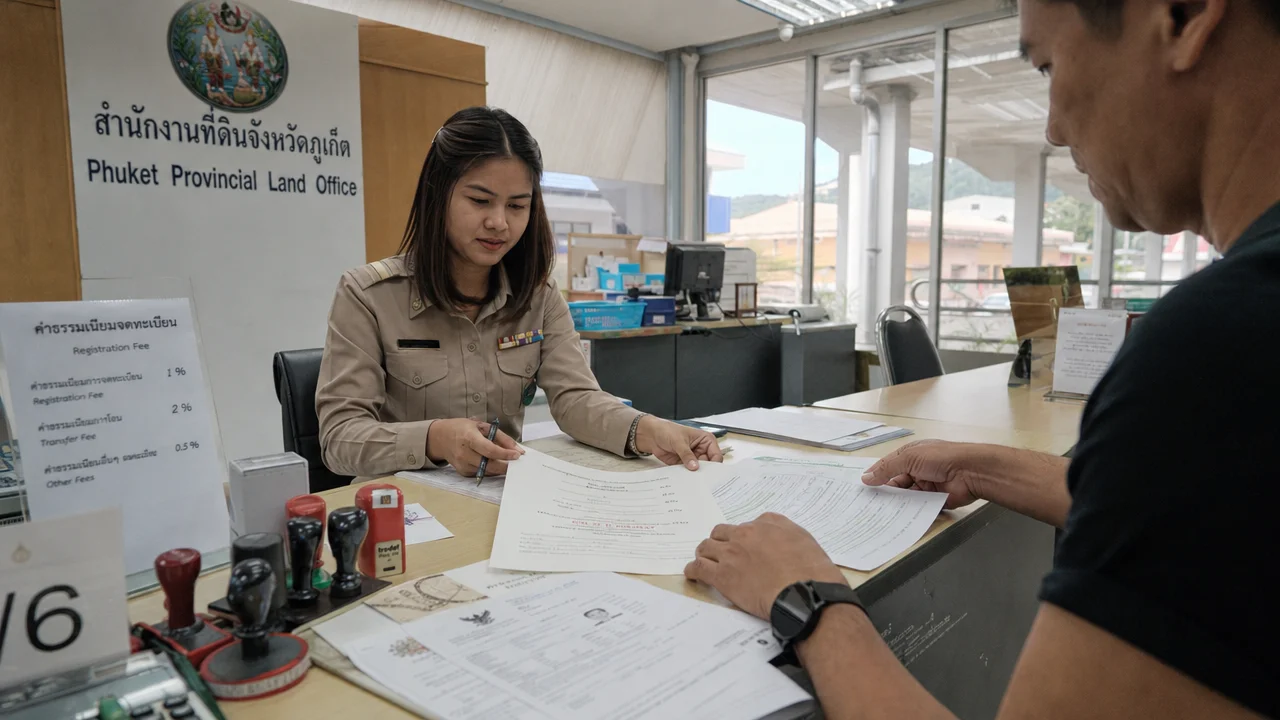
Important technical point: if you're planning a purchase in 2026-2027, verify the remaining foreign quota in a specific building before making a deposit. The quota is calculated by area, not by number of units, so a project may exhaust the limit by selling less than half the apartments if large penthouses went to foreigners. The Land Office will not register the transaction without quota confirmation and a bank certificate of foreign currency transfer.
The preferential 0.01% registration rate extended until June 2027 does not apply to foreigners. You will pay the standard 2% of the cadastral value or transaction price (whichever is higher). Factor these costs into your budget: for a 5 million baht property, registration will cost 100,000 baht plus stamp duty and legal fees.
Conclusions: The Market Is Restructuring
The structure of foreign demand for Thai real estate is changing faster than in previous decades. Myanmar, Taiwan, and India are replacing traditional leaders from China and Russia. For Pattaya, this is not yet critical: the Russian diaspora remains the largest among European buyers, and Chinese still dominate new projects along Sukhumvit.
REIC's forecast of 1% sales growth in 2025 appears conservative. If the Thai government decides to increase the foreign quota to 75% or extends benefits to a broader buyer segment, the market could show 3-5% growth. Until this happens, the focus remains on property quality, developer reputation, and legal transaction integrity-factors that don't depend on the nationality of building neighbors.