
Seven months ago, I moved from Pratumnak to the eastern part of Pattaya. The rental rate dropped from 95,000 to 68,000 baht per month for a villa of comparable size. During this time, land plots in the Eastern Economic Corridor industrial zone increased in price by 34%, and the assessed value of my rented villa rose by 2.8 million baht. I'm analyzing why East Pattaya turned out to be the right bet and how to read market signals before prices soar.
Why I left Pratumnak: price versus prospects
Pratumnak is considered a premium location. Villas with sea views, developed infrastructure, proximity to Cosy Beach. The rental rate for a three-bedroom villa of 180 m² with a pool was 95,000 baht monthly. One-year contract, two-month deposit, utilities separate - standard scheme for this area.
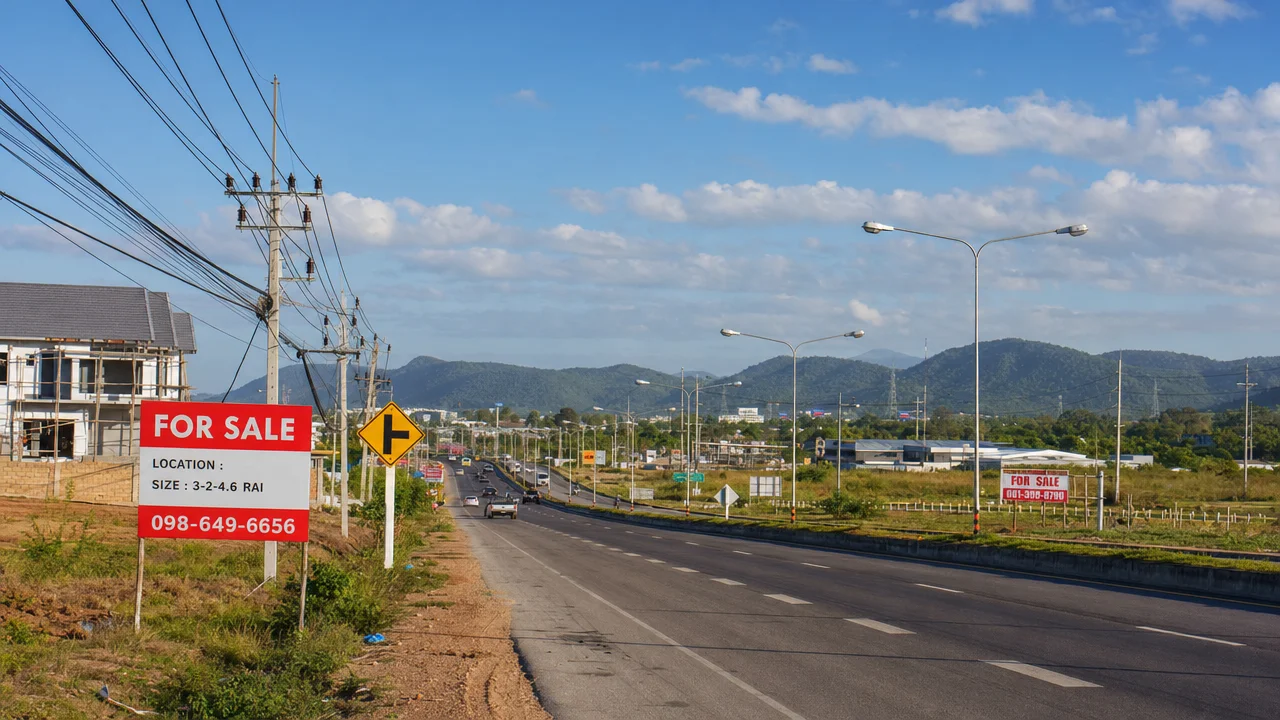
In spring 2026, I began tracking the dynamics of land deals in eastern Pattaya districts. Land Office data showed growth in Chanote title registrations in Huai Yai and Pong tambons. The average price per rai of land rose from 1.2 to 1.5 million baht per quarter. In parallel, construction companies began buying up plots along Highway 331 and Route 7 - highways connecting Pattaya with EEC industrial zones in Rayong and Chonburi.
The decision to move matured after analyzing three factors. First - logistics: Route 7 reduced travel time to U-Tapao airport to 25 minutes, which is critical for investors and expats working with industrial facilities. Second - government infrastructure plan: the Eastern Economic Corridor expansion envisioned investments in roads, water supply, and electrical networks specifically in the eastern sector. Third - rental rates: for 68,000 baht I found a 200 m² villa in a gated community in Ban Amphur, with three bedrooms, an 8×4 meter pool, and a 400 m² plot.
Savings of 27,000 baht monthly over seven months totaled 189,000 baht. Plus increased house and plot area. Minus - distance from central Pattaya (15 km), but having a car negated this disadvantage.
What happened to land in the EEC zone: numbers and growth mechanics
The Eastern Economic Corridor covers three provinces: Chonburi, Rayong, and Chachoengsao. The government program started in 2018, but the active investment phase fell on 2025-2026. According to EEC Office data, in the first half of 2026, the zone attracted 87 billion baht in foreign direct investment - a 41% increase compared to the same period in 2025.
Land in industrial clusters became sharply more expensive. Plots with Chanote titles in the Map Ta Phut area (Rayong) grew from 3.8 to 5.1 million baht per rai - plus 34% in seven months. Similar dynamics were observed in Pluak Daeng and Pong (eastern Pattaya). The reason - shortage of land with clean titles near highways and port infrastructure.
Residential property developers followed industrial buyers. Companies like Sansiri, SC Asset, and local developers began buying plots for townhouses and villas within a 5-10 km radius of industrial zones. The logic is simple: factory and logistics center employees need housing, and land prices haven't yet reached the level of central Pattaya or Pratumnak.
My villa in Ban Amphur is located 4 km from Route 7 and 8 km from the nearest industrial cluster. The plot owner - a Thai family that bought the land in 2019 for 800,000 baht per rai. Now neighboring plots sell for 1.8-2.0 million per rai. An appraiser I consulted with in October 2026 valued the villa with the building at 12.5 million baht versus 9.7 million when I moved in March. The increase of 2.8 million baht in seven months - the result not of renovation (the house is new), but of land revaluation.
How I chose a villa in East Pattaya: an eight-point checklist
The search took three weeks. I viewed 14 properties in Huai Yai, Ban Amphur, Pong, and Nong Prue areas. I formed selection criteria based on market analysis and personal needs.
Distance to Route 7. The highway connects Pattaya with U-Tapao airport and industrial zones. The closer - the higher the liquidity when reselling or renting. Optimum - up to 5 km.
Land title. Only Chanote (Nor Sor 4). I immediately excluded plots with Nor Sor 3 or without documents. I checked the Land Office extract: owner, encumbrances, transaction history.
Village infrastructure. Security, paved roads, central water supply. Many villas in East Pattaya stand on private plots without common infrastructure - such are cheaper but more difficult to operate.
Building condition. New houses (up to three years) or with quality renovation. Old villas require investments, which eats up rental savings.
Plot area. Minimum 300 m². Land appreciates faster than buildings, so the larger the plot - the higher the value growth potential.
Legal cleanliness of rental. Contract in Thai and English, registration with local administration (if term exceeds three years), clear conditions on deposit and utilities.
Proximity to schools and hospitals. Critical for families. Bangkok Hospital Pattaya - 12 km, Regents International School - 9 km. Acceptable.
District potential. Presence of new projects, developer activity, road development plans. Two new townhouse villages were being built in Ban Amphur, signaling growing demand.
The villa I chose covered all points. Two-year rental contract with extension option, deposit 136,000 baht (two months), utilities by meter. Owner - a Thai couple living in Bangkok, renting property through a local agent.
Parallel growth: residential real estate follows industrial
When an industrial zone grows, the residential market reacts with a lag of 6-12 months. Factory employees, logistics workers, engineers look for housing nearby. Developers launch projects for this demand. Land prices creep up, followed by rental rates and finished housing costs.
In East Pattaya, this cycle started in late 2025. Sansiri announced the Baan Sansiri Pattaya-Huai Yai townhouse project priced from 3.2 million baht per unit. SC Asset bought 15 rai of land in Pong for villas in the 8-12 million baht segment. Local developers offered budget townhouses from 2.5 million.
The rental market reacted more slowly. In March 2026, the average rate for a 150-200 m² villa in East Pattaya was 55-70 thousand baht. By October it grew to 65-80 thousand. An increase of 15-18% in six months. In Pratumnak during the same period, rates remained at 90-100 thousand - the market is saturated, no new growth drivers.
Buying land in East Pattaya in spring 2026 would have been an optimal decision. A 100 talwah (400 m²) plot with Chanote could be bought for 1.4-1.6 million baht. Now similar lots cost 2.0-2.2 million. Annual return 35-40% excluding construction.
I didn't buy land for two reasons. First - foreigners are prohibited from directly owning land in Thailand, requiring a Thai company or leasehold scheme. Second - plot liquidity is lower than finished villas or condominiums. Renting a villa provided flexibility and allowed me to lock in a favorable rate without legal complications.
East Pattaya risks: what could go wrong
Growth is never linear. Several factors can slow or reverse the trend.
EEC slowdown. If the government cuts the program budget or foreign investors leave, land demand will fall. Industrial zones will remain underloaded, the residential market will lose its driver.
Supply oversaturation. Developers launch projects simultaneously. If demand doesn't keep up with supply, prices will stabilize or decline. In 2023, a similar situation occurred in Hua Hin - excess condominiums led to a 12% price drop.
Infrastructure delays. Plans to expand roads and utilities may shift. Without logistics improvement, East Pattaya will remain peripheral.
Legal changes. Tightening rules for foreigners (visas, property ownership) will reduce buyer influx. The Pattaya market is 40-50% dependent on expats and investors from Russia, China, and Europe.
Natural risks. Part of the eastern districts are located in lowlands. The rainy season can cause flooding. Before renting or buying, I check the plot's history: whether it flooded, whether there's drainage.
My approach - diversification. Renting a villa in East Pattaya meets housing needs and provides exposure to a growing market without capital investment. In parallel, I hold a condominium in central Pattaya (bought in 2024) - a stable asset with predictable rental yield of 5-6% annually.
What this means for a buyer in Pattaya
East Pattaya's growth is not a local anomaly. Similar processes are occurring in areas along Route 7 and Highway 331: Sriracha, Bang Saray, Sattahip. The logic is the same - industrial development pulls the residential market along.
For a buyer from Russia, this is a window of opportunity. Prices in East Pattaya are still 30-40% lower than in the center or Pratumnak, but the gap is narrowing. A villa for 8-10 million baht today could cost 11-13 million in two years if the trend continues.
Rental is an alternative to buying for those who want to test the area. A rate of 60-75 thousand baht for a 180-220 m² villa allows comfortable living and market observation from within. If prices continue to rise, you can lock in profit by buying a plot or finished property. If the trend reverses - simply move without capital losses.
Investors should look at land plots with Chanote within a 5-7 km radius of Route 7. Size 200-400 m², price up to 2 million baht per lot. Investment horizon - three to five years. Liquidity is lower than condominiums, but growth potential is higher.
Buying a finished villa makes sense if you plan to live in Pattaya permanently or rent long-term. The 8-12 million baht segment - optimal balance of price and quality. Cheaper villas often require renovation, more expensive ones hit a narrow circle of buyers.
Main thing - check legal cleanliness. Chanote title, absence of encumbrances, correct transaction processing through a lawyer. Saving 100-200 thousand baht on a lawyer and losing 10 million due to document problems - a typical mistake of foreign buyers.
Conclusions: how to read the market before price growth
My move to East Pattaya was not accidental. Three months of analyzing land deals, infrastructure plans, and developer activity gave a clear signal - the area is on the threshold of growth. Savings of 189,000 baht on rent and villa value increase of 2.8 million baht in seven months confirmed the hypothesis.
Pattaya's real estate market is heterogeneous. The center and Pratumnak are stable, but growth potential is limited. Peripheral areas - East Pattaya, Bang Saray, Huai Yai - offer higher returns with increased risks. The key to success - early detection of growth drivers: infrastructure projects, industrial investments, developer activity.
For those ready to study Land Office data, track government programs, and personally visit areas, opportunities exist. Thailand's market is transparent, information is accessible, entry barriers are low. The main thing - don't chase hype, but look for fundamental reasons for growth.