Two Kingdoms Strengthen Ties Through Medical Personnel and Tourist Flows
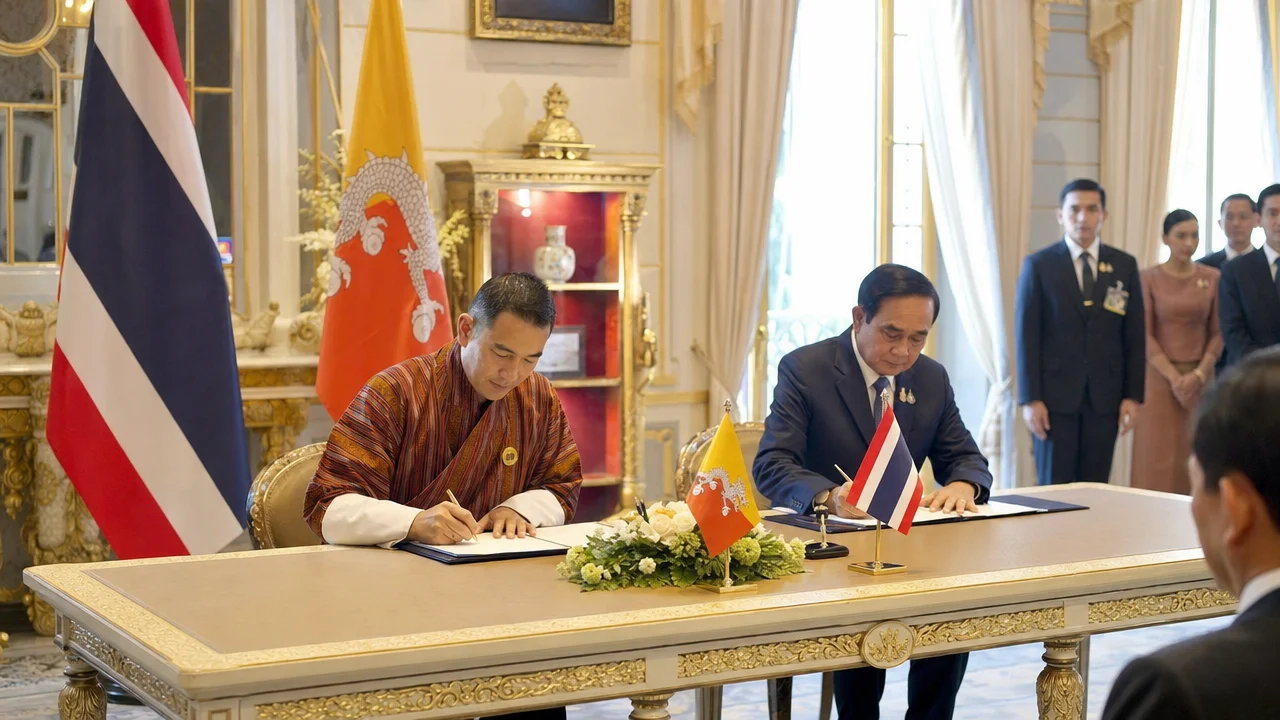
Thai Prime Minister Srettha Thavisin and Bhutanese Prime Minister Tshering Tobgay witnessed the signing of two memoranda of understanding on October 22, 2026. The ceremony took place at the Santi Maitri Building on the Government House grounds in Bangkok at noon. The documents cover academic cooperation in the medical field and development of tourism links between the countries, marking 35 years of diplomatic relations.
First Memorandum: Exchange of Doctors and Scientific Research
Thailand's Department of Medical Services and Khesar Gyalpo University of Medical Sciences (Bhutan) agreed on joint work in three areas. First - exchange of medical personnel between clinics and training centers. Second - conducting joint scientific research in areas where both countries have accumulated experience. Third - academic cooperation, including development of educational programs and internships for medical students.
The agreement does not establish specific quotas for specialist exchanges, but creates a legal framework for bilateral programs. Thailand is interested in studying the Bhutanese model of primary healthcare in mountainous regions, while Bhutan plans to send doctors for specialization in Thai clinics, especially in cardiology and oncology.
Second Memorandum: Tourism Without Specific Figures
The second agreement aims to expand tourist flows between the kingdoms. The document does not contain target indicators for tourist numbers or investment volumes, but establishes consultation mechanisms between the tourism authorities of both countries.
Bhutan traditionally applies a limited tourism policy with high daily fees (around 100 US dollars per person per day as of 2025), which restrains mass visitor flows. Thailand, in contrast, receives tens of millions of tourists annually and is interested in exchanging experience on managing tourism infrastructure. The memorandum provides for consultations on destination marketing, guide training, and service standards.
Trade Target of 120 Million Dollars and Free Trade Negotiations
At a joint press conference after the ceremony, Srettha Thavisin stated that Thailand's government would accelerate negotiations on a free trade agreement with Bhutan. The goal is to simplify access for each country's goods to the partner's market and achieve bilateral trade turnover of 120 million US dollars. A specific deadline for achieving this goal was not announced.
The Thai premier also mentioned Thai investors' interest in the Gelephu Mindfulness City project - a new city that Bhutan plans to build in the south of the country. The project envisages creating an economic zone with a simplified regime for foreign companies, but details of Thai business participation were not disclosed.
Knowledge Exchange: From Agriculture to Gross National Happiness
Srettha Thavisin emphasized that Thailand is ready to share experience in medicine, agriculture, and technology as a development partner. Simultaneously, the Thai side is interested in studying Bhutan's approach to sustainable development and the concept of Gross National Happiness - an alternative welfare indicator that Bhutan uses instead of traditional GDP.
The parties agreed on student and teacher exchanges, as well as cooperation in alternative energy. Bhutan possesses significant hydroelectric potential and exports electricity to India, while Thailand is actively developing solar generation. Technology exchange in these areas could be mutually beneficial.
"Friends of Thailand and Bhutan" Initiative and BIMSTEC Summit
The prime ministers agreed to create the "Friends of Thailand and Bhutan" initiative to strengthen people's diplomacy. Specific activities within this program were not detailed, but typically such formats include cultural exchanges, educational grants, and business forums.
Srettha Thavisin invited Tshering Tobgay to the Bay of Bengal Initiative for Multi-Sectoral Technical and Economic Cooperation (BIMSTEC) summit, which Thailand will host in September 2026. Bhutan is not a BIMSTEC member, but may participate as an observer or guest of the host country.
Context: 35 Years of Relations and Geographic Distance
Thailand and Bhutan established diplomatic relations in 1989. Despite geographic distance - the countries do not share a common border, with Myanmar, India, and Bangladesh located between them - the kingdoms maintain regular contacts at government and royal family levels.
Tshering Tobgay's visit to Thailand in October 2026 became the first official visit of a Bhutanese prime minister to Bangkok in recent years. Previous high-level meetings took place during regional summits, but bilateral negotiations in the partner's capital underscore both sides' intention to deepen cooperation.
What This Means for a Buyer in Pattaya
The signed memoranda do not directly affect the Pattaya real estate market or purchase conditions for foreigners. The agreements concern medicine and tourism, but do not touch on visa rules, land legislation, or tax rates for non-residents.
However, expansion of medical cooperation may indirectly increase Thailand's attractiveness for long-term residence. If Thai clinics gain access to new research programs and specialist exchanges, this will strengthen the country's reputation as a medical tourism destination. Property buyers planning retirement relocation or long-term stays often consider medical service quality alongside housing prices.
The tourism agreement with Bhutan is unlikely to change visitor flows to Pattaya, since the Bhutanese market is small and the high-fee policy limits traveler numbers. Much more significant for the Eastern Seaboard are Thailand's negotiations with China, India, and Russia on visa regimes and direct flights - these markets form demand for condominium rentals and purchases in Pattaya.
For investors, monitoring Thailand's Ministry of Finance decisions on property taxes and the Bank of Thailand's position on mortgage rates remains key. Bilateral agreements with small partners like Bhutan do not change the macroeconomic picture, but demonstrate Thailand's foreign policy stability and the government's readiness to develop regional ties.
Conclusion
The memoranda between Thailand and Bhutan open new channels for medical personnel exchange, scientific research, and tourism experience sharing. The agreements do not contain specific financial commitments or target indicators with strict deadlines, but create a legal framework for future programs. Free trade negotiations and Thai investors' interest in the Gelephu Mindfulness City project indicate an intention to expand economic interaction beyond symbolic gestures. For the Pattaya real estate market, these events remain background, but strengthening Thailand's medical infrastructure may increase the country's attractiveness for buyers seeking a place for long-term residence.