

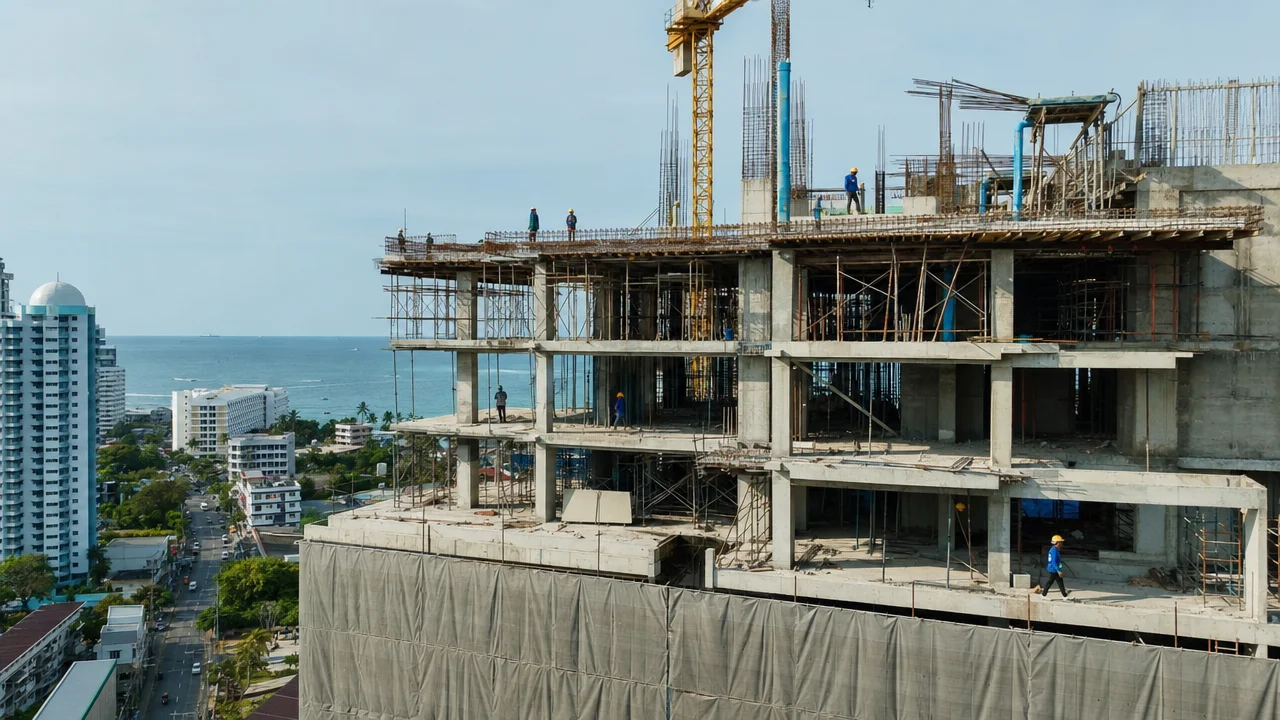

Thailand's Cabinet has approved an extension of the property registration fee reduction program for another year-until June 30, 2027. Rates remain at a symbolic level of 0.01% for both ownership transfer and mortgage registration. The decision aims to support the housing market and stimulate economic growth amid a situation where the number of new projects in the country has fallen to a two-decade low.
The benefit was originally introduced on April 22, 2025, and was set to end on June 30, 2026. Thailand's Ministry of Interior published two urgent regulations officially securing the extension in the Royal Gazette. The reduced rate of 0.01% replaces the standard 2% for ownership transfer and 1% for mortgage registration.
Who qualifies for the benefit and which properties are covered by the program
The program applies exclusively to Thai citizens purchasing property for personal residence. Foreign buyers continue to pay fees at standard rates regardless of property type or transaction amount.
Property types included in the program:
- detached houses
- duplexes
- townhouses
- commercial buildings
- land plots with residential structures
- condominium units registered under the Condominium Act
Mandatory conditions for receiving the benefit:
| Parameter | Maximum value |
|---|---|
| Contract property value | 7,000,000 baht |
| Official appraised value | 7,000,000 baht |
| Mortgage loan amount | 7,000,000 baht per one contract |
The benefit does not apply to the sale of ownership shares. The buyer must be an individual with Thai citizenship. Mortgage registration and ownership transfer must occur simultaneously-if the mortgage is registered later, the 0.01% rate does not apply to it.
How the new construction market in the Eastern Region changed in Q1 2026
The Real Estate Information Center of Thailand recorded a 50.2% drop in building permits for new residential projects in Q1 2026-to 27,870 units nationwide. The condominium segment suffered more than others: permits were issued for only 2,950 units, 71.3% less than a year earlier.
The Eastern Region, including Pattaya, Chonburi, and Rayong, showed a 54.3% decline. According to REIC, the projected volume of new condominium launches in 2026 will be 15,000 to 18,000 units-the lowest figure in two decades.
The average asking price for new condominiums fell to 84,500 baht per square meter, 55% lower than the previous quarter. Developers are shifting focus to suburban areas with prices below 80,000 baht per sqm, targeting Thai buyers with real demand for housing for living rather than investment.
Jomtien and Naklua have received virtually no announcements of major new projects since the beginning of the year. The only launches are concentrated in the low-rise segment: townhouses and homes for local buyers.
Why the government decided to extend the benefit amid declining developer activity
The extension decision was made amid weak domestic demand for real estate and developers massively postponing announcements of new projects. The government hopes that reducing transaction costs will encourage buyers who had postponed completing deals to finalize purchases before the benefit expires.
For a property worth 5,000,000 baht, the savings on registration fees are:
| Fee | Standard rate | Preferential rate 0.01% | Savings |
|---|---|---|---|
| Ownership transfer | 100,000 baht (2%) | 500 baht | 99,500 baht |
| Mortgage registration | 50,000 baht (1%) | 500 baht | 49,500 baht |
| Total | 150,000 baht | 1,000 baht | 149,000 baht |
For an apartment worth 3,000,000 baht, the savings will be 89,700 baht. For a house worth 7,000,000 baht-209,300 baht.
The government has also launched a long-term visa program tied to purchasing a condominium for 3,000,000 baht or more. The program targets retirees, investors, and digital nomads wishing to settle in Phuket, Chiang Mai, Pattaya, or Bangkok. However, the foreign ownership quota in condominiums-a maximum of 49% of space in one building-means developers cannot completely reorient to foreign clients.
How simultaneous registration of mortgage and ownership changes the transaction process
A key condition for obtaining the preferential rate for mortgage registration is simultaneous processing of ownership transfer and mortgage at the Land Office. This requires synchronization of actions by the buyer, seller, and bank.
Standard transaction sequence:
- Signing the sale and purchase agreement
- Registration of ownership transfer at the Land Office
- Receipt of funds from the bank
- Mortgage registration several days or weeks later
New sequence for obtaining the benefit:
- Signing the sale and purchase agreement
- Signing mortgage documents with the bank
- Joint appearance at the Land Office for registration of ownership transfer and mortgage in one day
Banks must be prepared to process the mortgage so that registration occurs in one visit. The buyer needs to coordinate the Land Office visit date with the bank's credit department in advance and ensure all documents are prepared. If the mortgage is registered later, the benefit rate does not apply to it, and the buyer will pay the standard 1% of the loan amount.
Risks for buyers during construction phase and opportunities in the secondary market
Developers switching to economy mode may freeze or postpone project completion. If you have paid a deposit for an apartment in a building under construction, there is a possibility of handover delays. Check the status of permits, handover schedule, and developer's financial condition. Request confirmation that the project has passed environmental assessment and has all necessary approvals from local authorities.
The reduction in new supply makes the secondary market more competitive. Apartment owners in Jomtien and Naklua who previously could not sell due to an oversupply of new construction are now receiving more buyer attention. Secondary market prices may rise more slowly than in the primary market, creating a window for favorable deals.
Projects in Pattaya's suburban areas-not on the first line-are now offered at prices below 80,000 baht per square meter. The difference with central Jomtien or Naklua reaches 30-40%. If you are willing to sacrifice a sea view for price, this may be a reasonable choice in current conditions.
What this means for a buyer in Pattaya
For Russian-speaking property buyers in Pattaya, the extension of the benefit until June 30, 2027, creates several practical consequences that are important to consider when planning a transaction.
Foreign buyers do not receive direct benefits from the rate reduction. You continue to pay the standard 2% for ownership transfer and 1% for mortgage registration. For an apartment worth 5,000,000 baht, this is 150,000 baht in transaction costs.
The end of the benefit on June 30, 2027, may cause a spike in Thai buyer activity in May-June 2027, when they rush to complete deals before the deadline. This will create short-term pressure on Land Offices and may slow document processing. If you are planning a purchase for summer 2027, allow extra time for registration.
After the benefit ends, a decline in short-term activity and a revision of sellers' price expectations is likely. Owners who were counting on a quick sale may become more flexible in negotiations. This is a window for aggressive bargaining in the secondary market.
The long-term visa program for property purchases from 3,000,000 baht works, but its effectiveness depends on market stability. Make sure the selected property meets the program requirements and that the developer is prepared to provide the necessary documents for submission to immigration services.
If you are considering a purchase through a Thai company or land lease scheme, confirm in advance with a lawyer and at the Land Office whether any part of the benefit applies to you. Under Thai common law, foreigners have restrictions on land ownership, and the possibility of directly receiving a land registration benefit may be limited for non-residents.
The market is in a restructuring phase. The next 6-12 months will show how deep the decline will be. If you are buying for residence, current conditions allow you to negotiate more aggressively than a year ago. If for investment-evaluate rental yield in a specific micro-district: without a confident rental rate, a condominium in Pattaya remains a high risk.
Check the project status before making a deposit. Request a copy of the building permit, handover schedule, and confirmation of financing from the developer's lending bank. If the project is frozen or the developer is experiencing financial difficulties, your deposit may be at risk.
Include in the sale and purchase agreement a clause on the distribution of registration costs and responsibility for correct document submission. Ask the appraiser and lawyer to verify the value on which fees will be calculated to avoid surprises with the Land Office assessment.
Practical steps for completing a purchase before the benefit expires
Even if you as a foreign buyer do not receive a direct benefit, understanding the benefit mechanics helps to properly structure the deal and avoid delays.
Confirm the seller's right to the benefit if they are a Thai citizen. Contact the Land Office or a specialized lawyer to ensure the seller's status and property fall under the announced rules. If the seller receives the benefit, they may be more flexible in price negotiations, as their transaction costs are reduced.
Coordinate with the bank the condition of simultaneous mortgage and ownership transfer registration if you plan to use credit. The bank must be prepared to process the mortgage so that registration occurs in one visit. This requires coordination between the credit department, lawyer, and Land Office.
Include in the agreement a clause on the distribution of registration costs. Standard practice in Thailand is for the seller and buyer to split costs equally, but this is always subject to negotiation. If the seller receives the benefit, their share of costs is reduced, and you can use this as leverage to revise the price.
Request from the appraiser and lawyer verification of the value on which fees will be calculated. The Land Office uses either the contract price or official appraised value-whichever is higher. If the appraised value exceeds the contract price, your fees will increase.
If you are a foreigner, clarify the applicability of law to the form of ownership. For condominiums, you can own an apartment on freehold terms within the 49% quota. For land and houses, 30-year lease schemes with renewal options or ownership through a Thai company are available. Each scheme has its own legal risks and tax implications.
Do not rush your decision. The market is in a restructuring phase, and the next 6-12 months will show how deep the decline will be. If you are buying for residence, current conditions allow you to negotiate more aggressively than a year ago.