
Pattaya Developers Adjust Price Lists Amid Rising Logistics Costs
Developers in Jomtien, Na Jomtien and East Pattaya have raised prices on new developments by 12-18% since early July 2026. The reason is a sharp jump in the cost of imported construction materials and transportation expenses following the escalation of military conflict between the US and Iran in the Persian Gulf region. The eighth consecutive night of American airstrikes on Islamic Revolutionary Guard Corps facilities in the Strait of Hormuz area, according to Al Jazeera data, has led to the blockage of key supply routes for steel, aluminum and petroleum products to Southeast Asia. Insurance premiums for cargo ships passing through the strait have increased 4.2 times in two weeks, which has directly affected construction costs in Thailand.
How the Strait of Hormuz Blockage Affects Thailand's Construction Sector
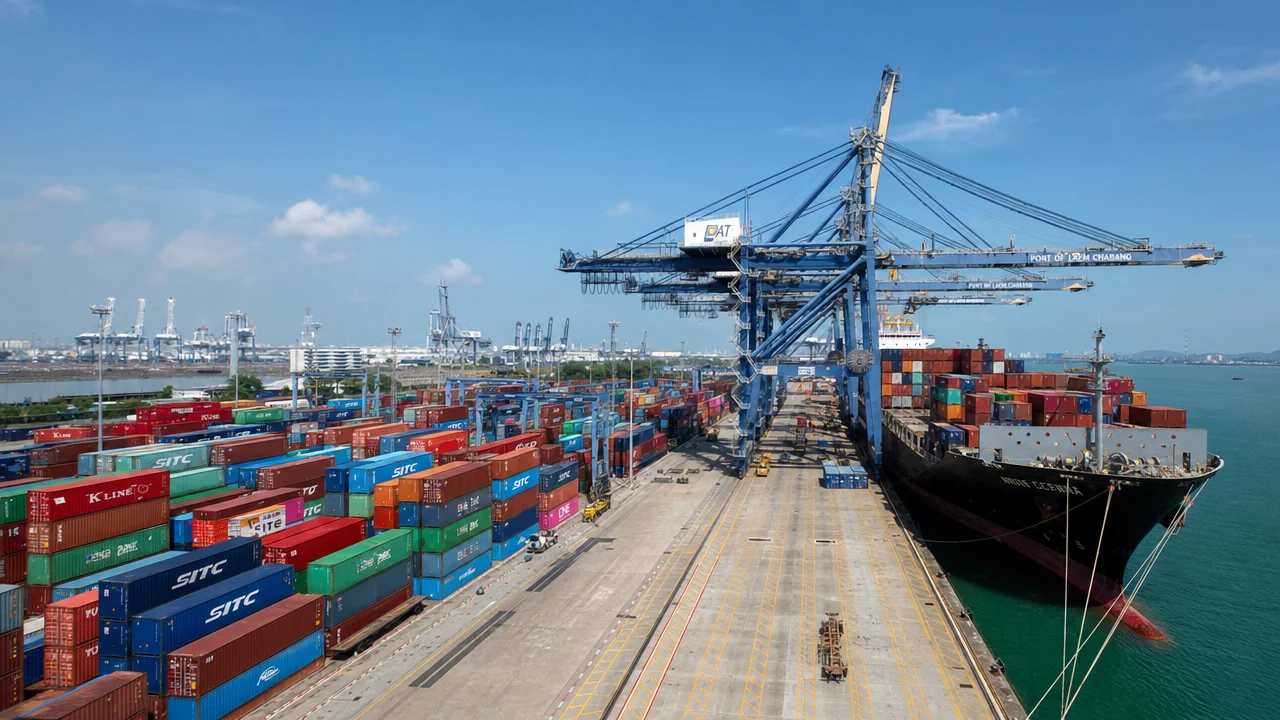
The Strait of Hormuz handles about 21% of global seaborne oil shipments and serves as a transit hub for importing construction rebar, cement and finishing materials from Iran, UAE and Saudi Arabia to ASEAN countries. Strikes on port facilities at Qeshm Island and Bandar Abbas, as described by CHOSUNBIZ, have effectively paralyzed container shipments to Bangkok and Laem Chabang. Delivery time for steel structures from Dubai to Laem Chabang port has increased from 14 to 38 days - vessels are forced to circumnavigate Africa via the Cape of Good Hope.
Thai developers purchase up to 40% of imported SD40 and SD50 grade rebar from suppliers in Iran and Qatar. The cost per ton of rebar at warehouses in Chonburi has risen from 18,500 baht in June to 24,200 baht by July 18. CPB-40 grade cement has increased in price by 22%, Spanish and Italian porcelain tiles by 15-19%. Developers who signed material supply contracts with fixed prices before February 2026 find themselves in a more favorable position. Those who worked with floating prices or planned summer purchases are forced to revise project budgets.
Which Areas of Pattaya Have Been Hit Hardest
The greatest price increases have been recorded in East Pattaya and Na Jomtien - areas with high concentrations of mid-range and economy class projects, where the share of imported materials in cost price reaches 35-42%. Studios of 28-32 m² in complexes along Thepprasit Road have risen in price from 2.4-2.6 million baht in May to 2.8-3.1 million baht in July. One-bedroom apartments of 35-40 m² in the Soi Chaiyapruek area have increased in price from 3.2 million to 3.7 million baht.
In Jomtien the situation is slightly milder: developers working with local concrete and brick suppliers have raised price lists by 9-12%. Projects on the first coastline of Jomtien Beach Road have maintained stability - there developers focus on the premium segment and have already built in a margin buffer. Apartments with sea views priced from 8 million baht have remained virtually unchanged in price, but project completion dates have shifted by 4-6 months due to delays in deliveries of Otis and Schindler elevator equipment, which comes through Singapore.
Central Pattaya and Pratumnak Hill show growth of 6-8%. Large developers with diversified supply chains and the ability to switch to alternative contractors from China and Vietnam operate here.
Direct Consequences for Buyers: Cancellation of Installment Plans and Reduced Discounts
Pattaya developers have begun revising sales terms. Three major developers in Na Jomtien have cancelled interest-free installment plans for 24 months that had been in effect since March 2026. Buyers are now offered 12-month installment plans with a 3-4% price increase or one-time payment with a 2-3% discount. Previously, discounts for full prepayment reached 7-9%.
Some projects in East Pattaya have introduced a floating price system: the apartment price is fixed only after making the first payment of 30% of the total amount. If a buyer makes a booking deposit of 50,000-100,000 baht but does not proceed to the main payment within 30 days, the price is recalculated at the current rate. This mechanism protects the developer from currency and logistics risks, but deprives the buyer of the opportunity to lock in a favorable price at the foundation stage.
Another trend is a reduction in the number of units available to foreigners under the 49% quota. Developers prefer to sell apartments to Thai residents, who complete purchases faster and do not require additional legal procedures. In two projects on Sukhumvit Road, the quota for foreigners has been reduced from 49% to 35%, with remaining units reserved for domestic market sales.
Response from Major Developers: Freezing New Launches and Revising Plans
Major market players have suspended the launch of new construction phases until the situation in the Middle East stabilizes. One of Pattaya's top-5 developers has postponed the sales launch of a project in the Bang Saray area from August to November 2026. The reason is the inability to accurately forecast cost price and set a competitive price. The company fears that if it launches sales at current high prices, demand will be lower than expected, and if it assumes an optimistic scenario of cost reduction - risks operating at a loss.
Two medium-sized developers in Jomtien have announced a switch to local materials. Instead of imported Porcelanosa ceramics, they will use Thai Cotto, instead of German Grohe sanitary ware - Chinese Jomoo. Savings will amount to 8-12% of the finishing budget, but this may reduce project attractiveness for foreign buyers accustomed to European brands.
Secondary Market Price Dynamics: Resales Rising More Slowly
Pattaya's secondary market is reacting to the crisis with a delay. Resale prices for apartments in complexes completed in 2023-2025 have risen by 4-6% since early July. Owners are not rushing to raise prices, fearing losing buyers who are switching to secondary market due to rising new development prices. A 30 m² studio in the Thappraya Road area, which cost 2.1 million baht in May, is now offered for 2.2-2.25 million. The difference with new developments has narrowed from 15-18% to 8-10%, making resales more attractive.
Rental rates remain stable for now. Long-term rental of a studio in Jomtien stays at 8,000-10,000 baht per month, one-bedroom apartment - 12,000-15,000 baht. Short-term rental through Airbnb has increased by 5-7% due to seasonal demand, but this is not related to the Middle East conflict.
Forecast: How Long Will Price Growth Last
Thai real estate market analysts expect the current wave of price growth to continue until the end of the third quarter of 2026. If military operations in the Strait of Hormuz area cease in the next 3-4 weeks and logistics routes are restored, the cost of imported materials will begin to decline by September. Developers will be able to return to previous price lists or at least freeze prices at current levels.
The pessimistic scenario assumes a prolonged conflict and further escalation. In this case, prices for new developments in Pattaya may rise another 8-12% by year-end. Developers will be forced to reduce construction volumes, extend project implementation timelines and abandon flexible payment terms. Demand from foreign buyers may decrease by 15-20%, especially among investors counting on quick resale.
The Central Bank of Thailand has not yet commented on the situation, but in case of continued inflation growth in the construction sector, tightening of mortgage lending conditions for Thai residents is possible, which would additionally cool the market.
What This Means for Russian Buyers in Pattaya
Russian buyers planning to purchase property in Pattaya in the second half of 2026 should consider several factors. If you have already made a booking deposit and fixed the price under contract before July, you are in a winning position - the developer has no right to revise the cost unilaterally. Check the contract terms: if it specifies a floating price or force majeure clause, the developer may demand additional payment.
For those just selecting a property, it makes sense to consider the secondary market. The price gap between new developments and resales has narrowed, and legal verification of secondary market transactions is faster. An apartment in a complex completed 1-2 years ago already has established infrastructure, functioning management and real resident reviews.
If you are set on a new development, pay attention to projects by developers who work with local suppliers and have material reserves in stock. Ask the agent what percentage of materials has already been purchased and whether the developer has contracts with fixed prices. Projects whose construction began before February 2026 are less susceptible to current fluctuations.
Avoid projects with long installment plans and floating prices. It's better to take an apartment with a short payment schedule or pay in full, locking in the current price. If you can wait 3-4 months, postpone the purchase until autumn - by that time the logistics situation may stabilize, and developers will return some discounts and flexible terms.
Pay attention to the area. Central Pattaya and Pratumnak Hill show less volatility than East Pattaya and Na Jomtien. If your budget allows, choose projects closer to the center - liquidity is higher there and the risks of price revision are lower.
Practical Steps for Buyers in the Current Situation
The first step is to request from the developer a current price list with publication date. Compare it with the version available in May-June. If the difference exceeds 10%, clarify what it is due to: rising costs or changing market conditions. Ask to see the estimate and calculation - a serious developer will provide these documents.
The second step is to check the price fixing terms. If the contract has a clause allowing price revision in case of currency exchange rate changes or material price changes, demand its removal or limitation of maximum percentage increase. A lawyer can add to the contract a condition that the price can be increased by no more than 5% and only with documentary confirmation of cost increases.
The third step is to study the payment schedule. If the developer requires 50% prepayment before construction begins, this is a warning sign. The standard scheme: 20-30% upon contract signing, the rest - according to construction stages. Do not agree to advance payments without linking to actual work progress.
The fourth step is to assess the developer's financial stability. Request data on the number of units sold in the current project and information about previous properties. If the company has completed fewer than three projects or has had delays in past timelines, the risk of construction freeze increases.
The fifth step is to consider purchasing through a Thai company if you are planning long-term investment and are prepared for additional legal costs. This provides access to the full apartment quota, including those reserved for residents, and simplifies future resale.
Alternative Strategies: Rent-to-Own and Delayed Transactions
Some Pattaya developers have begun offering rent-to-own schemes: the buyer rents an apartment for 12-24 months with the right to purchase at a fixed price. Part of the rental payments (usually 50-70%) is credited toward the future purchase. This allows locking in the price now but postponing the main payment until the market situation becomes clearer. The downside of the scheme is that if you refuse to purchase, you will lose 30-50% of the rent paid.
Another option is a delayed transaction with deposit. You pay 10-15% of the apartment cost as a deposit, the developer fixes the price for 6-9 months. If prices fall during this time, you can revise terms or take back the deposit with a small penalty (usually 2-3%). If prices rise, you buy at the fixed rate. Such schemes are offered by only a few developers so far, but demand for them is growing.
The third strategy is buying an apartment at the foundation stage with maximum discount. Currently some developers are willing to give discounts up to 15% for purchases at an early stage to ensure cash flow and complete construction on time. The risk is higher, but if you have thoroughly checked the developer and are confident in their solvency, savings can amount to 400,000-600,000 baht on a studio and up to 1.2 million baht on a two-bedroom apartment.