
Why Pattaya's Secondary Market Starts at $35,000, While Phuket's Begins at $80,000
Secondary condominiums in Pattaya are available from $35,000 (~1,260,000 baht at early 2026 exchange rates), whereas in Phuket the entry threshold is twice as high-around $80,000. The difference is explained not only by geography but also by demand structure: Pattaya is oriented toward long-term rentals to expats and short-term tourist rentals, Phuket-toward premium buyers and villas. The average price per square meter in Pattaya's secondary market is $1,500-3,000 (~55,000-110,000 baht/m²), according to 2026 condominium market analysis. In Phuket the similar range shifts to $2,500-4,500 per square meter.
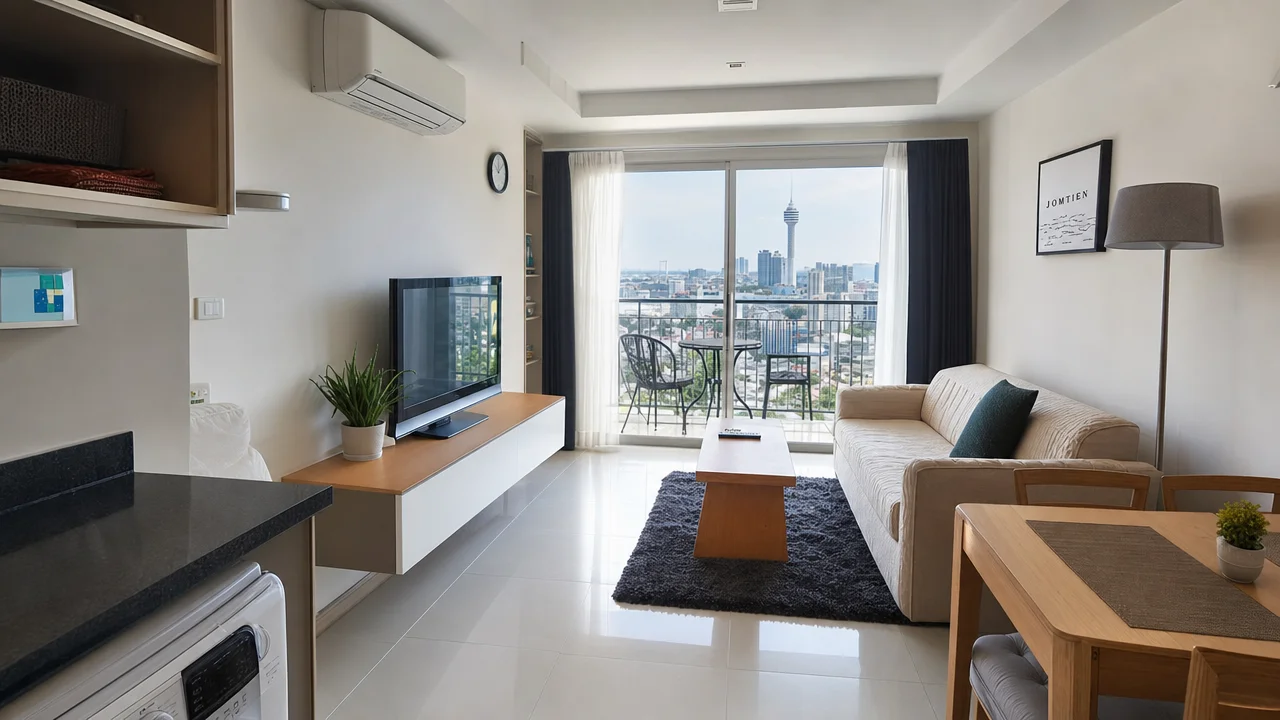
Secondary properties are sold with furniture and appliances-the buyer receives a ready asset for immediate rental. New developments require waiting for construction completion, and in case of delays profitability drops. Pattaya's secondary stock numbers tens of thousands of units accumulated over two decades of construction boom, creating a liquid market with wide choice of locations and budgets.
Legal Framework: 49% Foreign Quota and Money Transfer Requirements
A foreigner has the right to own a condominium in Thailand as full ownership (freehold) if two conditions are met. First: the building has an official condominium license issued by competent authorities. Second: the share of foreign ownership in the project does not exceed 49% of total saleable area. This is enshrined in the Condominium Act B.E. 2522 (section 19 bis). The remaining 51% is reserved for Thai citizens or Thai legal entities.
The purchase amount must be transferred to Thailand from abroad in foreign currency. The receiving bank converts the funds to baht and issues a Foreign Exchange Transaction form (FET, formerly known as Tor Tor 3 / ต.ท.3). For transactions of $50,000 and above the bank issues a full FET form; below this threshold a bank credit letter is sufficient. The document must indicate the purpose of transfer-purchase of a specific condominium unit, project name and unit number. Without FET the Land Office will refuse registration in a foreign name. International transfer takes 3-5 business days.
The condominium juristic person is obliged to provide a letter confirming that the unit falls within the 49-percent foreign quota. Without this letter registration is impossible. Also required is a certificate of no outstanding debts for utility payments and management fund contributions.
Land Office Registration Procedure: Timeframes, Fees and Taxes
Registration of ownership transfer takes place at the district branch of the Land Department. For property in Pattaya, Jomtien, Pratamnak and Naklua the competent authority is the Chonburi Provincial Land Office branch in Bang Lamung (สำนักงานที่ดินจังหวัดชลบурี สาขาบางละมุง), located at 398 Moo 10, Bang Lamung 20150. Property in Sattahip district is registered through the local branch.
Both parties (or their attorneys by power of attorney) must be present in person. The officer verifies passports, FET form or credit letter, quota letter from juristic person, certificate of no debts, original title deed (held by seller or mortgagee bank), signed sale and purchase agreement. All documents and registration form Tor.Dor.13 are executed in Thai language.
Fees and taxes are calculated from the greater of two amounts: declared sale price or official assessed value (ราคาประเมิน) established by the Treasury Department Valuation Office. After payment at the cashier, registration is completed the same day, the new owner's name is entered on the reverse side of the title deed.
Table of Fees and Taxes When Buying a Condominium
| Payment | Rate | Usually Paid By |
|---|---|---|
| Transfer fee (ค่าธรรมเนียมการโอน) | 2% | Buyer (often split 50/50) |
| Specific business tax (ภาษีธุรกิจเฉพาะ) | 3.3% (3% + 10% municipal surcharge), if seller owned less than 5 years or is a legal entity | Seller |
| Stamp duty (อากรแสตมป์) | 0.5%, only if specific business tax does not apply | Seller |
| Withholding tax (ภาษีหัก ณ ที่จ่าย) | For individual: progressive personal income tax scale from assessed value with deduction by years of ownership; actually 1-3%. For legal entity: 1% of greater amount | Seller |
Total transaction costs amount to 2.5-6.3% of price, distribution between parties is negotiated in the sale and purchase agreement. The Land Office does not regulate who pays-the main thing is that the cashier receives the full amount.
Stimulating Measure for Thai Citizens (Does Not Apply to Foreigners)
By Cabinet Resolution of April 22, 2025, the transfer fee is reduced from 2% to 0.01%, and the mortgage registration fee-from 1% to 0.01% for residential property (detached house, townhouse, commercial building, condominium), if both sale price and assessed value do not exceed 7 million baht. The benefit applies only when the buyer is an individual with Thai citizenship. Thai legal entities and foreign buyers do not fall under the measure. Period of validity-until June 30, 2026; extension remains at the Cabinet's discretion.
Transaction Timeframes and Verification Stages
From signing the sale and purchase agreement to registration of ownership transfer usually takes 30-90 days for the secondary market. Main time is spent on receiving incoming transfer, processing letters from juristic person (quota and no debts) and removing encumbrance from title deed if the property is mortgaged to a bank. The Land Office visit itself takes one day.
Reservation and agreement. Booking (often 50,000-200,000 baht) holds the unit for a short period. A full sale and purchase agreement is signed with deposit payment of 10-30% of cost for secondary or structured schedule for new developments. The agreement remains a private arrangement until the day of Land Office registration.
Title verification (due diligence). A lawyer verifies the type of title deed (Chanote / Nor Sor 4 Jor-most reliable; Nor Sor 3 Gor acceptable for land; condominiums issue Or Chor 2 for unit), presence of encumbrances and mortgages, outstanding common area fees, building permits, environmental impact assessment approval for projects from 4,000 m² construction area or 80+ units. Compliance of actual layout with registered plans is verified.
Rental Yield: Short-term vs Long-term
Secondary condominiums in Pattaya bring gross yield of 6-10% annually with short-term tourist rentals (daily or weekly through Airbnb, Booking.com). High season (November-March) gives 70-85% occupancy, low season (April-October) drops to 40-50%. Management companies charge commission of 20-30% of income plus cleaning and linen change.
Long-term rental to expats (annual contract) provides stable flow of 4-6% annually with minimal operating costs. Tenant pays utilities, owner bears only management fund contributions (usually 35-50 baht/m² per month) and annual property tax (12.5% of annual rental value for non-residential use; residential rental is taxed at 12.5% rate with deductions).
In Phuket gross yield is comparable (6-9%), but higher entry price requires more capital. Pattaya secondary market allows portfolio diversification: for the price of one Phuket unit you can buy two Pattaya units and reduce vacancy risk.
Alternative: 30-year Long-term Land Lease
If the building does not have a condominium license or the foreign quota is exhausted, a foreigner can enter into a long-term lease (leasehold) agreement for up to 30 years. Land Code B.E. 2497 and Civil and Commercial Code allow one renewal for another 30 years, but this right must be specified in the original contract and is not guaranteed automatically.
The agreement is drawn up in written form and registered at the Land Office to become valid against third parties. Without registration the lease term is limited to three years, and the agreement does not protect the tenant in case of sale of property or death of owner. Rent can be paid in full upon signing or in installments during the term; conditions are clearly fixed in the contract.
Lease registration is subject to a fee of 1% of the rent amount for the entire period (or assessed value if higher). This path is used for houses on land or units in buildings without condominium status. Leasehold rights can be sold or transferred to a third party with owner's consent.
What This Means for a Buyer in Pattaya
Pattaya's secondary market offers liquid entry with minimum threshold of $35,000 and immediate launch of rental flow. The buyer avoids construction delay risks, receives a time-tested project with functioning infrastructure and established community. Legal procedure is transparent: FET form, quota letter, Land Office registration in one day. Total costs of 2.5-6.3% are predictable and divided by agreement.
For an investor focused on yield, Pattaya wins due to lower entry point and diversification. Two units at $40,000 in different areas (Jomtien and Naklua) give more flexibility than one Phuket unit at $80,000. Rental market is deeper: year-round demand from expats working in Bangkok and Rayong, plus tourist flow in high season.
For a buyer from Russia or CIS countries it is important to open an account in a Thai bank in advance to receive rental payments and pay utilities. Bangkok Bank, Kasikornbank and SCB work with non-residents if they have a long-term visa or work permit. Alternative-use management company's account with monthly transfer of net income, but this increases commission.
Secondary market requires inspection: condition of plumbing, air conditioners, furniture. Units 10+ years old may need cosmetic repair; budget $2,000-5,000 for updates. Check financial health of management fund: accumulated reserve should cover major repairs of common areas. Request minutes of owners' meetings for the last two years.
Pattaya remains an entry point for buyers who want to test the Thai market with limited capital, obtain a real asset in ownership and start earning 30-60 days after deal closing. Phuket is suitable for premium segment and long-term villa ownership; Pattaya-for active condominium portfolio management with focus on cash flow.