

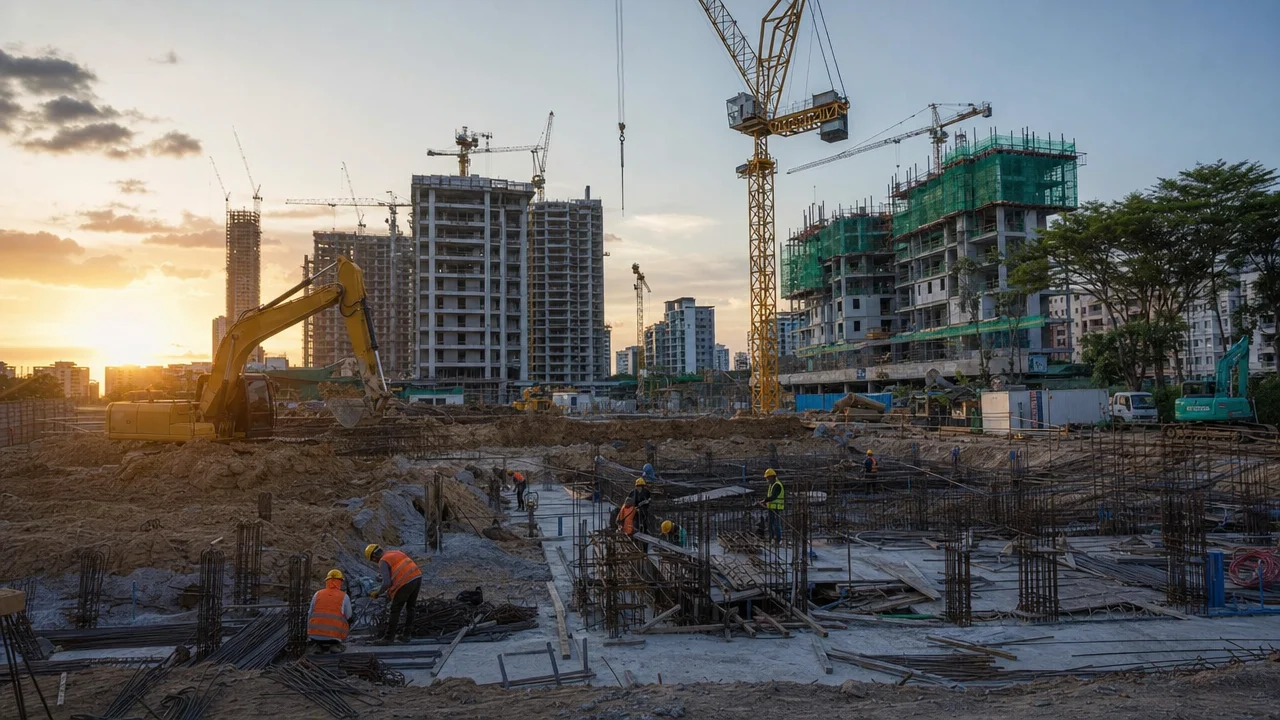

The escalation of conflict between Iran, the USA, and Israel in early 2026 triggered a sharp spike in global oil prices-above the $100-120 per barrel mark. For Thailand, which imports approximately 124 million liters of petroleum products daily, this means direct increases in logistics costs, construction material production, and, consequently, final housing prices. The Construction Material Price Index reached 108.5 points in March 2026, recording an 8.5% increase compared to the base period, according to data from the Trade Policy and Strategy Office of Thailand's Ministry of Commerce.
Why Oil from the Strait of Hormuz Impacts Condominium Prices in Pattaya
Thailand is critically dependent on crude oil imports. The threat of closing the Strait of Hormuz-through which a significant portion of global supplies passes-is already priced into quotations. Rising energy prices are instantly translated into the cost of producing cement, steel, plastic granules, and transporting materials to construction sites.
The corporate lending division of Kiatnakin Phatra Financial Group (KKP) forecasts that developers of new projects are forced to factor in increased costs, raising housing prices by 5-10% in 2026. The hardest hit is the mass market segment-condominiums priced at 1.5-3 million baht, where the purchasing power of the local population is already limited.
The National Economic and Social Development Council (NESDC) notes that the conflict's impact extends beyond direct fuel price increases. Consumer goods become more expensive, supply chains are disrupted, and shortages of certain raw materials emerge. If the conflict continues for 6-9 months, NESDC forecasts GDP growth of only 0.2% and inflation at 5.8%-conditions under which developers and investors will need to revise their new construction plans.
How East Pattaya Developers Are Responding to Rising Costs
In the East Pattaya and Na Jomtien areas, where mid-range projects are concentrated for foreign buyers and local investors, developers are already adjusting strategies. New project launches are being postponed until the end of 2026-developers are waiting for material prices to stabilize and a clearer picture on interest rates.
Projects where construction has already begun are protected by contracts with contractors secured in advance. Prices for buyers who completed the booking process before March 2026 remain fixed. However, for new phases and launches in the second half of the year, price increases of 7-12% per square meter are forecasted.
The average selling price of condominiums in the first quarter of 2026 in Pattaya was approximately 85,000-95,000 baht per square meter depending on location and project class. In East Pattaya, where complexes with infrastructure for long-term rental are popular, prices remain at the lower end of the range. Na Jomtien, oriented toward family buyers and retirees, shows higher price tags-100,000-110,000 baht per meter in projects with sea views.
Developers are shifting to a cautious planning model. Instead of large-scale launches of 300-500 units, companies prefer phased construction of 100-150 apartments to minimize risks of oversupply amid weak demand.
Materials Have Become More Expensive, But Not Critically-Yet
Construction materials account for 25-30% of the total project cost. A 10-20% price increase raises the final housing cost by only 2.5-6%. For now, developers are maintaining margins by cutting marketing expenses and optimizing design.
Cement prices have risen 12% since the beginning of the year. Steel-by 15%. Plastic granules used for pipes and finishing materials show market shortages, pushing prices up another 8-10%. Domestic logistics have become 6% more expensive due to rising diesel fuel costs.
However, the key factor is not the current price level, but their dynamics. If the Middle East conflict continues and the Bank of Thailand maintains high interest rates to combat inflation, developers will find themselves trapped: rising costs amid falling demand.
Interest Rates and Mortgage Affordability: A Double Blow to Buyers
Rising oil prices push inflation upward. Central banks, including the Bank of Thailand, are forced to maintain high interest rates or even raise them to curb price growth. For homebuyers, this means increased monthly mortgage payments and reduced affordability.
Mortgage rates in Thailand in the first quarter of 2026 remain at 6.5-7.2% per annum for local borrowers. Banks offer foreigners conditions with an increased down payment-from 40% of the property value-and rates 1-1.5 percentage points higher.
Buyers planning to obtain mortgages in the second half of 2026 are rushing to lock in lower rates now. Developers respond to demand with special offers: 1-3 year installment plans with zero interest from the developer allow postponing bank loan applications until the market stabilizes.
Foreign Demand as a Lifeline for the Pattaya Market
Against the backdrop of weak domestic demand, developers are betting on foreign buyers. Pattaya remains an attractive destination for investors seeking foreign residency or capital diversification. This particularly applies to buyers from Russia, China, and Middle Eastern countries.
In 2026, the Thai government introduced a long-term visa scheme tied to purchasing condominiums worth at least 3 million baht (approximately $81,500 USD). The program targets retirees, investors, and digital nomads seeking extended stays in the country. For Pattaya, where the average purchase by a foreigner is 3.5-5 million baht, this measure could become a demand driver.
However, the program's effectiveness will depend on market conditions. If prices continue to rise and the baht strengthens against the ruble or yuan, Thailand's attractiveness to foreign investors will decline.
Projects with Fixed Prices: Exception to the Rule
Against the backdrop of general construction cost increases, projects maintaining unchanged prices are emerging. An example is Baan Chao Thai, implemented with BTS Group participation. Company Chairman Keeree Kanjanapas stated that the project was not created as a typical commercial condominium sale but is positioned as social housing with targeted support.
The company will maintain original prices for buyers who have already passed the selection process and received the right to purchase an apartment. Construction is scheduled to start in mid-2026. The project demonstrates a new trend: affordable housing is beginning to be viewed as a social product with mechanisms of limited access, targeted support, and first-time homebuyer protection.
For East Pattaya and Na Jomtien, this model is still atypical-commercial projects for investors and second-home buyers dominate here. However, if the market continues to slow, developers may adopt elements of the social approach to maintain demand.
Stagflation and Currency Risks: What Awaits the Market in the Second Half
Stagflation-a combination of economic slowdown and rising prices-reduces housing demand among local buyers. For foreigners, the situation is twofold. A weakening baht makes Thai real estate cheaper in foreign currency terms, but simultaneously increases the cost of imported materials and reduces rental investment profitability.
The baht's exchange rate against the dollar in the first quarter of 2026 fluctuated in the range of 34-36 baht per dollar. Against the ruble-approximately 0.35-0.38 baht per ruble. Currency fluctuations create additional barriers to foreign investment inflows, especially from countries with unstable currencies.
East Pattaya developers targeting Russian-speaking buyers offer exchange rate fixing at the time of booking or installment plans in baht with early repayment options. This reduces currency risks for the buyer but increases the burden on the developer's financial model.
What This Means for Buyers in Pattaya
For those planning to purchase in East Pattaya or Na Jomtien in the second half of 2026, the situation requires quick decisions. Prices for new project phases will increase by 7-12% compared to the first quarter. Developers who have already launched sales offer price fixing and installment plans-this window of opportunity will close by the end of summer.
Buyers counting on mortgages should obtain preliminary bank approval now, before rates rise further. The alternative is a 2-3 year installment plan from the developer, allowing loan deferment until the market stabilizes.
Investors focused on rental income should revise their calculations. A 10% purchase price increase with unchanged rental rates reduces annual yield from 6% to 5.4%. In conditions of high interest rates and currency risks, this makes investments less attractive.
Ready-made properties in the secondary market are becoming more interesting than new construction. Sellers facing liquidity decline are willing to reduce prices by 5-8% for quick sales. For buyers, this is an opportunity to acquire housing at 2025 prices without the risk of further price increases during construction.
Those who have already booked apartments in fixed-price projects find themselves in a winning position. The difference between the fixed price and market price at key handover could amount to 300,000-500,000 baht for a 28-35 square meter studio.
Forecast for 2026-2027: When Will the Market Stabilize
Thailand's real estate market is undergoing an adaptation phase. Recovery is possible but will depend on external factors: the duration of the Middle East conflict, dynamics of global oil prices, and central bank policies.
If the conflict ends by mid-2026 and oil prices return to $80-90 per barrel, the market will stabilize by year-end. Developers will resume launching new projects, and prices will stop rising. Otherwise-with a protracted conflict and sustained high rates-the market will enter a stagnation phase with low sales volumes and accumulation of unsold units.
For East Pattaya and Na Jomtien, the key factor remains foreign demand. If the long-term visa program proves effective and the baht remains weak, these areas will maintain attractiveness for investors. Otherwise, developers will be forced to lower prices or offer aggressive installment terms to retain buyers.